Several New York Times journalists issued subpoenas after Air Force One reporting
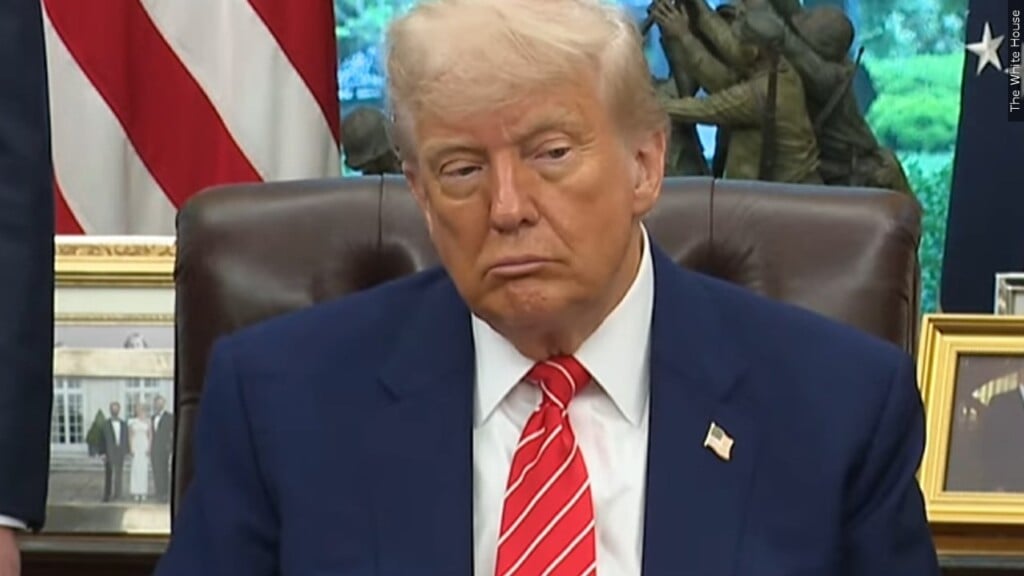
(CBS) — President Trump’s administration issued subpoenas on Friday to some New York Times journalists after the newspaper’s report this week on alleged security concerns involving the new Air Force One, according to the paper.
The Department of Justice addressed the subpoenas in a statement but did not specify who they had been issued to or what publications they worked for. Two statements from The Reporters Committee for Freedom of the Press said the subpoenas were sent to Times reporters. The New York Times also reported on the filings.
The subpoenas seek to force the reporters to testify before a federal grand jury in Manhattan on Wednesday, the paper said, adding that federal agents delivered some subpoenas to the reporters at their homes.
“Every administration has addressed the crime of leaking national security information. To the extent that we have to investigate breaches of national security, that’s something that we will continue to do,” the department said, adding that “reporters are not the targets, those leaking classified information are.”
“We value and appreciate the important role that the press plays in this country, but DOJ also plays an important role to make sure that the people entrusted with our nation’s secrets do what they’re supposed to do with that information, which means not sharing classified information,” the department added. “We recognize there may always be natural tension there, but we are not going to ignore the law and stop investigating the people who work in the administration and think it’s okay to leak classified information impacting national security.”
David McCraw, a lawyer for the Times, defended the publication’s reporters in a statement on Friday.
“The appearance of federal law enforcement agents on the doorstep of news reporters should shock the conscience of any American who believes in the Constitution and the press freedom it protects,” McCraw said.
Bruce D. Brown, president of the Reporters Committee for Freedom of the Press, said that the subpoenas “break from longstanding Justice Department practice to protect the public interest and press independence by requiring prosecutors to only seek information from reporters as a last resort when all other avenues have been exhausted.”
The developments come after the president flew the new Air Force One to a NATO summit in Turkey. But he departed Wednesday on one of the older-model Air Force One jets for a trip to Mildenhall, a Royal Air Force base in Suffolk, England. The two jets both flew to Mildenhall. Mr. Trump then switched to the newer plane for the flight home to Joint Base Andrews.
The plane swap came as a shaky ceasefire with Iran had collapsed, with the U.S. launching airstrikes on Iran and Tehran attacking three Gulf Arab states.
The paper reported Wednesday the switch had come at the urging of the Secret Service. On Thursday, the paper said the newer plane lacked some of the advanced security features of the older aircraft, including antimissile capabilities. Both articles cited anonymous sources.
CBS News also reported that the Secret Service advised Mr. Trump use the old jet. U.S. officials told CBS News that the new plane was hurried into service and is lacking some desired capabilities, and a former U.S. government official who spoke to CBS News expressed concern that there wasn’t enough time or money to outfit the new plane with defensive capabilities to fully meet the requirements to serve as Air Force One.
Mr. Trump, at the time, denied any security concerns, posting on social media that the stop in Mildenhall was so that service members there could view the new jet. During the flight, the president denied to the reporters accompanying him that security concerns involving Iran were a factor in flying two planes home. Asked if he was aware of any credible threats against Air Force One by Iran, Mr. Trump brushed off the question.
“I have a threat all the time. I’m No. 1 on their list,” he said
The White House later denied any security shortcomings on the new plane. Spokesman Steven Chung said in a statement that the new plane “is a state-of-the-art aircraft that has been fitted with high-level security protocols that ensure the safety of the President and his staff.”