State wildlife officials ask public to report Blue Land Crab sightings
MOREHEAD CITY, NC (WWAY) — The North Carolina Division of Marine Fisheries is asking residents to report sightings of blue land crabs, a nonnative species that has appeared with increasing frequency along the coasts of North Carolina, South Carolina and Georgia.
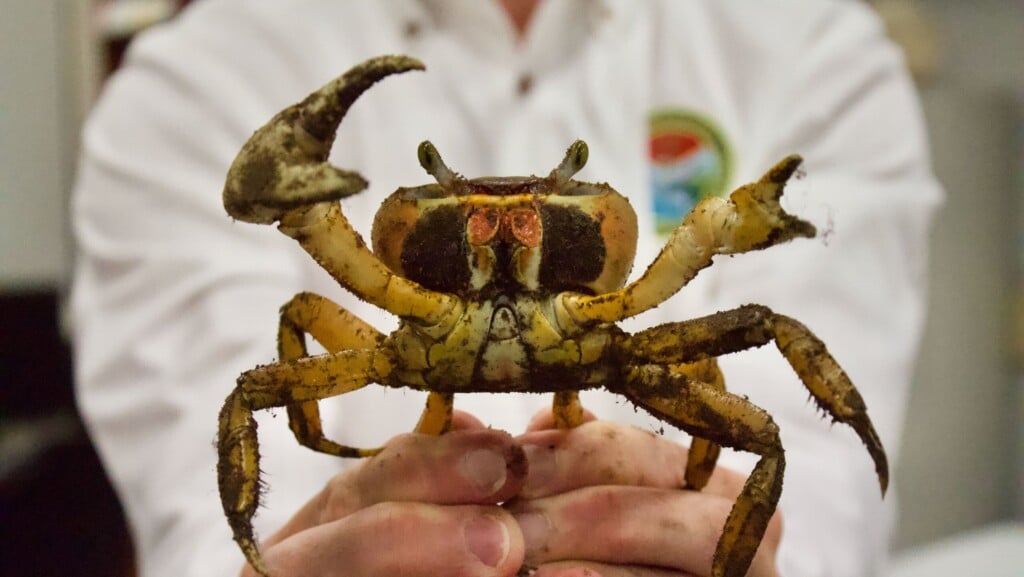
The crabs, known scientifically as Cardisoma guanhumi, resemble oversized fiddler crabs and are native to Atlantic coastal regions stretching from Brazil to South Florida. They were first spotted in South Carolina in 2008, and the first confirmed North Carolina sighting was recorded in the summer of 2023.
Since then, the state has logged 23 confirmed sightings and 34 unconfirmed reports. Two of this year’s confirmed sightings occurred in Emerald Isle.
Researchers say they don’t yet know how far the species has spread throughout the Carolinas, what effect it may have on local ecosystems, or whether its presence resulted from natural range expansion or human introduction. Officials said public reports of sightings will help biologists track the crabs’ spread.
The crabs’ coloring varies despite their name. Adult males typically display a blue-gray hue, while females can appear white or ash-gray, and juveniles range from orange to dark brown or purple. The species is notably long-lived for a crab, reaching maturity at 4 years old and living as long as 11 years.
Biologists describe the crabs as difficult to catch, citing their speed in retreating into deep burrows and a large claw used for defense. Officials said the crabs may be spotted more often after heavy rainfall, which can force them from their burrows.
Anyone who sees a blue land crab is asked to photograph it and report the date and location through an online form provided by the Division of Marine Fisheries. Additional information is available through the division’s species profile page.