Wall Street edges higher ahead of the Fed’s decision as oil prices and bond yields ease
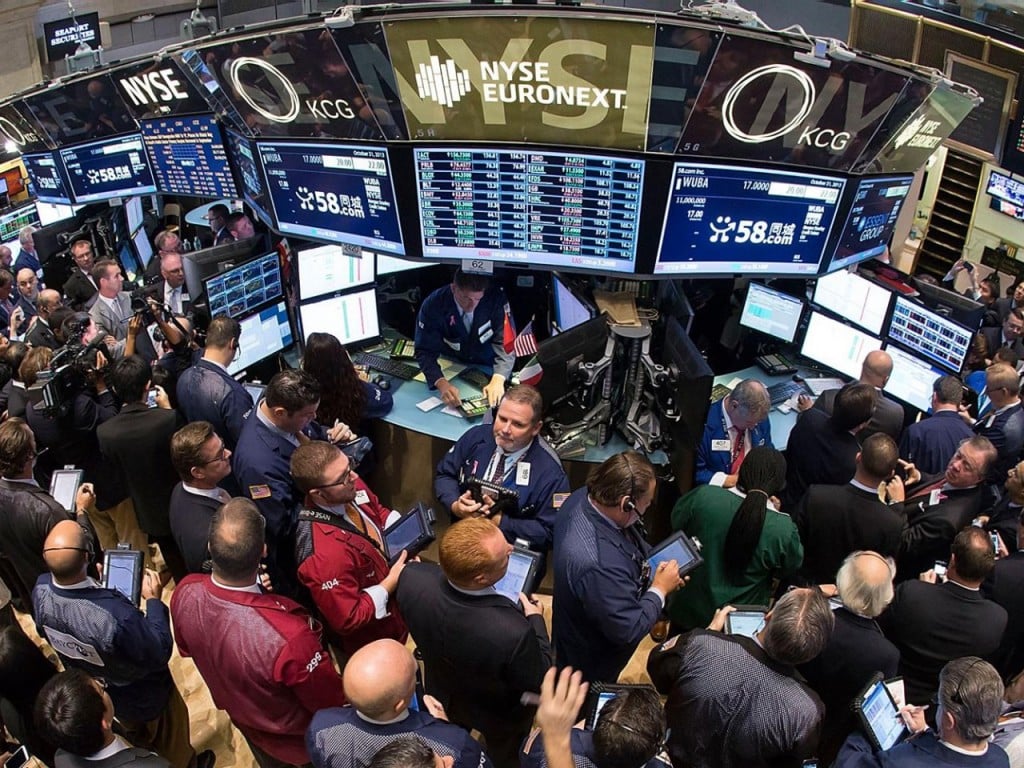
NEW YORK (AP) — Wall Street is edging higher as it waits to hear from the Federal Reserve. The S&P 500 rose 0.3% Wednesday and was on track for just its second gain in the last eight days. The Dow Jones Industrial Average added 61 points, and the Nasdaq composite gained 0.4%. Stocks got help from falling oil prices and an easing of pressure from the bond market. The price for a barrel of Brent crude fell 1%. The market’s main event is coming later in the day, when traders expect the Fed will announce the first hike to interest rates in three years.
THIS IS A BREAKING NEWS UPDATE. AP’s earlier story follows below.
U.S. futures rose Wednesday ahead of the Federal Reserve’s decision on interest rates with high expectations that they will move higher in what would be the central bank’s first hike in more than three years.
Federal Reserve Chair Kevin Warsh, economists say, has largely boxed himself into a rate hike after delivering a high-profile speech last month warning that inflation remains well above the Fed’s 2% target. U.S. data released last week showing that inflation remains stubbornly high bolstered expectations for higher rates, which can slow borrowing and cool costs.
That puts Warsh on a collision course with President Donald Trump, who wants the Fed to cut interest rates. Trump lambasted former Fed Chair Jerome Powell over the issue before he nominated Warsh for the job this year.
Futures for the S&P 500 gained 0.2% on Wednesday. Futures for the Dow Jones Industrial Average climbed 0.1% and the Nasdaq rose 0.4%.
Oil prices declined for the first time this week with Saudi Arabia’s crucial oil pipeline closure adding to pressure on global oil supply. Yemen’s Iran-backed Houthi rebels have been targeting infrastructure in the kingdom as well as its shipping on the Red Sea, where they have seized several islands on the Bab el-Mandeb Strait. And Iran is still targeting ships in the Strait of Hormuz.
Brent crude, the international standard, fell 1.1% lower to $107.61 a barrel, but is still far above the $70 per barrel before the U.S. and Israel attacked Iran in late February.
Benchmark U.S. crude dropped 2% to $103.70 a barrel.
A gallon of gasoline in the U.S. rose again overnight, hitting $4.37 on average, according to motor club AAA. A week ago, gasoline averaged $4.22 a gallon. Diesel, which topped $6 a gallon on Friday, is now $6.31 a gallon on average, up from $5.94 a week earlier.
Higher U.S. Treasury yields have pressured on the stock market. Government bond yields have risen as the Iran war-driven energy crisis added to inflationary pressure while the U.S. national debt grew.
The 10-year Treasury was at 5% on Wednesday, after it briefly touched 5.04% this week, its highest level in years.
The Commerce Department releases retail sales data for August. In July, Americans unexpectedly cut their spending by the biggest amount in more than a year with retail sales falling 0.6%. Economists are expecting a rebound in August, with analysts surveyed by FactSet projecting a 0.9% increase
In Europe, Britain’s FTSE 100 rose 0.6% to 10,723.77. France’s CAC 40 climbed 0.4% to 8,123.78, while Germany’s DAX gained 0.3% to 25,466.60. Asian markets were higher.
The U.S. dollar rose to 155.19 Japanese yen from 155.10 yen. The euro was trading at $1.1535, down from $1.1544.