Water conservation encouraged in central and eastern North Carolina as drought intensifies
NORTH CAROLINA (WWAY) — The North Carolina Drought Management Advisory Council reported that drought conditions have worsened in parts of central and eastern North Carolina after two weeks of minimal or no rain and an abnormally dormant hurricane season, with some areas trending back toward peak drought levels.
“Occasional rains over the last few months have provided some relief, but many areas east of Interstate 85 have seen one of their top five driest August through October periods according to Southeast Regional Climate Center data,” said Klaus Albertin, chair of the North Carolina Drought Management Advisory Council. “We’re seeing rainfall deficits of 6 to 10 inches reported for this period.”
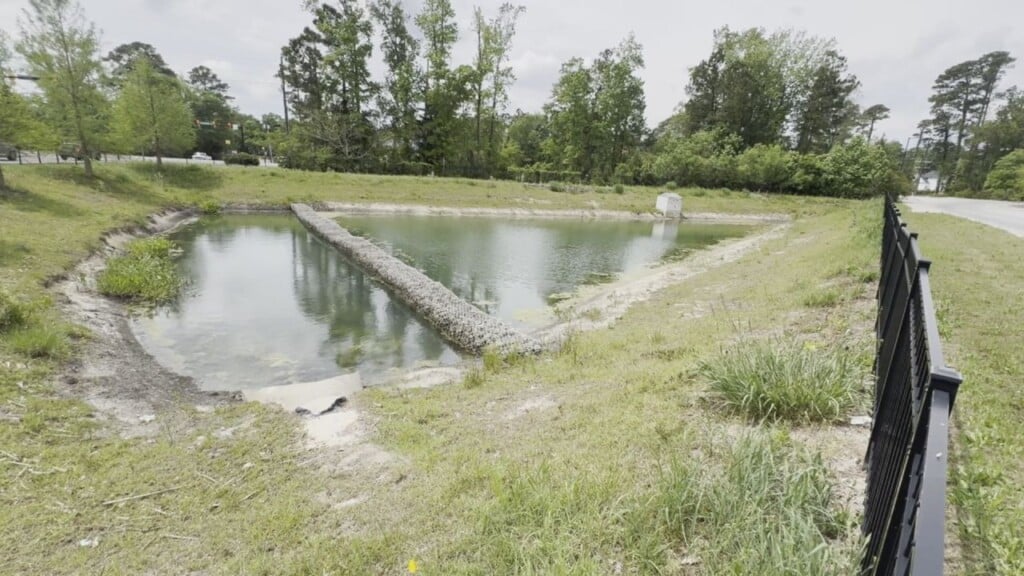
In central North Carolina, drinking water reservoirs are well below normal.
As of November 2, Falls Lake was approximately 6 feet below normal, Jordan Lake was down 3.5 feet and John H. Kerr Reservoir was down 9.7 feet.
“This week’s forecasted rain is not expected to be widespread or especially heavy, so improvements will be limited,” Albertin said. “The forecast is for below-average rainfall for the next two weeks. Longer-term forecasts suggest that we might finally start to see average-or-above-average rainfall toward the end of November.”
Meanwhile, parts of the western Piedmont and mountains remain drought-free following Hurricane Isaias’ moderate-to-heavy rains.
W. Kerr Scott Reservoir in Wilkes County is tracking at normal levels.
Conditions for the Catawba-Wateree basin eased from conservation level 2 to 1 this week, though rainfall has been below-normal for the entire state since then.
The latest county-by-county breakdown of drought conditions released Thursday can be found on the N.C. Drought Management Advisory Council website.
For counties in extreme drought, water systems are advised to follow their Water Shortage Response Plans and adhere to water use reduction measures.
Residents can check with their local water supply system for information on water use restrictions such as limits on lawn watering, car washing or other measures. Systems may also have tips for conserving water, such as washing only full loads of laundry.