‘Keep going’: Stroke survivor encourages others on road to recovery
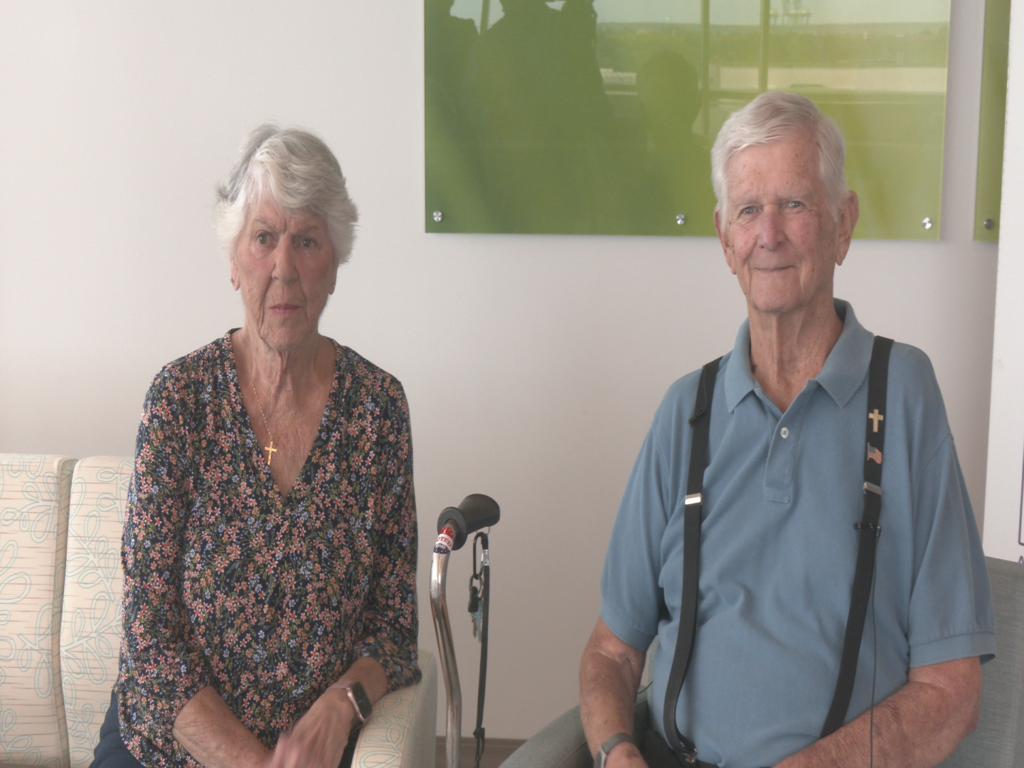
WILMINGTON, NC (WWAY) — It’s World Stroke Day, but for one Wilmington couple, raising awareness about strokes is an everyday mission.
Twenty-one years after a stroke left William Plenk struggling to perform basic tasks, he and his wife, Pat, are helping other survivors navigate recovery and find support.
“I could not write. I had to learn how to eat,” Plenk said, recalling the challenges he suffered from a stroke.
Recovery took perseverance, but Plenk said he refused to give up.
“I just had to keep going. When I thought I was finished, I was told I wasn’t finished,” he said.
Today, the couple shares what they have learned with other stroke survivors through a support group that gives members an opportunity to share experiences, connect with others facing similar challenges and learn about new resources.
Pat Plenk said the group also helps survivors and their families stay informed about developments in neuroscience and resources that may help meet their needs.
“We sometimes have meetings with learning more resources that will help us with what our needs might be,” she said. “If there’s new development in neuroscience, we learn about that as well.”
Carolina McCalmon, a physician assistant with Novant Health, said support groups can be an important part of the recovery process. She also stressed the importance of recognizing stroke symptoms and seeking emergency medical care.
“By definition, a stroke is a sudden loss of function,” McCalmon said. “And so if you can’t feel a limb, if you can’t move a limb, if you cannot talk, if you cannot see, then those are emergency situations.”
Recognizing symptoms quickly is critical because a stroke occurs when blood flow to the brain is interrupted or when bleeding occurs in the brain.
Advances in medical technology are also helping doctors treat some strokes more quickly.
Novant Health’s Deloris P. Jordan Neuroscience Institute is the first in North Carolina to use Thunderbolt, a computer-assisted system that uses suction to remove blood clots blocking blood flow to the brain.
The technology can help doctors restore circulation and potentially limit damage to brain tissue.
“We’re saving hundreds of thousands, if not millions, of neurons and ultimately changing the outcome of functionality in the long run,” a medical expert said.
For Plenk, the road to recovery has become an opportunity to encourage others facing the same challenges he experienced more than two decades ago.
His message is simple: Keep going, even when progress seems impossible.
“You might not think things will get better, but they will if you keep trying,” he said.
The stroke support group meets the third Tuesday of each month at 2 p.m.
To contact the support group, you can email them at Erika.Yourkiewicz@NovantHealth.org