NCDHHS monitoring hantavirus outbreak after NC passenger evacuated from ship
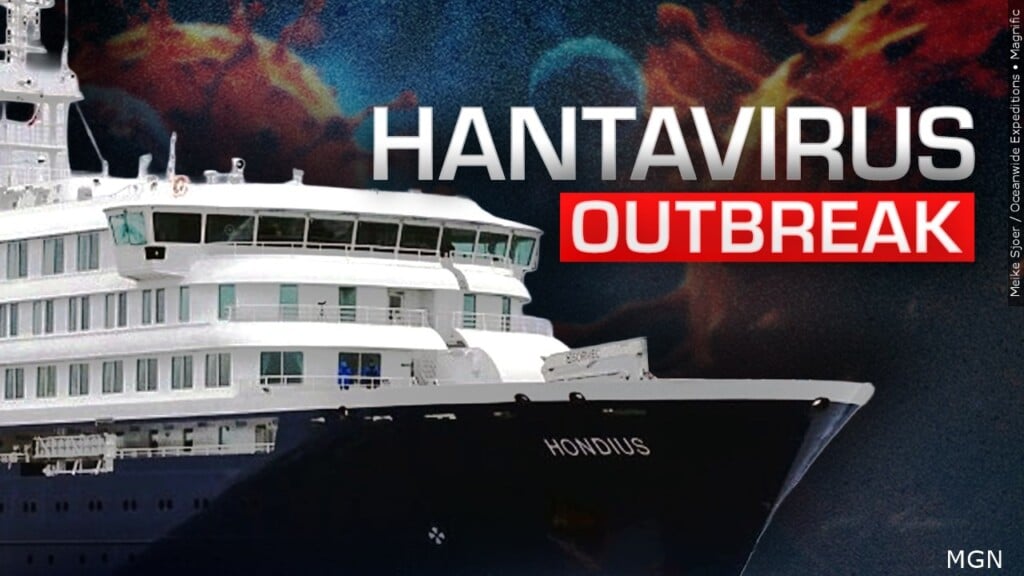
RALEIGH, NC (WWAY) — The North Carolina Department of Health and Human Services says it is closely monitoring a recent hantavirus outbreak connected to the M/V Hondius cruise ship.
According to NCDHHS, the U.S. Centers for Disease Control and Prevention confirmed that one person from North Carolina was aboard the ship and was evacuated along with remaining U.S. passengers to the University of Nebraska Medical Center’s National Quarantine Unit. Officials said no additional details about the individual will be released to protect their privacy.
State health officials emphasized there are currently no cases of hantavirus in North Carolina and said the risk of infection in the state remains “extremely low.”
“Our public health team is among the best in the country and remains ready to respond as the situation evolves,” said Dr. Kelly Kimple, director of the NCDHHS Division of Public Health. “We are in constant communication with federal, state and local officials and are prepared to assist the individual and protect the health and well-being of all North Carolinians.”
NCDHHS said the CDC and the U.S. Department of Health and Human Services are coordinating with state, federal and international partners regarding the outbreak.
Officials said all remaining U.S. passengers aboard the ship were transported to Nebraska over the weekend for additional assessment. Federal health authorities will determine when passengers can return to their home states. Passengers will be monitored for symptoms for 42 days after their last possible exposure, regardless of whether they remain in Nebraska or return home.
Hantaviruses are a family of viruses that can cause severe illness and death. People typically become infected through contact with rodents such as rats and mice, including exposure to urine, droppings or saliva.
The virus involved in the M/V Hondius outbreak is the Andes virus, which officials say is the only known hantavirus capable of spreading from person to person through close, prolonged contact. Health officials said the Andes virus does not naturally occur in the United States.
Most hantavirus cases reported in the U.S. involve a different strain and primarily occur in western states. North Carolina has reported only one hantavirus case, which occurred in 1995, according to NCDHHS.
Symptoms can develop between four and 42 days after exposure and may include fever, fatigue, deep muscle aches and, in severe cases, respiratory distress. There is currently no specific treatment for hantavirus infections, and patients typically receive supportive care such as rest, hydration and symptom management.