NCDOT rejects private Cape Fear Memorial Bridge proposal as toll concerns persist
WILMINGTON, NC (WWAY) — The North Carolina Department of Transportation has rejected a private company’s unsolicited proposal to replace the Cape Fear Memorial Bridge, determining the plan offered no meaningful differences from the state’s existing replacement project while ongoing concerns over tolls persist.
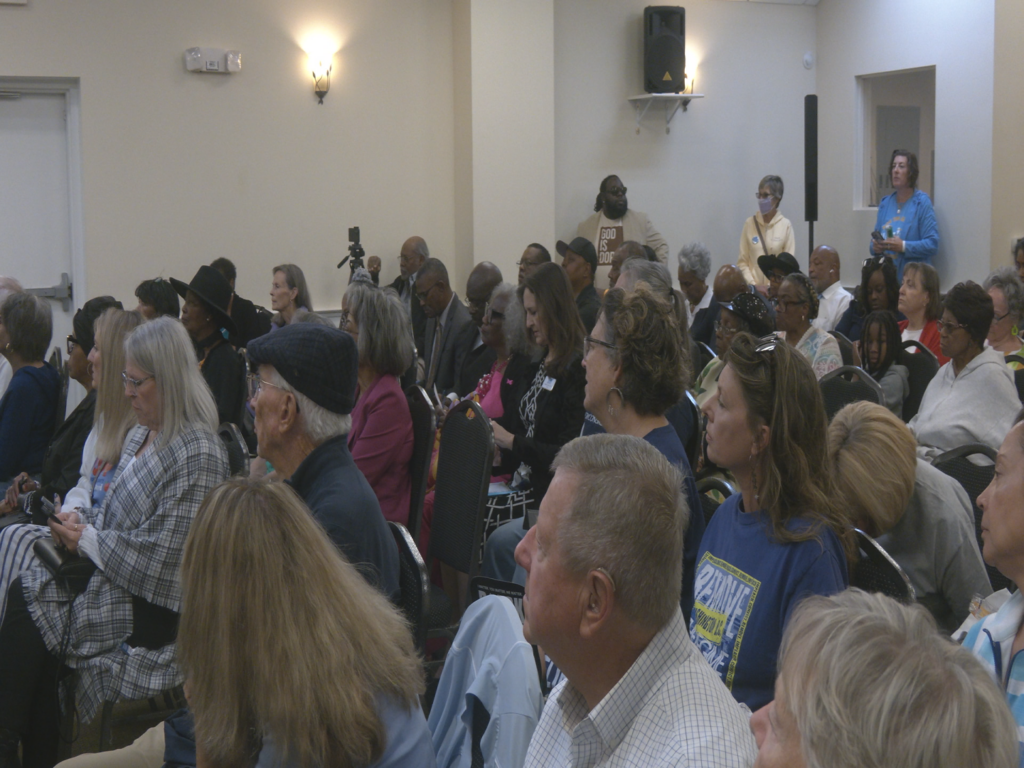
During Wednesday’s Wilmington Urban Area Metropolitan Planning Organization meeting, NCDOT Division Engineer Trevor Carroll said they accepted a recommendation from an oversight committee against pursuing the proposal submitted by Delivering Bridges LLC, saying the plan closely mirrors the bridge replacement already included in the State Transportation Improvement Program (STIP).
“We recommend not pursuing the unsolicited proposal,” Carroll said. “The reasons are because it doesn’t present or offer anything materially different than the project that is already identified in the STIP.”
The unsolicited proposal called for a six-lane bridge with a vertical clearance of up to 135 feet, an estimated cost exceeding $1 billion and tolls of up to $2.75 for drivers.
Although the proposal has been rejected, tolling remains one of the most contentious issues surrounding the project.
Jane Patterson, president of Residents of Old Wilmington, told board members a toll would disproportionately affect Brunswick County residents who rely on the bridge to commute into Wilmington for work, school, and essential services.
“On the toll, ROW believes that this is fundamentally a fairness issue,” Patterson said. “The toll is a regressive tax and the burden would fall hardest on healthcare workers, teachers, hospitality staff and college students commuting from Brunswick County.”
Wilmington resident Peter Ruffin said he opposes tolls unless they are removed after construction costs have been recovered.
“We are in opposition, at least I am, to a toll,” Ruffin said. “If it is going to be tolled, the state should toll it so that it ends when their capital funding has been recouped.”
Carroll said NCDOT continues to evaluate only a traditional toll bridge because it receives a significantly higher score under the state’s transportation prioritization process than a non-tolled alternative.
The project also reached a major milestone on Tuesday when its environmental assessment was completed and signed. The assessment evaluates potential impacts on wetlands, wildlife, and other environmental resources. The first of two public hearings on the assessment is scheduled for late August.
Board members also learned more about a new provision included in North Carolina’s recently approved state budget that could have significant financial implications for transportation projects across the state.
Known as the “I-77 provision,” the measure allows NCDOT to recover money already spent on a project if a metropolitan or rural planning organization votes to remove that project from its transportation improvement program.
Carolina Beach Mayor Lynn Barbee said the provision is intended to encourage local governments and transportation planners to reach consensus before significant design work and spending occur.
“The representatives that voted to remove that project would incur those costs,” Barbee said. “The impetus behind this is to make sure that we work closer together upfront so that that doesn’t happen.”
Barbee pointed to the proposed Eastwood Road and Military Cutoff Road project, which has already accumulated nearly $20 million in project costs. If seven members of the Wilmington MPO voted to stop the project, each municipality represented by those members could be responsible for repaying one-seventh of those expenses.
Barbee said it remains unclear how the state would recover those funds or whether the new provision would ultimately apply to the Cape Fear Memorial Bridge replacement if the project were not approved.