NCDOT to host public hearings on Cape Fear Memorial Bridge replacement options
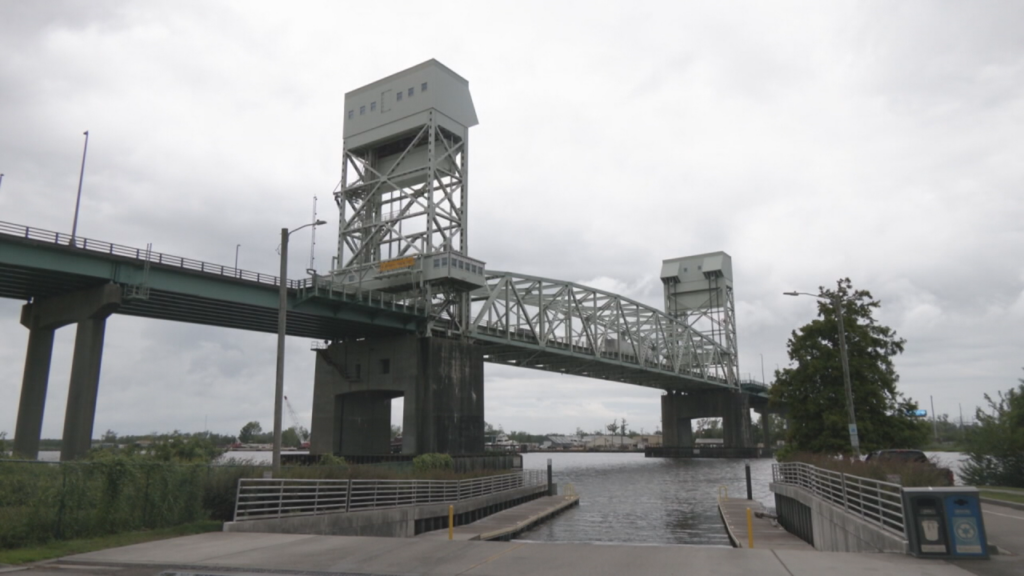
WILMINGTON, NC (WWAY) — The North Carolina Department of Transportation is giving the public a chance to weigh in on the future of the Cape Fear Memorial Bridge, a nearly $1.1 billion replacement debate intensifies across the region.
The public hearing will be held tomorrow at 6 p.m. inside Daniels Hall at Cape Fear Community College.
The NCDOT has narrowed potential replacements down to two primary designs: Plan A, a 65-foot drawbridge, and Plan B, a permanent 135-foot fixed span.
While Plan B would permanently eliminate drawbridge lift delays, it requires massive approach ramps stretching into 5th and 6th streets in historic downtown Wilmington. The U.S. Army Corps of Engineers mandates the 135-foot clearance, arguing a shorter bridge would obstruct future federal shipping channel projects.
Leland resident Doug Field questioned the financial and logistical justification for the massive clearance height.
“We can’t justify $500 million paid by innocents so that a few may one day, hopefully perhaps, use that stretch of river with a tall vessel,” Field said.
Conversely, Megan Mullins of the Greater Wilmington Chamber of Commerce strongly backs the higher fixed span, emphasizing the need for reliable travel and emergency response times.
“We just want to make sure that our commuters, our workforce, the people that are riding along with our first responders and ambulances can get to where they need to go as quickly as possible,” Mullins said.
However, that footprint faces heavy local pushback. The Wilmington City Council recently passed a unanimous resolution rejecting Plan B and opposing tolls. NAACP New Hanover County President LeRon Montgomery warned that the expansion threatens historic neighborhoods and displaces long-term residents.
“People who have lived in homes for most of their lives, they will be asked to move and lose their homes with this bridge proposal,” Montgomery said. “I think we need to look at the complete picture of this and how it will interfere with the living of the citizens of Wilmington.”
Adding to the tension, a nearly $700 million funding gap. Although the NCDOT rejected a private toll proposal in July, state-managed tolls remain on the table. Field voiced deep frustration over the financial burden placed on regular commuters.
“Any toll would fall right on the shoulders of people who live in Brunswick County and trades people who would travel this way in order to work,” Field said.
UNCW economist Dr. Mouhcine Guettabi warned that tolls could cost individual commuters more than $1,000 annually, potentially triggering a ripple effect across the regional housing market as people relocate to avoid fees.
“It could potentially push people to consider living inside New Hanover County to avoid paying for the toll,” Guettabi said. “However, simple economics tells us the more people make that decision, the more demand for housing there is in New Hanover County, and that could push rents up.”
Faced with fierce opposition to tolls, local leaders are exploring a potential backup plan involving a tri-county sales tax, which would require voter approval at the ballot box. Guettabi cautioned that delaying action will only drive up costs as the region continues to grow.
“Waiting is costly. Doing nothing is costly,” Guettabi said. “The area continues to grow. Traffic continues to get worse. And we need to act.”
The second public hearing will be at the Leland Cultural Arts Center on Tuesday at 6 p.m.