North Carolina film incentive funding dries up, putting future productions at risk
WILMINGTON, N.C. (WWAY-TV) — The future of North Carolina’s film industry is facing uncertainty as state funding for film incentives runs low, potentially leaving some productions waiting years before receiving financial assistance.
The development comes after the popular Netflix series The Hunting Wives announced it is leaving North Carolina and moving production to Georgia.
For people who worked on the series, the move means lost opportunities — and potentially lost paychecks.
Joel Sanders, a background actor on The Hunting Wives, recently learned he would not be returning to the production.
“And that crushed me because I was really looking forward to working on season 3,” Sanders said.
The announcement comes as North Carolina’s film grant program faces a funding shortage. The state currently has about $31 million allocated for the program, which reimburses eligible film and television productions after they shoot in North Carolina.
Industry leaders say that funding level puts the state at a disadvantage compared with states offering larger incentives.
“It seems like this state cannot get their act together when it comes to keeping and maintaining a film industry,” Sanders said.
Kirk Englebright, president of Dark Horse Stages, said the state recently made changes to improve its film incentives but failed to increase the overall funding available.
“So that puts us at a pretty unfair advantage, so while on one hand we made these enhancements, on the other hand we stayed stagnant,” Englebright said.
Englebright said that without additional funding, some projects in North Carolina may not receive incentives until 2029. He pointed to states such as New York and New Jersey, which offer significantly larger incentives, including rebates of up to 45%.
“Where are you going to take your project? At the end of the day, it’s all about economics. Hollywood is chasing incentives,” Englebright said.
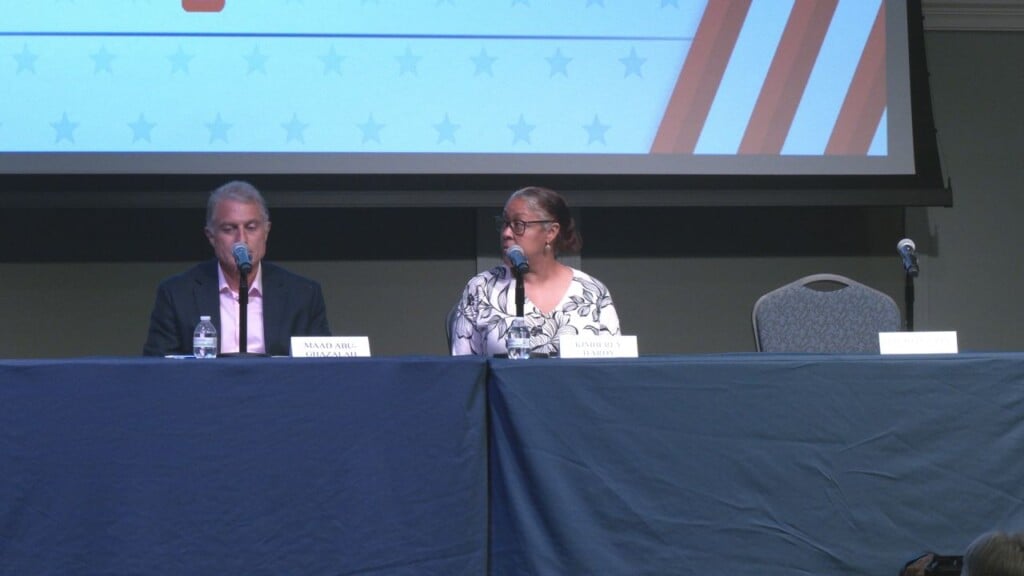
The funding issue was also discussed Thursday during a candidate forum at the Greater Wilmington Business Journal Power Breakfast.
State Sen. Michael Lee said the shortage is the result of what he described as mismanagement of the film grant program.
“The state film office granted $100 million in the last 24 months, $91 million of which they didn’t have,” Lee said.
State officials are now working to determine how to address the shortage.
“We are working on that right now, talking behind the scenes with Secretary of Commerce and House and Senate leadership really on what the path forward looks like,” Lee said.
Lee’s opponent for the state Senate, Jessica Bichler, said the problem stems in part from a change in how the state distributes film incentives.
She said the state previously operated under a multiyear spending plan that allowed productions to plan ahead. Under the new budget, incentives are distributed on a year-to-year basis.
“The film industry understood that money to be recurring in a way that they could plan several years out, and now with a flip of a light switch, the state decided, ‘No, we’ve already overplanned. We have moved forward too far in advance, and we’re going to stop for the time being,'” Bichler said.
The North Carolina Department of Commerce, which oversees the film grant program, said in a statement to WWAY that it will honor existing commitments.
“While the state will be limited in its ability to make new awards, we will meet all award commitments. Commerce will continue to work with the NC General Assembly to ensure that the program has the resources needed to keep cameras rolling across the state.”
Meanwhile, the slowdown is already being felt by crews and businesses that depend on film and television productions.
Englebright said many members of his crew are currently out of work or have had to find jobs outside the entertainment industry.
“A lot of our crew are not working right now, and if they are working, it’s definitely not in the film or entertainment sector. It’s scary. People’s livelihoods are at stake. Rents and mortgages are falling behind,” Englebright said.