Researchers discover a new gigantic dinosaur species in Thailand
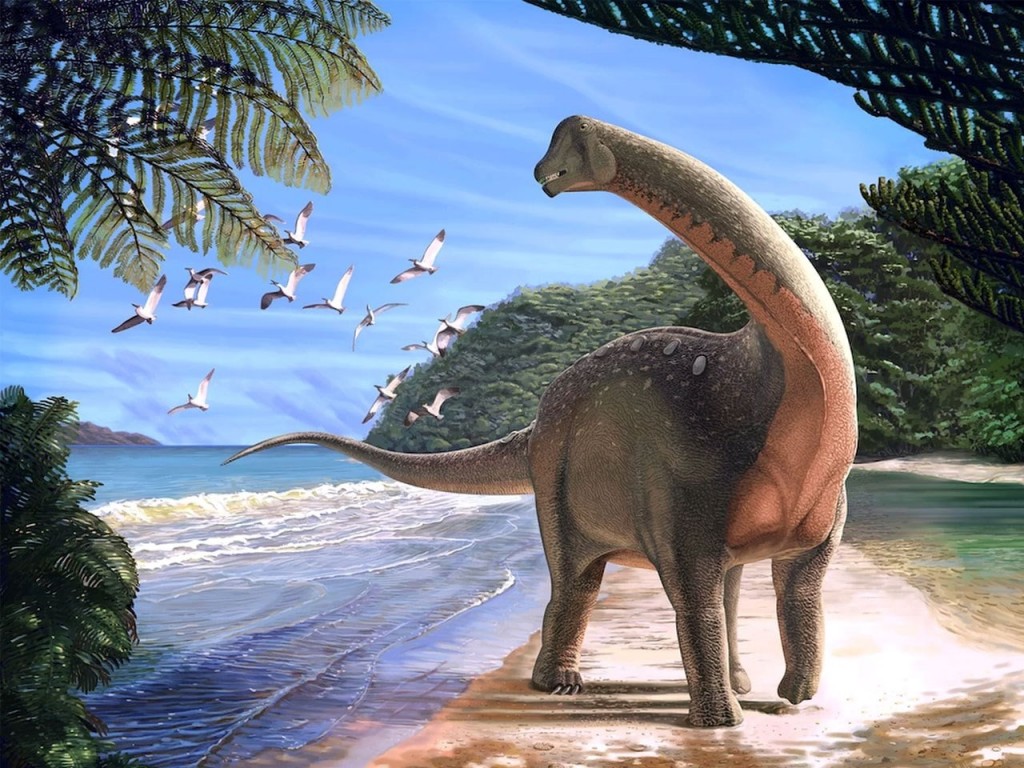
(ABC) — Scientists say they’ve identified the largest long-necked, herbivorous dinosaur to ever live in Southeast Asia, and it could be the last remains of this species they will ever find, according to a new study.
Thitiwoot (Perth) Sethapanicsakul, a Thai PhD student at the University College London Earth Sciences and the lead author of the study, is calling it “the last titan” of Thailand.
“We won’t find any more dinosaur fossils in any younger rocks in Thailand, making this dinosaur kind of the last giant of its kind that we could possibly find in the region,” Sethapanichsakul told ABC News.
The dinosaur’s scientific name is Nagatitan chaiyaphumensis.
The name is derived from Naga, a mythological serpent-like being found in Southeast Asian folklore, while titan is one of the 12 giants of Greek mythology. Chaiyaphum is the Thai province where the original fossils were discovered.
Locals in the Chaiyaphum province of northeastern Thailand were the first to discover the dinosaur’s fossils in 2016. Embedded in a rock formation along the side of a pond, the region’s Department of Mineral Resources excavated 10 bones, including a front leg bone estimated to be nearly six feet.
“In fact, when I first saw the specimen, the kind of front leg bone is actually taller than me, which is quite surprising,” Sethapanichsakul said.
Excavation teams continued digging for evidence until they ran out of funding in 2020, according to Sethapanichsakul. After receiving a grant from the National Geographic Society in 2023, he joined forces with a team of researchers and together they stepped in to complete the study.
From the remains, scientists found they had unearthed something larger than any previous dinosaur species documented in Southeast Asia — a massive dinosaur estimated to have weighed approximately 27 tons when it roamed the Earth.
That’s more than twice the size of the world’s largest living land mammal, the African elephant.
“This dinosaur is very unique for us, especially in Southeast Asia, because of its size,” Sethapanichsakul explained. “It is massive in comparison to what we currently know of.”
Scientists say Nagatitan chaiyaphumensis lived some 100 to 120 million years ago during the Cretaceous period. Prehistoric Thailand is home to some of the most diverse dinosaurs in Asia.
“I would like to think of is like the next big boom of dinosaurs in Southeast Asia,” Sethapanichsakul said.
Sethapanicsakul says the discovery was more than the announcement of a new dinosaur; it created an opportunity to reignite interest in paleontology in Thailand, which only entered the world of paleontology in 1986.
“We’ve only been studying dinosaurs in Thailand for roughly 40 years,” Sethapanichsakul said. “The world has known about dinosaurs for over 200 years In comparison.”
“We are trying to get people, especially in rural areas, to understand the values of paleontology,” he added. “And we do that through outreach and things like that and having a brand-new dinosaur to announce to get people excited for really helps that out.”