Snake activity increases in North Carolina
(WWAY) — Snake sightings are becoming more common across North Carolina as warmer spring temperatures bring the reptiles out in search of food and shelter, according to wildlife experts.
Specialists say seasonal changes are a primary driver of increased snake activity, but other environmental factors may also be contributing. Jeff Hall, a herpetologist with the North Carolina Wildlife Resources Commission, said prescribed fires and controlled burns can make snakes easier to spot.
“Holes in the ground are a little bit more obvious, and so many of the species that I work with, such as various snake species, some lizards, occasionally turtles, will be a little bit easier to see because they’re near or at those holes in the ground, usually left behind by trees, stump holes essentially,” said Hall.
Hall said there are several reasons snakes may be more active this time of year, including searching for food, water or potential mates.
“Whether it’s they’re trying to look for a mate if it’s breeding time for some of those species, although we’re a little early for that, it may be that they’re looking for prey, and then you may have animals that either are hunkering down because they’re at a good water source, or they may be moving because the area they are in is too dry and so they’re seeking out a water source, so you have a lot of reasons that snakes might be moving around,” said Hall.
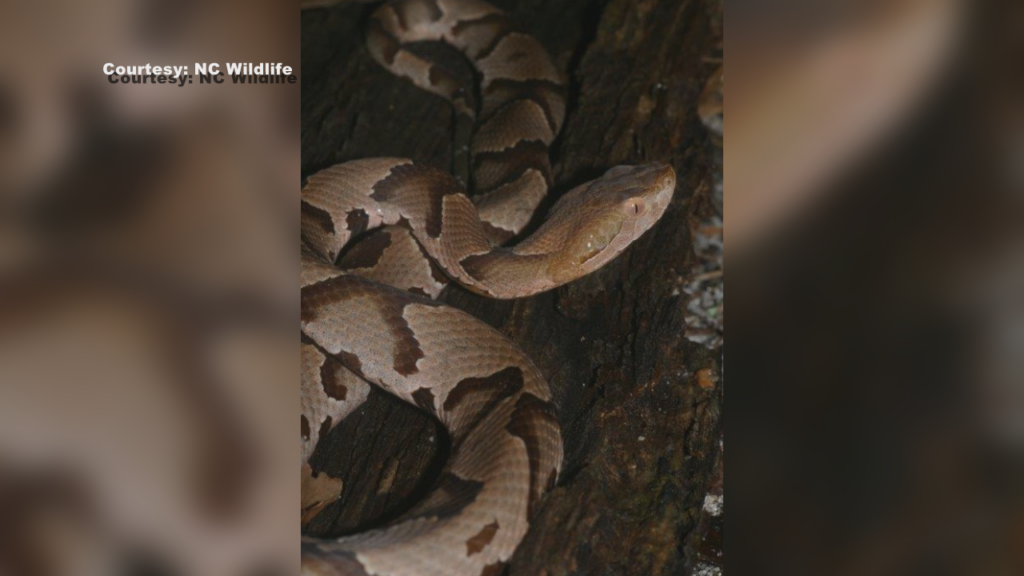
North Carolina is home to 38 snake species, most of which are non-venomous, including the garter snake, rat snake, and green snake. The state also has six venomous species, with the eastern copperhead among the most common and found in all 100 counties. Copperheads are often identified by a distinct hourglass pattern, sometimes described as resembling Hershey’s Kisses, while juveniles have a bright yellow-tipped tail.
Hall said the safest response when encountering a snake is to give it space and allow it to move on.
“If someone’s out in their yard and they’re walking around and they encounter a snake, they can back up a little bit, give it some space, and if you give any kind of wildlife, but snakes are no different, if you give them time and space, they’re going to move on and continue about what their business is. They have no interest in interacting with a person; they would see us as a giant predator, you know, that wants to eat them, and so they would want to retreat from that as best that they can,” said Hall.
Officials say learning how to identify snake species can help residents respond appropriately and stay safe during encounters, and a helpful field guide resource can be found at https://herpsofnc.org/