Andy Burnham becomes seventh British prime minister in a decade
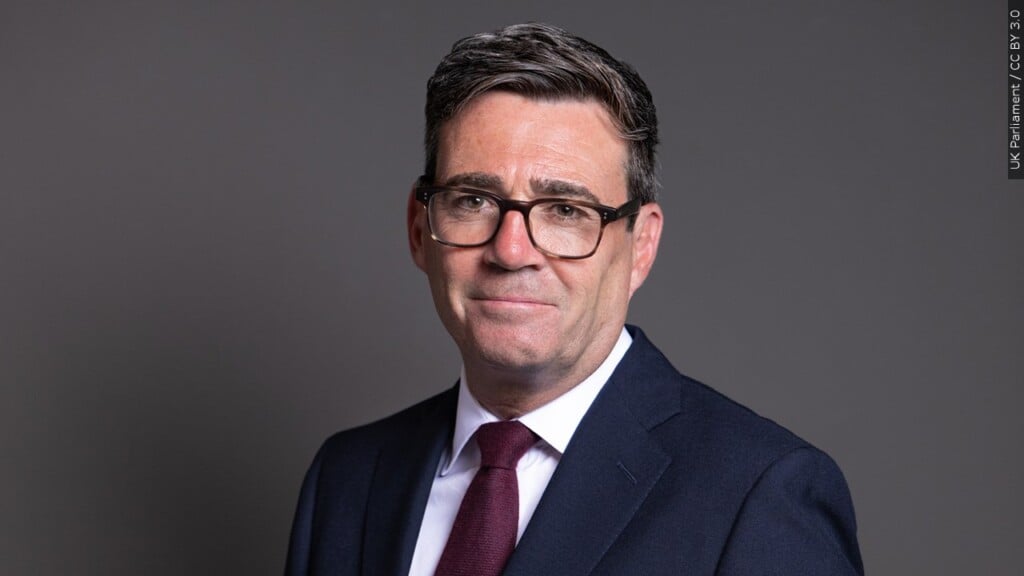
LONDON (AP) — Andy Burnham, the former mayor of Greater Manchester and new leader of the Labour Party, is taking the final steps on Monday to succeed Keir Starmer and become Britain’s seventh prime minister in a decade.
The affable Burnham returned to Parliament in June by winning a risky special election and was sworn in as a member on July 12, hours after the unpopular Starmer announced his resignation to end a tenure of just two years in office.
Starmer will travel the mile from Downing Street to Buckingham Palace to formally tell King Charles III that he is resigning.
Soon after, the 56-year-old Burnham will go to the palace and Charles will ask him to form a government. That is when he will officially become prime minister, a moment known as “kissing hands.”
Here is the latest:
Press pack gathers outside famous black door
Dozens of reporters and photographers from international media have packed the street outside No. 10 Downing Street.
They have gathered about half an hour ahead of Keir Starmer’s departure from his official residence to see King Charles III and formally resign as prime minister.
Police have put up extra metal barriers outside the famous black door to prevent people standing directly in front.
The lion and the unicorn in front of No. 10
You know it’s the business of government — and not just politics — when the lectern in front of 10 Downing Street features the curious crest with a lion and a unicorn on it.
The lectern was set up in advance of Keir Starmer’s final speech as prime minister.
The two creatures share the distinction of being part of the royal coat of arms since the 17th century.
The lion, although never living in the wild of England, is its national animal. The unicorn, though fictional, is Scotland’s official animal.
The two became part of the crest when the two crowns were united in 1603, when King James I ascended the throne in England. He was already King James VI in Scotland.
An unwelcome soundtrack may not drown out new leader
Protesters have a habit of blasting music that mocks prime ministers outside 10 Downing Street.
Starmer did not escape the abuse, nor did his predecessor.
But Burnham could avoid an unwanted soundtrack after the Metropolitan Police banned the use of loud speakers by anyone gathering outside the gates to Downing Street between 10:30 a.m. and 1:30 p.m.
Starmer began his resignation speech last month as the European Union anthem, Beethoven’s “Ode to Joy,” echoed from the walls behind him.
Rishi Sunak, the Conservative Party’s last prime minister, was nearly drowned out by the volume when he called the July 4, 2024, election that would see Starmer and Labour sweep him out of office.
It seemed prescient as Sunak stood in a downpour to the tune of D:Ream’s “Things Can Only Get Better,” a rival Labour campaign song from the Tony Blair era.
Headlines the next day showed a soaked Sunak and said, “Things can only get wetter.”
Get ready to kiss hands
The political ritual at Buckingham Palace to change British prime ministers has specific steps.
The outgoing prime minister, Keir Starmer in this case, goes to the palace to offer his resignation to the king.
Then the incoming prime minister, Andy Burnham later today, sweeps in for a private ceremony known as the “Kissing of Hands,’’ though no hands are actually kissed.
Instead, the king will ask Burnham to form a new government. Burnham will bow, shake Charles’ hand and assume his new role. A photo will be snapped to record the moment power is transferred.
“The proof, if proof were needed, is the photograph and the film footage that we will also see of the encounter,″ said Joe Little, the managing editor of Majesty Magazine. “That is the defining moment.”
Outside the palace, there is usually a swirl of activity as commentators breathlessly speculate on what’s being said inside and news helicopters hover overhead.
Traditionally, the new prime minister leaves the palace in a government car and heads to his official home and office behind the famous black door of No. 10 Downing Street, where he will make a statement.
Britain’s new prime minister had ‘unfinished business’
Andy Burnham served in Labour governments two decades ago before leaving London in 2017 to run for mayor of Greater Manchester.
Burnham was a popular leader for the northwest England city, overseeing economic regeneration, improved public transport and growing cultural confidence.
Burnham, 56, says he had “unfinished business” on the national stage and Starmer’s troubles gave him the opportunity to return to Parliament after winning a special election.
Burnham says he will replicate “Manchesterism” on a national scale, harnessing public and private investment to spur economic growth and handing power from central government to local and regional leaders across the country. And he’s pledging to restore a sense of hope to politics.
But he will have to convince a skeptical British public that he has what it takes to make their lives better.
What will happen at Buckingham Palace
Andy Burnham has been U.K. leader in waiting for the past week. But he does not become prime minister until King Charles says so.
That will happen today at Buckingham Palace in an exchange that embodies the fact that in this parliamentary democracy, the right to govern is still derived from royal authority.
The ceremony harkens back to a time when the king exercised supreme power and chose his preeminent minister, the prime minister, to run his government.
That has changed, of course. Modern Britain is a constitutional monarchy where the king’s powers are strictly limited by law and tradition. But centuries after real power was transferred to the elected House of Commons, many things retain echoes of the past.
One of those is the moment when the king formally asks a politician selected by his or her party to form the next government.
How Britain got to this point
Britain got its most recent prime minister just two years ago, when Keir Starmer led the Labour Party to a landslide election victory.
Starmer’s honeymoon was short-lived. A series of missteps and policy U-turns saw public support drain away. After dire local election results in May, the Labour Party took the nuclear option and forced him to resign.
Britain’s parliamentary democracy allows governing parties to change leaders midterm, with the winner becoming prime minister without the need for a general election.
The next national election does not have to be held until 2029, five years from the last election in 2024, though Burnham can call one sooner if he wants.
Get ready to meet the chief mouser
Before the day is over, Andy Burnham is likely to encounter Larry the cat, the most famous permanent resident of No. 10 Downing Street.
The gray and white tabby has lived at the prime minister’s residence since 2011, surviving six of Burnham’s predecessors.
A one-time stray adopted to help combat a rodent problem, Larry now regally patrols Downing Street, often appearing just as visiting dignitaries arrive.
He already has been seen Monday morning, the center of attention in front of the polished black door.
Larry is the most stable thing in British politics, said photographer Justin Ng, one of the cat’s most frequent chroniclers.
″(He’s) like the night watchman of Downing Street,’’ Ng said. “He’s looking out, looking out for people. People are reassured (by) his presence that things will carry on.
These days Larry has his own profile on the government website and more than 900,000 followers on X. NATO Secretary-General Mark Rutte recently stopped to say hello, but all leaders hope to be seen by his side.
Now he just has to win over Burnham’s dog, Axel. No problem, right?
It’s moving day at Downing Street
It’s a day of action at Downing Street, the British prime minister’s official residence.
Departing leader Keir Starmer will give a short farewell speech before going to Buckingham Palace to tender his resignation to King Charles III. The king will then invite new Labour Party leader Andy Burnham to the palace and ask him to form a government.
Burnham will then address the nation for the first time as prime minister in front of the famous black door of 10 Downing St.
Labour is hoping Burnham’s arrival will signal an end to the rapid turnover of U.K. leaders. He will be the country’s seventh prime minister since 2016.