Will gas prices fall if companies build oil routes that bypass the Strait of Hormuz? Experts explain
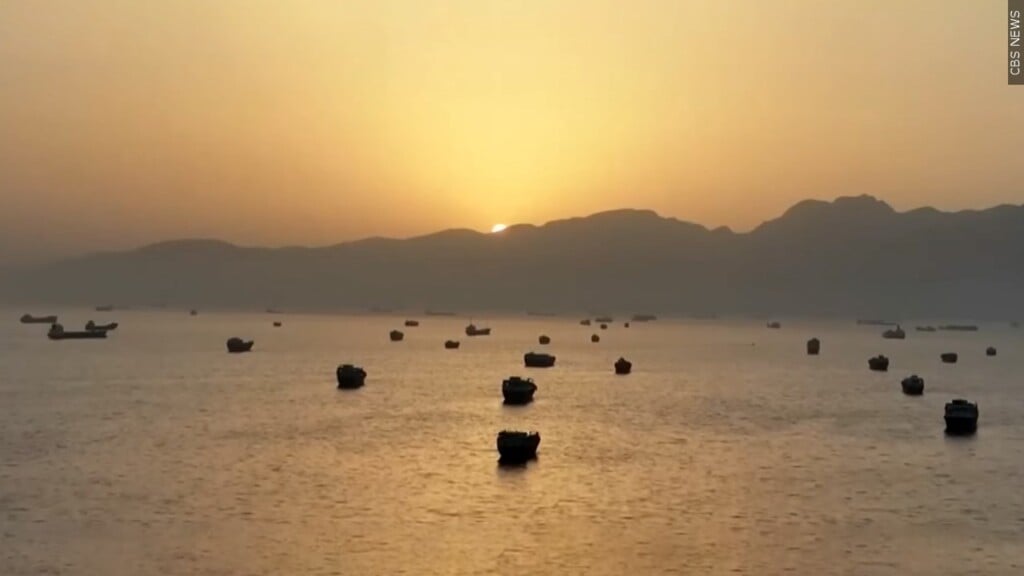
(ABC) — The largest global oil shock on record has catapulted U.S. gasoline prices above $4 a gallon, rekindled inflation and set the stage for November’s midterm elections.
It all traces to fighting in a narrow strip of water thousands of miles away. Iran’s near-closure of the Strait of Hormuz choked off a trade route responsible for about 20% of global oil supply, or nearly 21 million barrels of oil each day, according to the U.S. Energy Information Agency. A U.S. blockade of Iranian ships deepened the crude shortage.
On-again, off-again negotiations have shown little sign of a breakthrough, encouraging oil producers and Gulf nations to seek out other trade routes, some of which are already transporting millions of barrels each day.
Those alternatives, in theory, could eventually restore most of the lost oil flow and provide relief at the pump, some analysts told ABC News, but construction would take several years and require major investment. Still, they said, the approach may offer a durable fix, heading off future flareups in the Strait.
“You’ve already got some projects in the works. I don’t see any turning back,” Tom Seng, a professor of energy finance at Texas Christian University, told ABC News. “Nobody wants to get stung without a solution again.”
Shipping traffic in the Strait has declined sharply since the outbreak of war in Iran, according to oil data company Kpler. An average of about 13 ships crossed the Strait each day last week, the firm said in a post on X, down from more than 100 ships per day before the recent conflict.
The shortage of oil has kept fuel prices elevated. Global oil prices stand at about $89 a barrel, up about 25% since late February. The average price of a gallon of gas is $4.06, putting it well above an average of $2.98 before the war, AAA data showed.
U.S. Energy Secretary Chris Wright downplayed the oil shock in a post on X last week, saying alternatives had already helped replace much of the lost capacity, though he noted the majority of exported oil in the area continues to pass through the Strait.
“Thanks to the coordinated efforts of the U.S. military and our gulf allies, the seven-day average for oil leaving the Strait of Hormuz is currently up to almost 9 million barrels per day,” Wright said.
“When combined with the additional 5-7 million barrels per day leaving the region via newly upgraded pipelines and export facilities, total oil flows are currently averaging approximately 15 million barrels per day,” Wright added.
After the war began, Saudi Arabian oil giant Aramco came to depend on a pipeline that runs along the width of the country from the Persian Gulf to a port on the Red Sea. The pipeline carries as much as 7 million barrels of oil each day, about 5 million of which are exported, Aramco CEO Amin Nasser said in May.
Saudi Arabia is considering an expansion of the pipeline, potentially allowing it to deliver up to an additional 2 million barrels a day, Reuters reported last month.
The United Arab Emirates, meanwhile, has begun construction on a new pipeline that will run from the country’s oil fields to the port of Fujairah on the Gulf of Oman, circumventing the strait, the UAE announced in May. The project is expected to double the UAE’s exports through Fujairah to 3.6 million barrels a day by next year, according to the Washington, D.C.-based Institute for Energy Research.
Other projects are also in the works. Jordan and Iraq are partnering on a pipeline that could transport as much as 1 million barrels a day to a port in the Red Sea, a Jordanian state news agency said in June. Kuwait is holding discussions with Saudi Arabia and other countries about a possible pipeline to bypass the Strait, Kuwaiti Oil Minister Tariq Sulaiman Al-Roumi said earlier this month.
“There are viable pipeline paths,” Hugh Daigle, a professor at the University of Texas at Austin who studies petroleum, told ABC News. “It’s not impossible, but it’s a challenge of logistics.”
Pipeline construction typically takes a matter of years and requires significant investment, some analysts said. While underway, the infrastructure could be vulnerable to attack amid a war in which Iran has targeted regional energy sites, some added, saying it could put workers at risk.
It will take as many as five years to build the infrastructure necessary to replace most of the oil that passed through the Strait before the war, excluding millions of barrels from Iran and Oman, Ramanan Krishnamoorti, a professor of petroleum engineering at the University of Houston, told ABC News.
Expedited construction could take as little as two years, according to Seng and Daigle.
“Pipelines can work but it will take years,” Krishnamoorti added.
Even after the alternative routes have been completed, they could also prove vulnerable to attack by Iran or its proxy forces in the region, some analysts said.
The video player is currently playing an ad. You can skip the ad in 5 sec with a mouse or keyboard
In recent weeks, Iran-allied Houthi militants in Yemen claimed to have struck oil tankers traversing the Red Sea.
Lately, the Bab el-Mandeb Strait — a trade route that feeds into the Red Sea — has played host to more tanker traffic than the Strait of Hormuz, according to Kpler, which counted an average of about 40 ship crossings per day over a recent three-day period.
Trade routes such as the East-West pipeline in Saudi Arabia depend on export via tankers in the Red Sea, some analysts said, meaning any potential escalation of fighting in that area could shut off its viability as an alternative trade route.
“The wild card is the Houthis,” Seng said. “They could try to help the Iranians by disrupting any oil flow in the Red Sea.”
With little sign of an imminent resolution to the impasse in the Strait, the development of alternative trade routes is all but certain, some analysts said, noting that oil-rich countries in the region want to control the supply chain for their key export.
“Regardless of short-term political outcomes, the Gulf nations have strategic incentives to think hard about avoiding this situation in the future,” Jeff Colgan, a professor of political science and director of the Climate Solutions Lab at Brown University, told ABC News. “They want to make sure nobody else can put a boot on their neck.”