More than 60 North Carolina counties remain in drought
RALEIGH, NC (WWAY) — More than 60 North Carolina counties remain in some stage of drought despite recent rain bringing relief to parts of the mountains and coast.
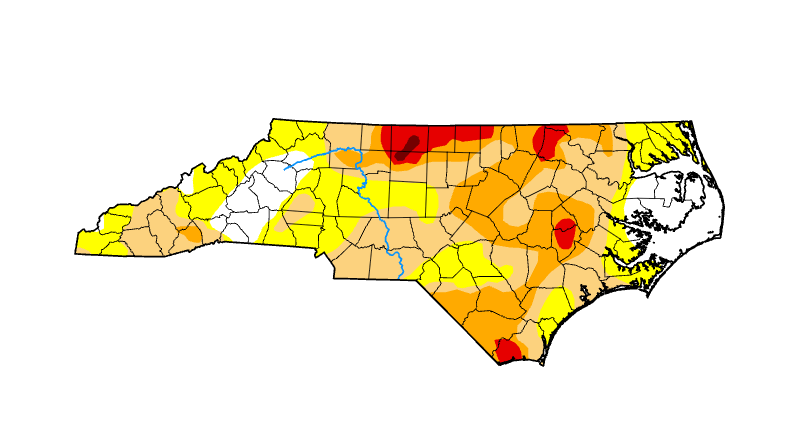
Sixty-two counties were experiencing drought conditions in the latest assessment, which covers conditions from Sept. 22 through Sept. 29, according to the North Carolina Drought Management Advisory Council.
Parts of Guilford and Rockingham counties remained in exceptional drought, the most severe category. Other areas of those counties, along with portions of Stokes, Caswell, Person and Granville counties, remained in extreme drought.
Conditions also worsened in parts of the Coastal Plain, where some areas received less than half of their normal rainfall during the week. Portions of Lenoir and Greene counties were classified as being in extreme drought.
“The nor’easter this week brought high tides and heavy wave action on the coast but brought less than a quarter inch of rain,” said Klaus Albertin, chairman of the North Carolina Drought Management Advisory Council and a water resources engineer with the N.C. Department of Environmental Quality.
Albertin said some coastal areas experienced their first- or second-driest September on record as the state saw limited tropical activity and a continued pattern of below-normal rainfall.
Heavy rain did provide some relief in Western North Carolina. Some areas received 2 to 4 inches, causing flash flooding in places. Officials said much of the heaviest rain fell in areas that were already drought-free, although above-average rainfall along the Blue Ridge foothills helped some drier areas.
Low water levels remain a concern elsewhere in the state.
Kerr Lake, which borders Vance, Granville and Warren counties, is nearly 11 feet below normal, according to state officials. It is the fifth-lowest level recorded at the lake. Hydropower generation at the John H. Kerr Dam and Reservoir was reduced by about 44% last week because of the low water level.
Water levels at Jordan Lake and Falls Lake also continue to decline, and more than half of streamflows across North Carolina were classified as below normal or much below normal.
Water systems in areas experiencing extreme or exceptional drought are advised to follow their water shortage response plans and implement water-use reduction measures.
Residents are encouraged to check with their local water providers for restrictions or conservation measures, which could include limits on lawn watering or washing vehicles.
Rain is forecasted for the weekend, including in the Cape Fear, which state drought officials said could bring some improvement to current conditions.