More than 65,000 ballots cast in Cape Fear as early voting tops 1.1 million statewide
WILMINGTON, NC (WWAY) — With Election Day less than two weeks away, voters across North Carolina and the Cape Fear region are heading to the polls in strong numbers, raising questions about how turnout could impact key races in the 2026 midterm elections.
According to the North Carolina State Board of Elections, more than 1.1 million ballots have already been cast statewide through absentee and in-person early voting since the process began last week. North Carolina has nearly 8 million registered voters.
In the WWAY coverage area, which includes Bladen, Brunswick, Columbus, New Hanover and Pender counties, more than 65,000 people have already cast their ballots.
Voters from both major political parties expressed enthusiasm on the first day of early voting.
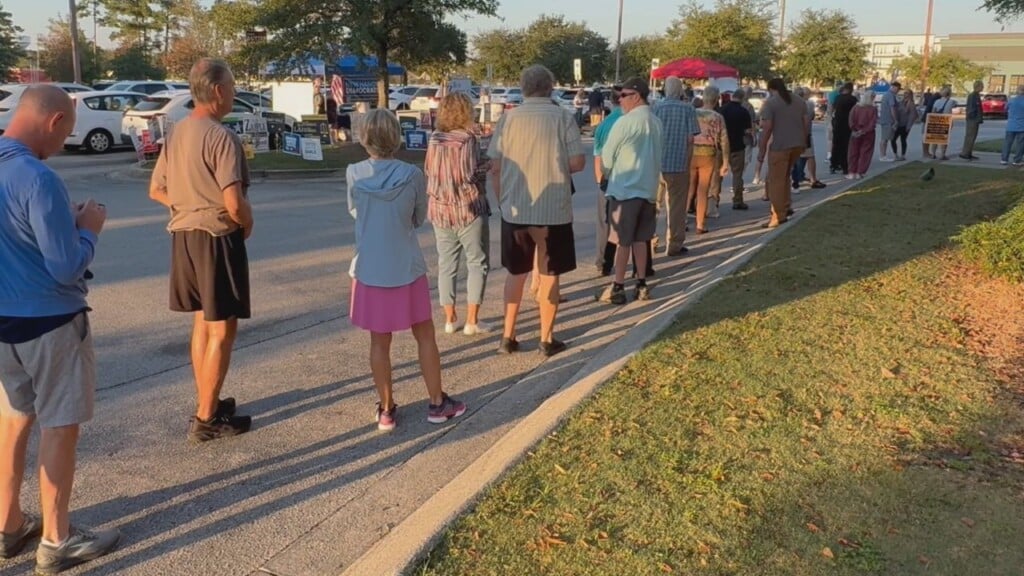
Democrat Brian James described seeing a large crowd before the polls even opened.
“I’d probably give it about a hundred people in line before the doors even opened, a pretty good turnout. Early voting is very important for us, it’s a good sign of what’s to come for the community.”
Republican Diane Krantz shared some of the issues motivating her to vote.
“You know my issues are that it’s so important to support the Trump agenda and to secure the border.”
James’ wife, Heather, said she was encouraged to see people participating in the election, regardless of political affiliation.
“No matter what party you are, you know, voting for, it’s good for you to come out and support who your candidates are and what your views are.”
Why voters are heading to the polls early
UNCW Associate Professor of Public and International Affairs Nadine Gibson said convenience and accessibility are among the factors driving early voting participation.
“Having everything happen all at once can be really inconvenient for some people, so having the ability to plan and find a time that is most convenient for them, those are the types of people who will gravitate to early voting. there are certain people, like, for example, someone who is disabled, right? It would make a lot of sense that they would want to vote early so that they wouldn’t have to maybe stand in a long line or they could go to an early voting location that has curbside voting.”
Gibson also pointed to economic concerns as a potential factor influencing voters, particularly those frustrated by high prices.
“The economy is always important. And especially when prices are feeling very high and people don’t feel like the economy is going in the right direction. It doesn’t bode well for the party in power.”
Local races could play a significant role
Several closely watched races in the Cape Fear could also be motivating voters to cast their ballots, including the contests between Michael Lee and Jessica Bichler, as well as Dane Scalise and Tim Merrick.
Gibson said the region’s changing demographics and competitive political landscape make these elections particularly important.
“So this is an area that really resembles what the state as a whole tends to look like politically. There’s changing demographics here, too. I think there’s a lot of attention and the elections here are contentious. And so going back to that calculus of voting, your vote does matter in Wilmington.”
National political figures push voter turnout
National political figures are also working to energize voters ahead of Election Day.
President Donald Trump visited Greenville this week, while Vice President JD Vance traveled to Hendersonville to campaign for Republican candidates.
Gibson said the impact of Trump’s visit might not become apparent until Election Day, noting that voting data suggests Republicans have traditionally been more likely to cast their ballots on Election Day rather than during early voting.
The outcome of the midterm elections could determine which party controls Congress.
How does turnout compare with previous elections?
While early voting numbers indicate strong interest, Gibson noted that midterm elections typically draw fewer voters than presidential elections.
North Carolina election data reflects that trend, with nearly 2 million more people voting in the 2024 presidential election than in the 2022 midterms.
Although more than 1.1 million ballots have already been cast statewide, it remains unclear whether this year’s overall turnout will approach presidential election levels.
With early voting continuing and Election Day approaching, the final turnout numbers will provide a clearer picture of voter participation across North Carolina and the Cape Fear region.