Cape Fear Chapters: Three-book series explores trauma, healing and the bond between people and rescue cats
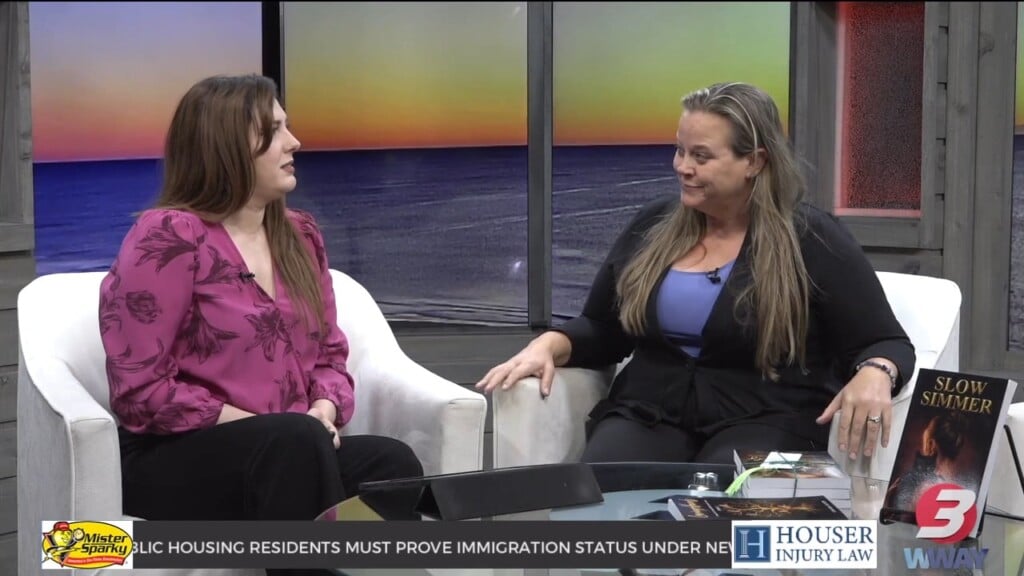
WILMINGTON, NC (WWAY) — Wilmington-based author Amanda Olsen is drawing from her personal experiences with childhood trauma to explore healing, trust and the bond between people and animals in a three-book fiction series.
Olsen joined WWAY’s Cape Fear Chapters to discuss her series, A Complex Post Traumatic Stress Disorder (C-PTSD) Journey, which includes Calming Melody, Slow Simmer and Loving Hands.
Each book follows characters affected by childhood abuse and explores how relationships with rescued cats can provide emotional support as they work toward recovery.
Olsen said her own experiences growing up in an abusive household and receiving trauma-informed therapy influenced the stories.
“I grew up in an abusive home, and so I’m a CPTSD survivor,” Olsen said.
Complex post-traumatic stress disorder, or C-PTSD, is associated with exposure to prolonged or repeated trauma. Olsen explained the condition by comparing it to living in a forest with a bear, never knowing when the animal might attack.
She said the comparison illustrates the uncertainty and fear that children can experience when growing up in abusive environments.
Olsen also discussed how trauma-informed therapy helped her recognize physical responses to stress and develop techniques to regulate them.
The first book, Calming Melody, follows a teenage girl named Melody who grows up in an abusive home and experiences symptoms associated with complex PTSD.
While volunteering at Loving Hands Cat Rescue, Melody meets Callie, a fragile gray kitten struggling to survive.
As Melody cares for Callie, the two develop a relationship that helps Melody begin addressing her own emotional wounds.
Olsen said the story focuses on learning to recognize stress responses and developing the ability to calm the body as part of the healing process.
The second book, Slow Simmer, follows Melody’s younger sister, Stef, who responds to childhood trauma differently.
While Melody often withdraws or freezes in stressful situations, Stef reacts through confrontation and avoidance.
Stef eventually forms a connection with Sunny, a rescued black cat who also struggles to trust others. Their relationship becomes a central part of Stef’s efforts to understand her emotions and build healthier connections.
The third book, Loving Hands, shifts the focus to Abby, the owner of the cat rescue who becomes the legal guardian of Melody and Stef.
The novel explores Abby’s efforts to provide a stable home for the sisters while learning about the effects of complex PTSD.
It also introduces C-PTSD MEOW, a fictional program that connects trauma survivors with trained rescue cats and explores ways to make specialized therapy more accessible.
During her interview, Olsen said much of her research came from her own experiences with trauma-informed therapy.
She described learning to identify physical signs of stress before addressing traumatic experiences in therapy.
Olsen said understanding those responses is an important part of the healing process and a theme she wanted to explore through her fictional characters.
The series also examines the role of faith, family relationships and community support in recovery.
While the books portray rescued animals as sources of comfort and emotional support, the stories are works of fiction and do not establish animal companionship as a substitute for professional mental health treatment.
Olsen said readers can find more information about her writing at AmandaOlsonBooks.com. The books are also listed for sale on Amazon.