Ancient ice shelf discovery by UNCW researchers offers clues about rising sea levels
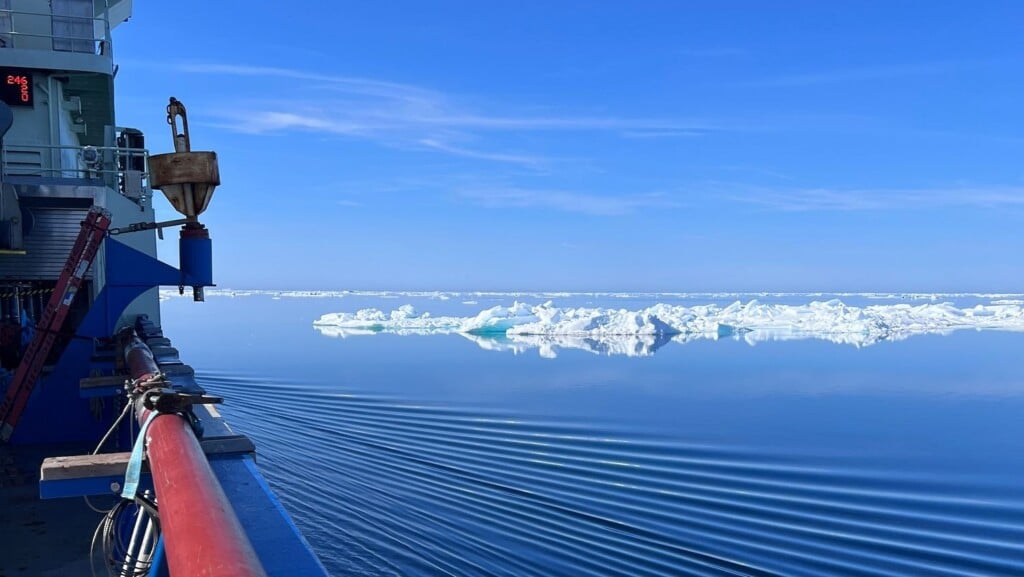
WILMINGTON, NC (WWAY) — Researchers at the University of North Carolina Wilmington have uncovered evidence of a massive ancient ice shelf that could provide new insight into how melting ice may affect future sea levels.
Shannon Klotsko, an associate professor in UNCW’s Department of Earth and Ocean Sciences, led a study published in the scientific journal Nature Geoscience examining an ice shelf that once covered much of Baffin Bay between Greenland and Canada.
Researchers estimate the ancient Baffin Bay Ice Shelf covered approximately 150,000 square kilometers, or about 58,000 square miles, during the last ice age.
The ice shelf was estimated to be between 1,400 and 2,100 meters thick, making it thicker than modern Antarctic ice shelves.
Using seafloor mapping data, researchers identified features along the continental slope that revealed how far the ice shelf extended and how deep it reached.
“We didn’t set out to find an ice shelf this thick when we embarked on the research cruise for our project, the Baffin Bay Deglacial Experiment, so finding these imprints of ice on the seafloor at such great depths was a huge surprise,” Klotsko said.
The findings suggest the ice shelf played a significant role in stabilizing three major ice sheets — the Laurentide, Innuitian and Greenland ice sheets — that converged in Baffin Bay during the last glacial period.
Researchers also found evidence that the ice shelf’s collapse contributed to the rapid retreat of surrounding ice sheets.
According to the study, the ancient ice shelf disappeared over a period of approximately 500 to 1,000 years.
Scientists say the findings could help improve understanding of how modern ice shelves in Antarctica influence the stability of ice sheets and global sea levels.
“Modern ice shelves help prevent Antarctic ice sheets from rapidly draining into the ocean, which would cause significant global sea level rise, so finding one of a similar size in the past that disappeared in 500–1,000 years is a bit scary when thinking about the future of our coasts,” Klotsko said.
The research was supported by a National Science Foundation grant and included UNCW doctoral student Erin Gregory.
Scientists from several other institutions also contributed, including the University of Florida, Columbia University, University of Colorado Boulder, Queen’s University Belfast, Oregon State University and the University of Washington.
The study, titled “The Baffin Bay Ice Shelf stabilized three adjacent ice sheets during the last glacial period,” was published in Nature Geoscience.
The full study is available here.