Election Day unfolds with relatively few problems. Some voters disrupted by weather, machine issues
WASHINGTON (AP) — The final day of voting in this year’s midterm elections arrived Tuesday against a backdrop of uncertainty after a year in which President Donald Trump has tried to interfere in how states run their elections and sown doubts about the outcome should Republicans lose.
Millions of Americans had already cast their ballots, with early voting turnout on pace to eclipse that of the last midterm elections. In contrast to the president’s continued rhetoric about election cheating, voting so far has unfolded with relatively few problems.
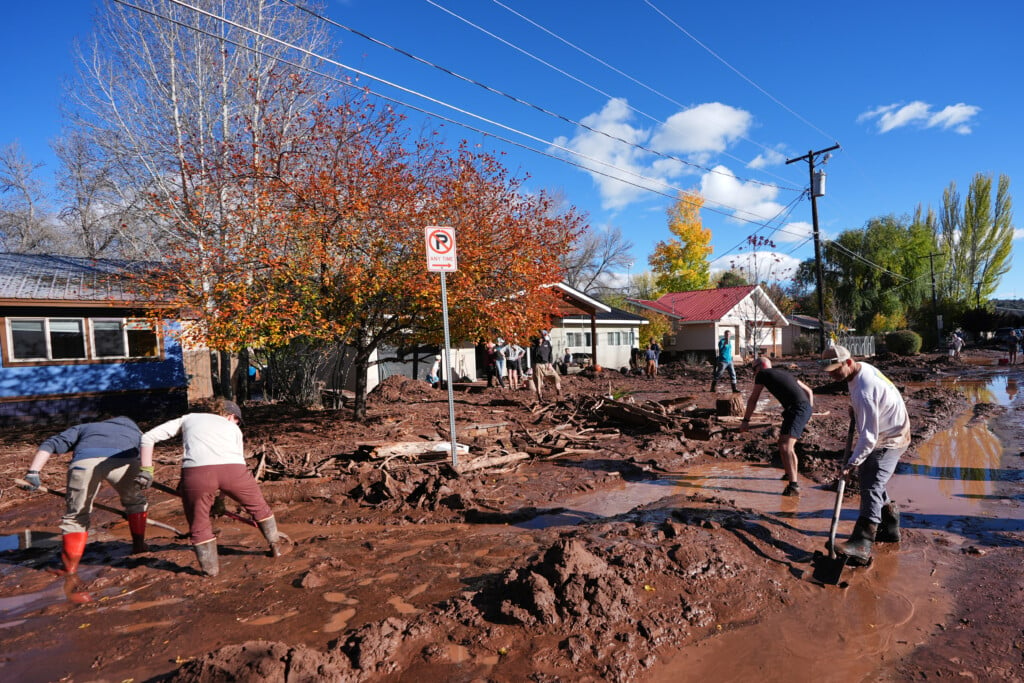
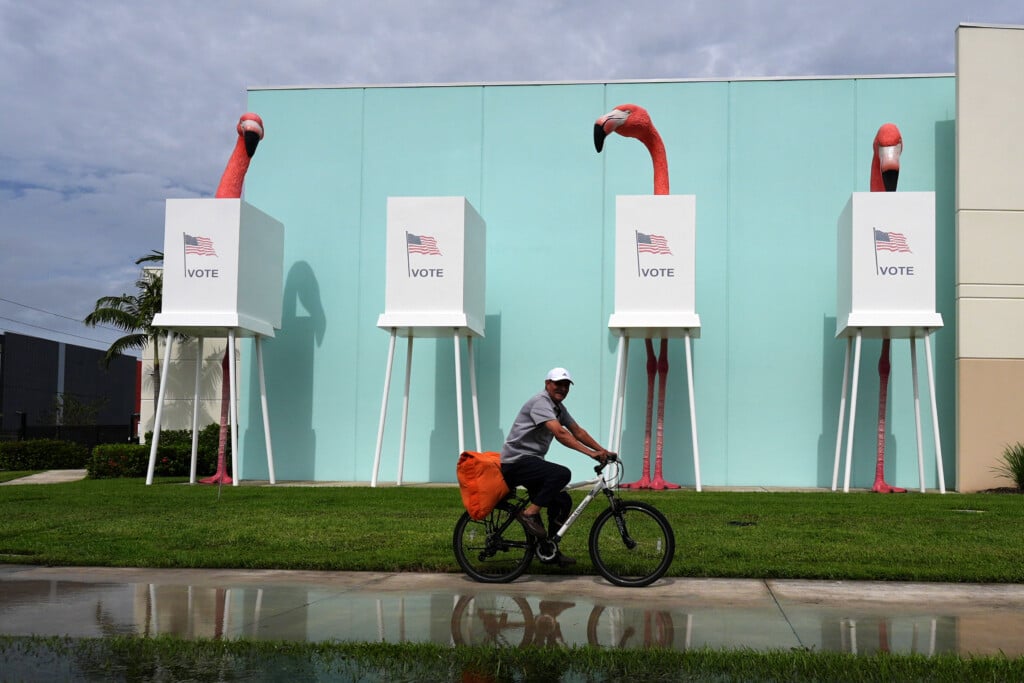
By afternoon on Election Day, the biggest issues affecting voting were weather-related, with flooding in Florida and parts of the Southwest prompting changes to polling locations and other emergency measures. A problem with ballot scanners also was delaying vote counting — though voting was able to continue — in New York’s suburban Westchester County, part of which is in a U.S. House district with a competitive race.
Trump has spent months trying to use the power of the presidency to put his thumb on the scale of this year’s elections, which will determine whether his party keeps control of Congress.
His Justice and Homeland Security departments have been involved in a massive hunt for voters who are not U.S. citizens, at one point engaging in a made-for-the-cameras predawn operation that led to more than two dozen arrests in California. The Department of Justice was making its largest-ever effort to monitor Election Day polling places across all 50 states, countered by an even larger effort among Democrats and allied groups, and at the president’s urging had sued to block certification of Alaska’s results if the outcome of the Senate race favored Democrats. A federal judge on Sunday dismissed that lawsuit.
At the same time, Trump’s constant false claims about widespread voter fraud led election officials and Democratic groups across the country to plan for the possibility of immigration agents at voting sites or federal officers seizing voting machines. U.S. Immigration and Customs Enforcement posted a warning on its X account Tuesday that pushed the administration’s narrative about noncitizen voting: “We will track you down, arrest you, and prosecute you,” the post read. “There will be no escape.”
The agency did not return a request for comment about the post. The Trump administration has insisted that no armed federal officials would guard the polls, and on Tuesday, none of the steps Democrats most feared had yet come to pass.
Westchester County ballot scanner issue is delaying tabulation, but voting continues
Voting on Tuesday has had few disruptions so far. Hannah Fried, CEO of the voting rights group All Voting Is Local, said the issues she’s seen are “garden-variety stuff that any of us who works on elections is used to seeing, and it’s quickly resolved.”
David Becker, executive director of the Center for Election Innovation and Research, said it was “remarkable” to have so few issues, and suggested the massive early voting turnout may have contributed to a smoother Election Day.
In Westchester County, election officials said ballot scanners were not accepting paper ballots, an issue that resulted from a program update made after polling equipment was initially prepared and tested. That required the ballots to be placed in emergency bags for later counting. Officials stressed that the ballots would remain secure and monitored and that voters could continue casting ballots while they worked to resolve the issue.
One resident, registered Democrat Benjamin Hort, said he opted not to cast a provisional ballot Tuesday and planned to come back later in the day, when he hoped the machines would be operational.
“I’ll wait as long as I have to,” Hort said. “You would think they would have tested the machines. Not ideal.”
Westchester County Executive Ken Jenkins vowed to launch a bipartisan investigation into what he called a “debacle.”
At polling locations across Florida’s Broward County, voting was delayed for 20 minutes after polls opened because a new voting system safety feature malfunctioned. Supervisor of Elections Joe Scott apologized to voters who had to wait and said some left before they were able to vote. The problem was solved by 7:20 a.m., and Scott encouraged those who left to return.
Officials also extended voting hours at three polling sites in Pennsylvania and five in North Carolina after technical issues created delays.
Weather disrupts voting in the Southwest and Florida
Heavy rains and flash flooding in a swath of the Southwest were making it harder for some voters to reach polling places in parts of Colorado, Arizona, Utah and New Mexico. Election administrators in the Navajo Nation announced several polling location changes, and in Utah’s rural San Juan County, voters were allowed to vote electronically on Tuesday to account for difficulty getting to the polls.
Flooding in eight Florida counties also prompted some last-minute polling location changes in the state. Nancy Zhmendak, a registered Democrat from Riviera Beach, said she typically votes at her neighborhood clubhouse, but her voting location changed when her development flooded.
“Everybody’s on Nextdoor and they’re saying, ‘how do we get out of here? How can we go vote if we can’t even get out of here?'” she said. “There’s a lot of water in there, but it’s better than it was.”
Election administrators and voting rights advocates had advised voters casting late absentee ballots to use drop boxes or deliver them to polling places in person, noting that recent changes in U.S. Postal Service operations could result in postmarking delays.
Courts have blocked the Trump administration’s efforts to influence elections
The Republican administration’s legal maneuvers have been largely blocked by the courts.
One of its most high-profile attempts to interfere in state elections was turned away Monday night by the U.S. Supreme Court, which rejected its push to force California to set aside thousands of ballots as part of its search for noncitizen voters. In another Monday night ruling, a federal judge said the administration must stop sending voter lists of alleged noncitizens to election officials.
On Tuesday, though, the Justice Department scored a small victory when the 9th U.S. Circuit Court of Appeals paused a lower court’s ruling that had barred it from intimidating election officials involved in processing disputed ballots in California. Its practical impact was limited because rulings from other courts that are still in effect have blocked similar behavior.
Even the administration’s own record of arrests and charges has demonstrated what research and state investigations have made clear — that instances of noncitizens casting ballots are extremely rare.
The president faced another defeat in the Supreme Court less than two months ago, when it rejected his attempt to limit mail balloting through changes at the Postal Service. That directive was included in one of two executive orders Trump has signed during his second term that attempted to federalize certain aspects of elections, even though the Constitution gives states the authority to set election rules.
Trump hasn’t committed to accepting the election results
Voting rights groups, Democrats and the Justice Department have been exchanging a flurry of legal filings over election processes — court battles that may extend past Election Day into counting and certification of the results.
Election law experts said the administration’s legal arguments were unlikely to convince judges.
Trump also has ramped up his own equivocations about whether the election will be legitimate, as he has in the past. A week before Election Day, he wouldn’t commit to accepting the results.
“I will if they are honest,” he said.