Federal appeals court to hear arguments in case on access to mail-order abortion pill mifepristone
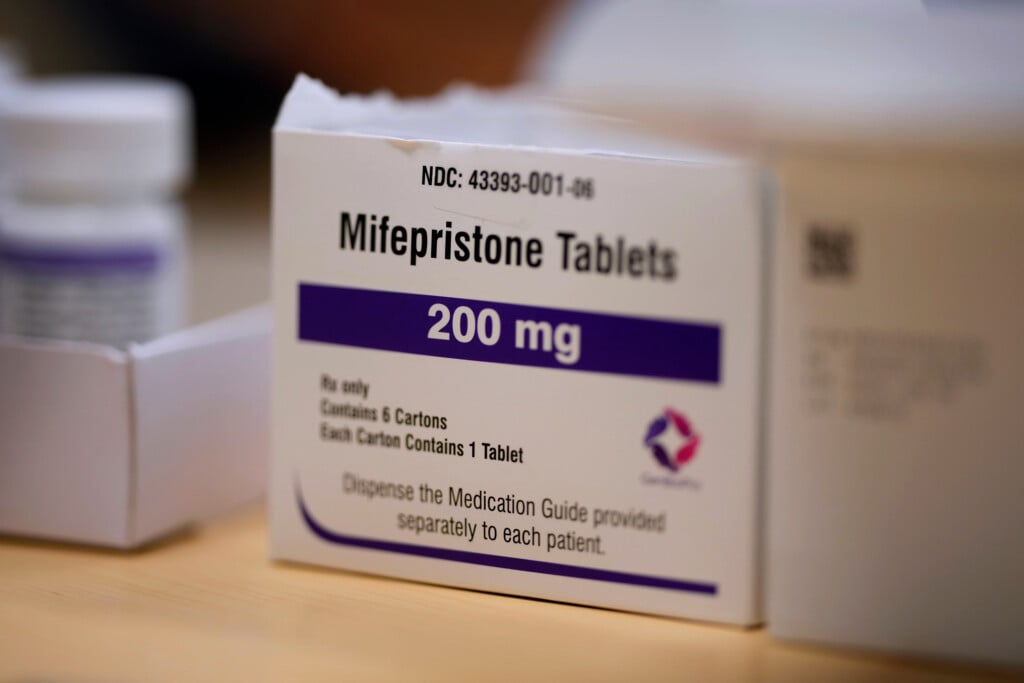
(ABC) — A federal appeals court in Louisiana could decide whether patients in the U.S. can continue to access the abortion drug mifepristone by mail and at pharmacies.
The U.S. 5th Circuit Court of Appeals in New Orleans will hear oral arguments on Wednesday as Louisiana attempts to roll back a Biden-era policy around the way mifepristone is dispensed.
In January 2023, the Food and Drug Administration (FDA) announced it was permanently lifting its restriction that mifepristone had to be dispensed in person, allowing certified retail and mail-order pharmacies to dispense the medication as well.
Louisiana, however, has argued that government regulators acted arbitrarily without proper consideration of health risks. The state has also argued the rule change violated the 2022 Dobbs v. Jackson decision that overturned Roe v. Wade by allowing abortion pills to be administered by telehealth and by mail in states with abortion bans, including Louisiana.
The 5th Circuit Court of Appeals ruled in favor of the state in May, barring dispensation of mifepristone by telehealth providers and by pharmacies or mail, but the Supreme Court preserved access to the pill, keeping the lower court’s order on hold.
Abortion rights groups have argued that reinstating an in-person requirement would create a barrier for pregnant patients, many of whom live far from a clinic.
“This case isn’t just about Louisiana — it could make it much harder to get abortion pills in every state, from New York to California,” Nancy Northup, president and CEO of the Center for Reproductive Rights, said in a statement. “Abortion pills and telehealth have been a game-changer for women since Roe v. Wade was overturned, and that is exactly why the anti-abortion movement is going after them.”
She went on, “This is not simply about convenience — for many people, telehealth could be the difference between getting an abortion and not. Whether a doctor sends it to you via mail or hands it to you in their office, mifepristone is safe and effective. There is no scientific reason to restrict it.”
The court date comes two years after the Supreme Court unanimously rejected a similar legal challenge to mifepristone, concluding that the doctors and anti-abortion groups who sued over the drug did not have standing.
Mifepristone is a drug typically used in combination with another drug, misoprostol, to induce an abortion or to help manage an early miscarriage.
The medication works by blocking progesterone, a hormone that the body needs to continue a pregnancy.
This causes the uterine lining to stop thickening and to break down, detaching the embryo. The second drug, misoprostol, taken 24 to 48 hours later, causes the uterus to contract and dilates the cervix, which will expel the embryo.
The FDA authorized mifepristone for medication abortion in September 2000 for up to seven weeks’ gestation, which was then extended to 10 weeks’ gestation in 2016.
However, the World Health Organization says the two drug-regimen can be taken up until the 12-week mark of pregnancy.
Medication abortion now accounts for more than 60% of all abortions in the U.S., according to the Guttmacher Institute.
In states with total bans, about 91,000 abortions were provided last year via telehealth, the Guttmacher Institute said.