New battery aims to prevent some child deaths. Is it the solution?
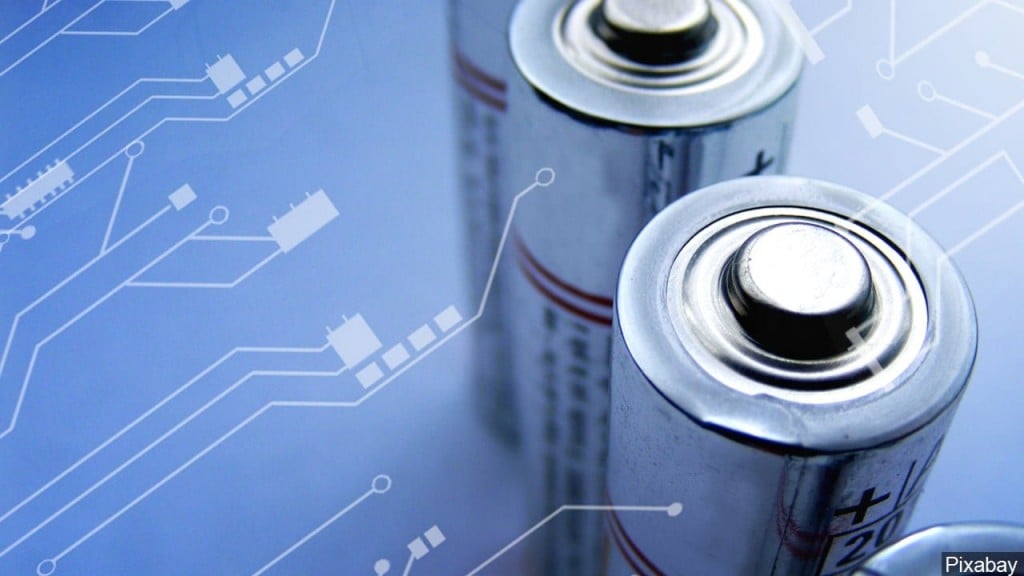
(ABC) — Energizer is launching a new coin lithium battery that the company says can potentially prevent child injuries and deaths if a battery is accidentally swallowed or ingested.
Energizer says their new Ultimate Child Shield 20 mm coin lithium batteries, launching Wednesday and available where specialty batteries are sold, are the first of its kind and made from a proprietary titanium alloy material, instead of the usual stainless steel material found in similar batteries.
Coin lithium batteries are used in a wide variety of household products like electronic devices, jewelry, remote controls, toys and watches.
According to Energizer, the material change makes it so that if a battery were to be swallowed, it would not cause burning of the digestive tract, a common injury that arises in ingestion incidents with coin or “button” batteries. Energizer said independent testing and verification back up their claims but ABC News has not verified those claims.
The new battery, available in sizes 2032, 2025 and 2016, replaces Energizer’s 3in1 Child Shield batteries released last year, which the battery maker said it is discontinuing.
Doctors say this new battery is promising to help prevent some health problems if accidentally ingested but can still cause severe health problems that include choking or obstructing the digestive tract and is still not considered a “safe” product for children to ingest.
Annually, there are over 3,500 people in the U.S., including children, who swallow button or coin-sized batteries, according to the National Capital Poison Center. It also estimates that between 3,000 to 8,000 people around the world suffer from coin battery-related injury complications each year, and these complications can be deadly.
The new coin battery also comes in child-resistant packaging as mandated by law, has a nontoxic food dye that turns blue when a battery comes into contact with saliva and also has a bitter-tasting coating that may help deter swallowing, according to Energizer. The company said it has been working on the technology behind the new battery for over a decade.
The new battery is one that mom Trista Hamsmith said she believes could protect kids like her late daughter, Reese, who was 18 months old when she died following a button battery ingestion six years ago. Hamsmith is now working with Energizer to promote the new battery, but isn’t a paid spokesperson for the company.
“We’re always gonna have batteries. That’s just life,” Hamsmith told ABC News. “But what we can do is continue to look forward in making these products as safe as possible and that’s where companies like Energizer, they’re always looking for what’s the next step.”
Dr. Jade Cobern, a pediatrician board-certified in pediatrics and preventive medicine and a fellow of the ABC News Medical Unit, called the new battery “a step in the right direction” but cautioned that the only way to fully prevent battery injuries and deaths is to keep batteries out of the hands of children.
“What is most paramount really is preventing accidental ingestions. [A battery] is not a safe product for a child to ingest,” Cobern said. “It is not meant to go inside the mouth, nose, ears, or really anywhere but the thing that it’s powering.”
How to prevent button battery injuries
Children can pick up small objects like button batteries very quickly, so Cobern said it’s important to look for and keep them out of reach from children.
“If it’s not inside the object that it’s powering, it should be locked away,” Cobern said. “It should not be next to things that kids are going to readily grab. It shouldn’t be in a drawer with pencils and crayons.”
Another key prevention strategy, according to Cobern, is to discuss the dangers of small batteries with children.
What to do if button battery ingestion occurs
When a button battery ingestion is suspected, Cobern said it should be treated as an emergency and a child should be seen by a medical provider immediately.
The first step is to get the child to a hospital or doctor’s office quickly.
Children over the age of one can also be given honey, if they are able to swallow, to help coat the esophagus, but this should not delay seeking care. Children should not be given other forms of food or drink if this type of ingestion is suspected until they are evaluated by a healthcare provider, according to Cobern.
The National Capital Poison Center offers further guidelines and treatment options available on how to respond in the event of a suspected button battery ingestion.
If you are not sure what to do, you can call the National Battery Ingestion Hotline at 1-800-498-8666, call poison control at 1-800-222-1222, or visit https://triage.webpoisoncontrol.org/ to speak to an expert.