Rare fish discovered in NC river for first time, signaling progress in restoration efforts
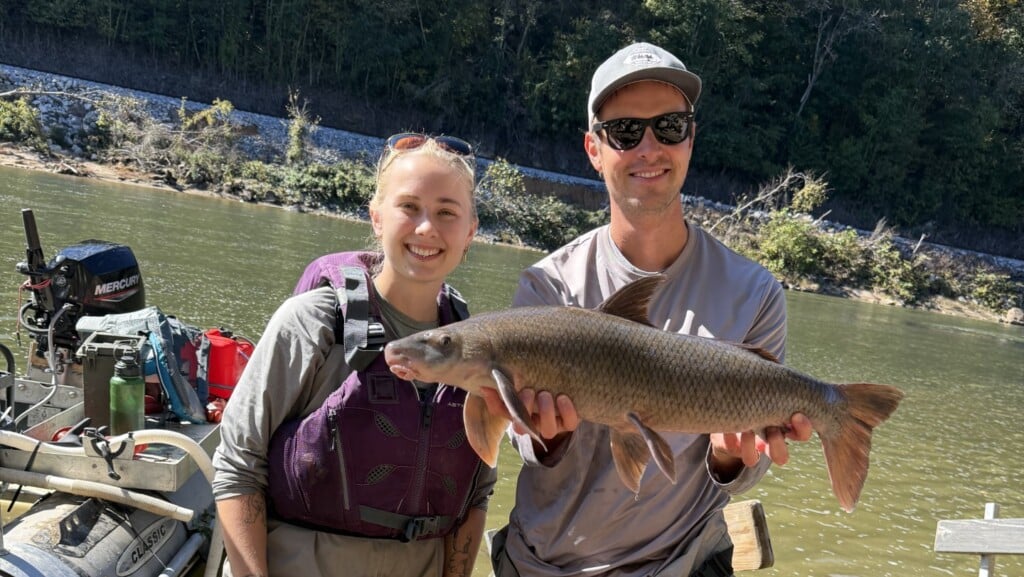
HOT SPRINGS, NC (WWAY) — A rare fish discovery in western North Carolina is providing new insight into the recovery of the French Broad River after decades of industrial pollution and damage from Hurricane Helene.
Biologists with the North Carolina Wildlife Resources Commission discovered a 29-inch male blue sucker in the French Broad River near Hot Springs on Oct. 21.
According to the commission, it marks the first recorded discovery of the species in the river.
“This giant sucker fish species can live longer than 100 years and can reach sizes up to 40 inches,” said fisheries biologist Luke Etchison. “They prefer deep and swift water which now makes the French Broad River an ideal home for this species.”
The discovery comes as state wildlife officials continue efforts to restore fish populations in the French Broad River watershed.
The river once supported more than 76 fish species, but industrial pollution and the construction of dams contributed to a significant decline in biodiversity over the past century.
By the 1960s, a section of the river between Brevard and Hendersonville had become so depleted of oxygen that it could no longer support aquatic life.
Water quality began improving following the passage of the Clean Water Act in 1972 and the closure of several manufacturing plants along the river.
In 2022, the Wildlife Resources Commission began relocating certain fish species from below three dams on the river to areas upstream where they had not been recorded for more than a century.
Those species include the tangerine darter, gizzard shad, freshwater drum, black buffalo, smallmouth buffalo and smallmouth redhorse.
Biologists say the newly discovered blue sucker could be another indication of improving river conditions.
“Blue suckers are what we call an indicator species,” Etchison said. “When suckers are found, it suggests we have good water quality. It’s also a sign that the French Broad River is recovering from Hurricane Helene devastation.”
The discovery also has implications for other aquatic species.
Researchers from Appalachian State University and the Wildlife Resources Commission recently found that several sucker species can serve as hosts for the federally endangered Appalachian elktoe mussel.
The mussel’s larvae temporarily attach to fish gills before dropping off in another location, allowing the species to spread through river systems.
Healthy mussel populations can also contribute to water quality by filtering suspended particles from the water.
Fisheries biologist Dylan Owensby, who was aboard the boat when the blue sucker was caught, described the discovery as unexpected.
“My first reaction was confusion for a second and then after realizing what it was, I was shocked and in a little bit of disbelief,” Owensby said. “I knew that there were no records of it in North Carolina, so it definitely felt special.”
Wildlife officials believe blue suckers may be expanding into the French Broad River from rivers in Tennessee as water quality improves.
Biologists have also documented six other fish species that were previously unknown or had disappeared from the watershed, including the snubnose darter, white bass, brook silverside, stonecat madtom, mountain madtom and American brook lamprey.
The Wildlife Resources Commission continues to monitor fish populations and evaluate the success of its reintroduction efforts.
Officials are also studying how dams affect fish migration, particularly during spring spawning when sucker species travel upstream and transport nutrients into smaller waterways.
“The French Broad River Watershed is identified as a priority watershed in our Wildlife Action Plan,” Etchison said. “We are hopeful that our reintroduction efforts and future dam removals will restore these important sucker migrations to the upper French Broad River and uplift the entire French Broad ecosystem.”
The commission is working with Clemson University and the U.S. Forest Service to track sucker populations and study their recovery following Hurricane Helene.