Western Brunswick County remains in exceptional drought despite recent rain
RALEIGH, NC (WWAY) — Recent rainfall has improved drought conditions across much of North Carolina, but some areas remain in severe to exceptional drought, according to the latest U.S. Drought Monitor.
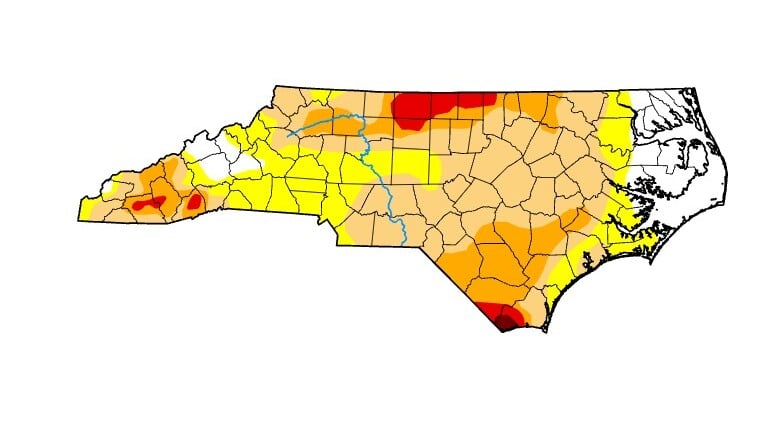
Western Brunswick County continues to experience exceptional drought, the most severe drought category. Officials say many reservoirs and groundwater levels remain below normal and are encouraging residents to continue conserving water.
The latest drought map, released Thursday and covering conditions from Aug. 4 through Aug. 11, shows some areas making significant progress after recent rainfall.
Parts of the Foothills and southwestern Piedmont received at least 2 inches of rain last week, moving those areas out of the official drought designation and into the “abnormally dry” category.
Heavy rain also improved conditions across parts of the southern Coastal Plain, where soil moisture and stream flows have returned closer to normal levels.
“Overall, the past two weeks are a sign that even normal summertime rain showers are having a positive impact in keeping water levels from dropping and alleviating some of the drought’s ongoing impacts,” said Corey Davis, assistant state climatologist at the NC State Climate Office and a member of the North Carolina Drought Management Advisory Council.
Charlotte, Salisbury, Hickory and Morganton are now officially out of drought. Officials said repeated rainfall this summer has helped saturate soils, recharge streams and refill reservoirs in those areas.
However, drought remains a concern in several parts of the state.
Parts of Guilford, Rockingham, Caswell, Person and Granville counties in central North Carolina, along with portions of Macon, Jackson and Transylvania counties in the west, remain in extreme drought. Part of Columbus County is also classified as being in extreme drought.
Some reservoirs also remain below average following a year-long period of dry conditions. Falls Lake is nearly 2.7 feet below normal, while Lake Michie is down about 6.5 feet and Little River Reservoir is about 12.1 feet below normal.
Kerr Lake is approximately 6.2 feet below normal, while several lakes in western North Carolina and the Catawba basin also remain below target levels.
Officials are urging residents in areas experiencing exceptional or extreme drought to follow local water-use restrictions and conservation measures.
Residents should check with their local water systems for restrictions involving activities such as lawn watering and car washing.
Water conservation tips
Officials recommend residents:
- Check their local water system’s conservation status and follow any restrictions.
- Limit outdoor watering to before 10 a.m. to reduce evaporation.
- Fix leaking faucets and toilets.
- Run dishwashers and washing machines only when they are full.
- Use a broom instead of a hose to clean sidewalks and driveways.
- Consider delaying car washing until drought conditions improve.
- Residents with private wells should watch for signs of low water levels, including muddy tap water or a pump cycling when no water is being used.
Officials say recent rainfall is helping, but longer-term rainfall deficits mean some parts of North Carolina still have a long way to go before drought conditions fully ease.