Daylight saving time 2026: When to ‘spring forward’ and more
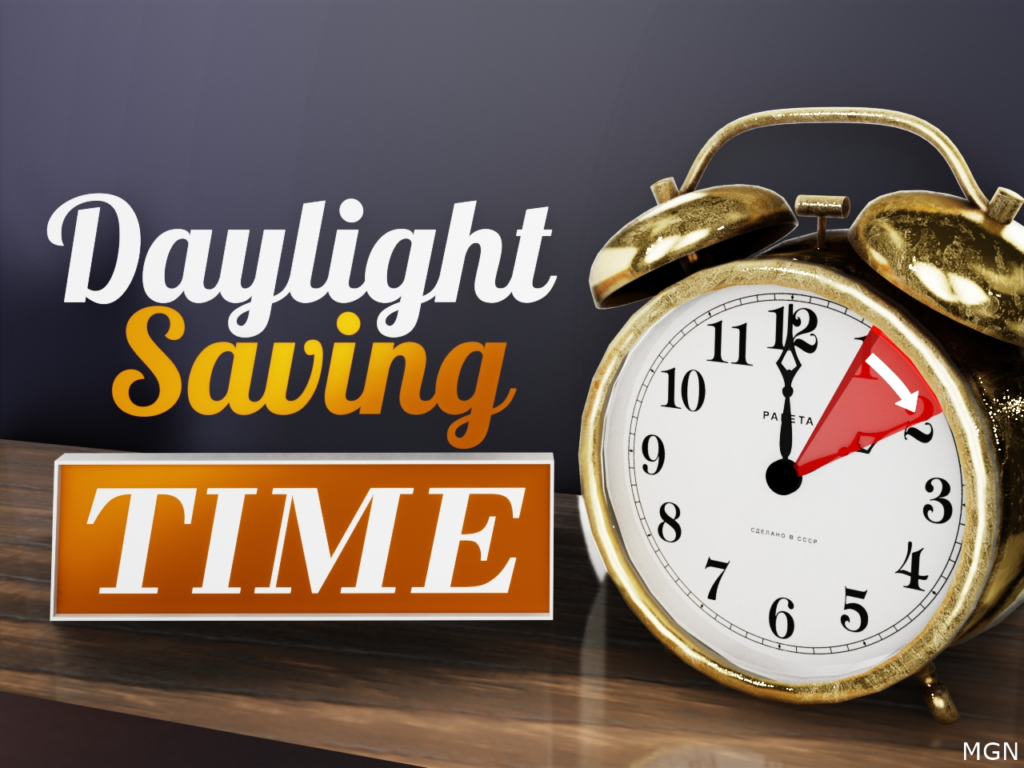
(ABC) –Get ready to “spring forward!”
It’s almost time for the advent of daylight saving time, the annual practice of adjusting clocks forward by one hour to take advantage of more sunlight and daylight hours.
With daylight saving time a week away, here’s everything to know about the clock change this year.
Is it daylight saving time or daylight savings time?
Although often referred to as daylight savings time, the correct term for the clock change is daylight saving time.
Daylight saving time is set by federal law and marks the difference from standard time.
When does daylight saving time start in 2026?
Daylight saving time, where clocks are turned one hour ahead, is meant to save energy and capitalize on more sunlight during the day and has been in place for over 100 years. The practice began after the Standard Time Act was passed and went into effect back in March 1918, as the Library of Congress notes.
Since 2007, daylight saving time has been observed in the United States on the second Sunday in March.
Daylight saving time will start this spring on March 8 at 2 a.m. local time and run until Nov. 1, according to the U.S. Naval Observatory.
Do we gain or lose an hour of sleep when we ‘spring forward’?
When daylight saving time begins in the spring, one loses an hour of sleep as the clock changes from 2 a.m. local time to 3 a.m. local time.
What states do not follow daylight saving time changes?
Most states, the District of Columbia, and the Navajo Nation observe daylight saving time except for Arizona (apart from the Navajo Nation), Hawaii, and U.S. territories, including American Samoa, Guam, Northern Mariana Islands, Puerto Rico and the U.S. Virgin Islands.
Is the U.S. going to permanently end daylight saving time?
There have been several proposals and ongoing debates arguing for an adjustment or end to daylight saving time, such as the recent H.R. 7378, the Daylight Act of 2026, which calls for modifying clocks by only half an hour.
As the debate continues, the annual practice of changing the clocks will continue for the foreseeable future.
Daylight saving time and health impact
Because daylight saving time often translates to less sleep for a brief period, the annual change can impact a person’s health.
“Small changes in sleep, even small decreases, can detrimentally affect your health, increasing stress hormones,” ABC News medical correspondent Dr. Darien Sutton explained on “Good Morning America” in 2025. “That increases our risk of heart attacks and strokes, principally among women and older adults in the first two days after this shift change.”
To minimize the effects of daylight saving time on one’s health, Sutton recommends making a few adjustments, which include modifying one’s bedtime 15 to 20 minutes earlier than usual, maintaining sleep consistently over time, and avoiding alcohol.
“Shifting your bedtime earlier is really important, especially for the first week,” Sutton said.
Sutton also recommended aiming to get at least 15 minutes of natural light after waking up and trying to get a walk in to stabilize one’s circadian rhythm.