Downtown Wilmington incident sparks investigation and questions about police response to moving vehicles
WILMINGTON, NC (WWAY) — The State Bureau of Investigation is investigating a shooting that occurred in Downtown Wilmington early Sunday morning.
The Market Street Parking Garage re-opened Monday after the top three levels were shut down after Sunday morning’s shooting.
Around 3:15 Sunday morning, Wilmington Police officers heard gunshots coming from the nearby parking deck and found a man inside the deck who had been shot.
According to WPD, a witness pointed them to several people sitting in a nearby vehicle, and after they were taken into custody, a man inside another car refused to get out and drove towards the officers, barely missing them and hitting a parked car.
Officers then fired shots at the oncoming car, hitting the driver, who was pronounced dead at the scene.
Blayne Tart was dining at “Slice of Life” and says the incident caught him by surprise.
“All you hear is two shots go off. Everyone is sitting there, we all look around, and then you hear it just start flooding with shots. We all ran, it was crazy, it was real wild,” says Tart.
The driver has now been identified as Edilberto Espinoza Sierra.
A man with the same name shared a social media post saying, “I didn’t expect your death, my son.”
The New Hanover County Sheriff’s Office says it would not comment on policies involving oncoming vehicles, and the Wilmington Police Department says it is too soon in relation to the shooting to discuss.
How do other police departments deal with this scenario?
On January 7th, Minneapolis bystanders captured the fatal shooting of driver Renne Good as she moved in the direction of immigration officers.
In cases involving moving vehicles and the use of force, law enforcement agencies are guided by three factors in a Supreme Court ruling, Graham v. Connor.
It names three factors: What was the severity of the crime the officer believed the suspect to have committed or to be committing?
Did the suspect present an immediate threat to the safety of officers or the public?
Was the suspect actively resisting arrest or attempting to escape?
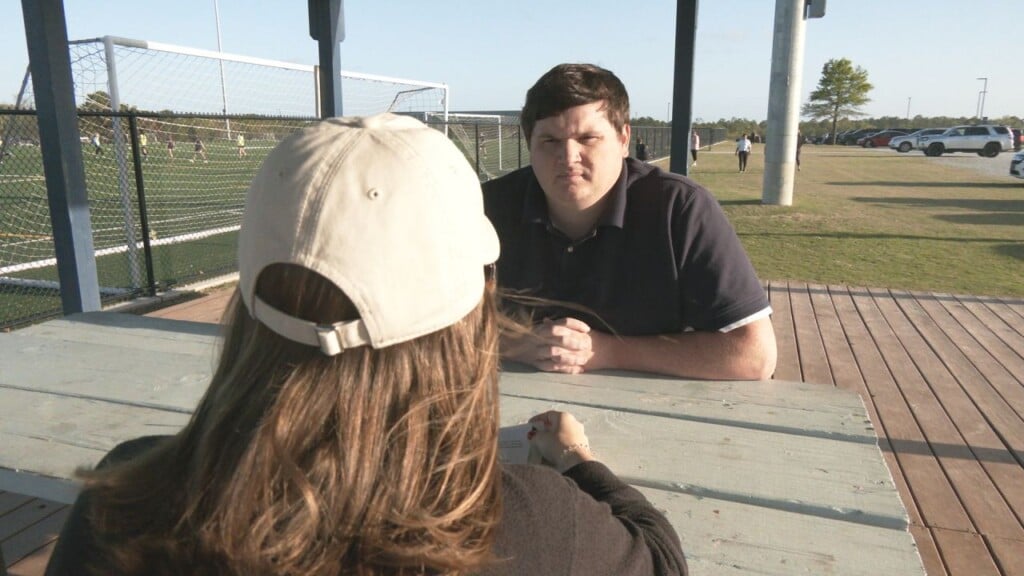
Laura Scarry is an attorney who represents law enforcement.
She says officers’ actions are judged on the Constitution’s Fourth Amendment concept of “objective reasonableness.”
“It establishes that we will look at an officer’s use of force under the totality of the circumstances, and from the perspective of a reasonable officer on the scene, rather than with 20/20 hindsight,” says Scarry.
Scarry adds that a big question in police training is determining whether a car is threatening the officer or fleeing the scene.
In training, factors include reaction time, tunnel vision, perceptual distortion, and automatic responses under stress.