Labor commissioner discusses minimum wage, Wilmington job market and worker protections
WILMINGTON, NC (WWAY) — North Carolina Labor Commissioner Luke Farley is pushing back against a national study that ranked the state last for workers, while announcing plans to introduce new labor protections and highlighting record wage recoveries across the state.
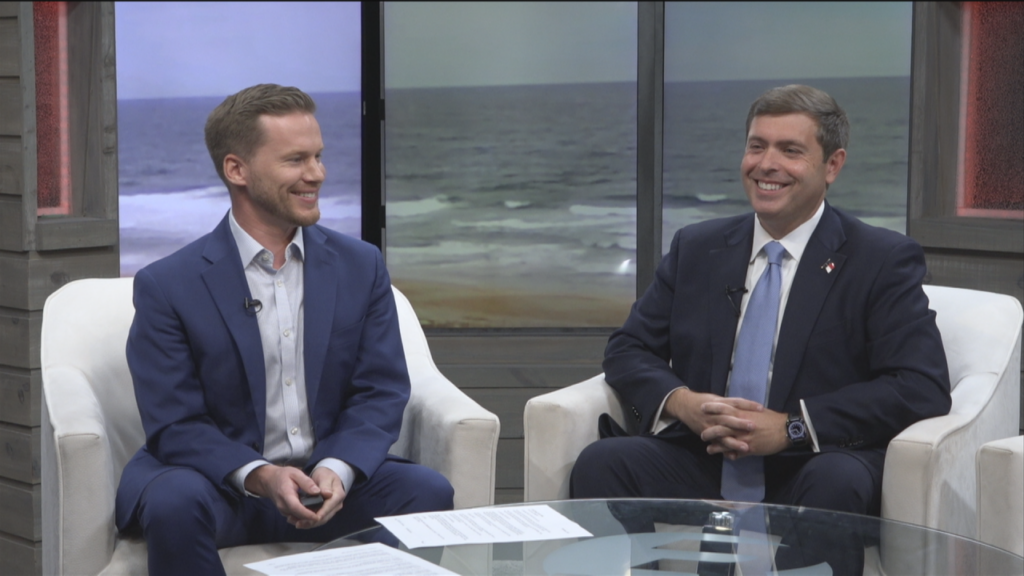
During an interview with WWAY on Friday, Farley addressed several issues affecting North Carolina workers, including wages, job opportunities, workplace safety, and recent paycheck delays at Novant Health.
North Carolina’s worker protections
A recent study by Oxfam, a global anti-poverty organization, ranked North Carolina last among all 50 states, Washington, D.C., and Puerto Rico in its 2026 Best States to Work Index.
The report evaluated state policies involving wages, worker protections, and the right to organize.
Farley acknowledged that improvements are needed and revealed plans to pursue additional protections during the upcoming legislative session.
“There’s always more we can do to improve the working conditions for workers in this state,” Farley said. “I am absolutely committed to making sure we have fair labor standards in this state, and so in the new General Assembly legislative session that starts in January, we’re gonna be rolling out a new package of fair labor standards and worker protections.”
However, Farley disputed the study’s conclusions, pointing to North Carolina’s population growth as evidence of the state’s appeal to workers.
“People chose here to live and move, and I think the reason is because they believe it’s a good place to work, to raise a family, and to be prosperous,” Farley said.
He argued that the state’s growth and economic opportunities paint a different picture than the Oxfam report.
Wilmington’s growing population and job market
Farley also addressed concerns about whether job opportunities in the Wilmington area are keeping pace with the region’s rapid population growth.
He said North Carolina has experienced significant job creation, pointing to what he described as a record year for new jobs announced statewide.
“More jobs, new jobs were announced in North Carolina last year than any year in our history,” Farley said.
He emphasized the importance of workforce training and education, particularly through the state’s community college system, to prepare residents for available opportunities.
Farley also addressed North Carolina’s minimum wage, which remains at the federal minimum of $7.25 per hour.
Asked whether the minimum wage should increase, Farley did not directly endorse raising it. Instead, he argued that stronger job markets and competition for employees are the most effective ways to increase wages.
“As labor commissioner, I wanna know what is the absolute most workers can get paid in this state?” Farley said. “And the way you drive up wages is to create a hot job market.”
He added that workers have greater negotiating power when employers are competing to hire them.
Record recovery of unpaid wages
The North Carolina Department of Labor recovered a record $3.7 million in unpaid wages during the most recent fiscal year, surpassing the previous year’s record of $2.5 million.
According to figures provided by Farley’s office, approximately $78,000 was recovered for workers in New Hanover County and $18,000 in Brunswick County.
Farley said the department recovered an average of approximately $1,600 per worker.
“Prices are too high. The cost of living is high, and so workers can’t afford to be shorted the wages that they’ve earned,” Farley said.
He credited the recoveries to a renewed emphasis on enforcing wage laws and holding employers accountable.
Novant Health paycheck delays
Farley also addressed recent payroll problems at Novant Health, which left some employees waiting days for their paychecks following a change in payroll vendors.
Asked what protections workers have in those circumstances, Farley said state law requires employers to pay workers by the end of their scheduled payday.
“If that wage isn’t there, you immediately the next day have the right to make a wage and hour complaint to the North Carolina Department of Labor, and we take those complaints very seriously,” Farley said.
He warned employers that his department would aggressively pursue cases involving unpaid wages.
Farley did not directly answer whether his office had received complaints related to Novant Health.
New workplace safety funding
Farley also discussed additional resources that could help expand workplace safety oversight as construction and development continue across North Carolina.
He said the General Assembly had approved $7.5 million in additional funding for workplace safety programs following months of advocacy by his department.
At the time of the interview, Farley said the legislation was awaiting the governor’s signature.
“One of the best investments we can make in the workforce of North Carolina is to keep them safe and healthy, to make sure every working man and woman goes home safe at the end of the day,” Farley said.
He said the funding would help expand the department’s resources for protecting workers.
Lawsuit seeks more than $91,000 in unpaid wages
The Department of Labor also announced a lawsuit this week against the Courtney Jordan Foundation and affiliated entities, seeking to recover more than $91,000 in allegedly unpaid wages for 13 workers.
The department alleges that the employees were not properly compensated for their work.
Farley described the case as the department’s largest lawsuit to recover wages in years.
He said the department is committed to pursuing employers who fail to meet their obligations, including through the court system when necessary.
The allegations remain subject to the legal process.
What workers should know
Farley encouraged employees who believe they have not been paid properly to maintain detailed records, including employment contracts, employee handbooks, pay stubs, and pay period information.
He said those documents can help investigators determine what an employee was promised and whether those obligations were met.
Workers who believe they have experienced wage violations or unsafe working conditions can contact the North Carolina Department of Labor at 1-800-NC-LABOR.
“The workers of this state don’t have to feel like they’re alone when they’re being mistreated by employers,” Farley said. “That’s what we’re here for.”