Super Bowl 2026: Bad Bunny brings Puerto Rican culture to halftime show stage
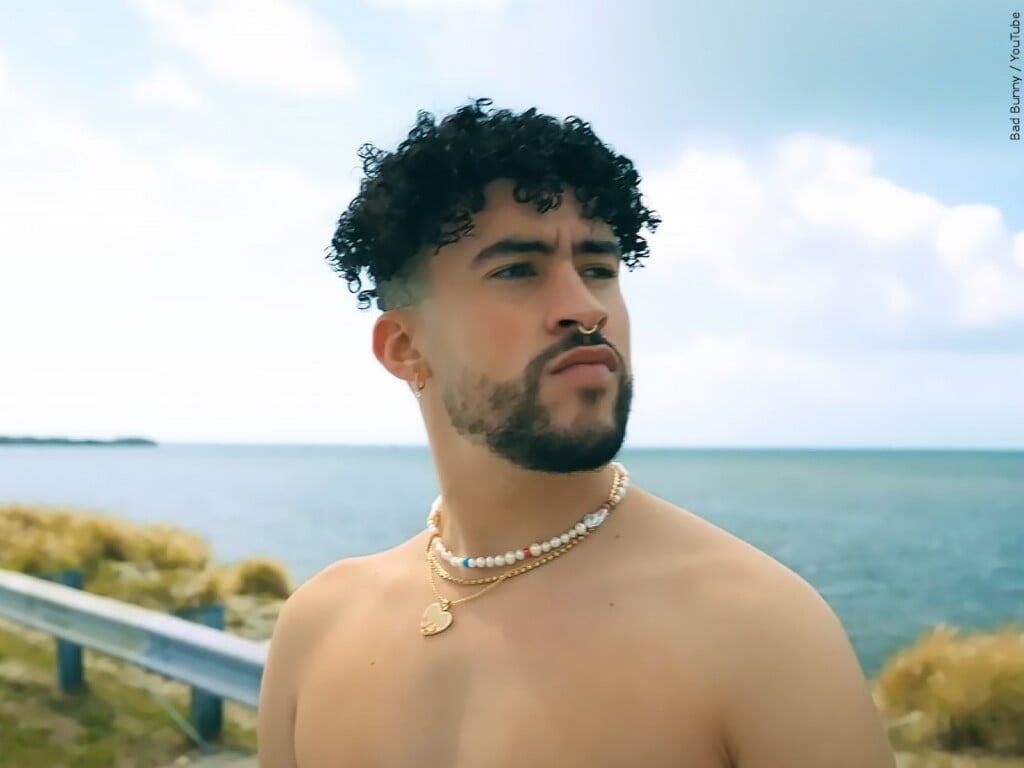
(ABC) — The highly anticipated Super Bowl LX halftime show featuring Bad Bunny is here.
Bad Bunny took the stage during halftime at Levi Stadium in Santa Clara, California, on Sunday in an all-white jersey-like outfit with “Ocasio” on the back, representing the star’s last name.
The Grammy-winning global sensation brought his Puerto Rican culture to the stage along with a collection of his hit songs, starting with “Tití Me Preguntó.”
Bad Bunny’s performance began with a scenic shot of the star walking through a tall sugar cane field, walking alongside backup dancers dressed as field workers.
Bad Bunny went on to perform a large collection of hit songs, including “BAILE INoLVIDABLE” and “NUEVAYoL,” which he performed in front of a set design of a market called “La Marqueta.”
Midway through the show, the star crashed through a roof onto a new set before continuing the show uninterrupted.
At one point, Bad Bunny was seen paying homage to his recent success, handing a Grammy award to a young boy on stage.
Fireworks erupted at the end of the performance during a rendition of his hit song “DtMF.”
His background played a prominent role in the performance as the star carried a Puerto Rican flag on his back while singing for a portion.
Ricky Martin, Lady Gaga and more celebs join Bad Bunny
Lady Gaga joined forces with Bad Bunny mid-way through the halftime show singing a salsa-inspired version of “Die with a Smile.” She dawned a light blue dress with a red flower pinned near her shoulder, adding to the tropical theme of the show.
Dancers, matching Bad Bunny’s all-white look, danced along on stage, and Bad Bunny and Gaga shared a dance for a moment during the show. Gaga’s portion of the show saw a band with red suits and blue undershirts play alongside the stars.
Singer Ricky Martin also joined in on the fun, singing a portion of the Bad Bunny song “Lo Que Le Paso a Hawaii.”
Cardi B, Jessica Alba, Karol G and Pedro Pascal were among the celebrities who joined in on the celebratory show.
Bad Bunny’s global impact
Bad Bunny’s halftime performance seemingly marked a turning point for the Spanish-language genre and Puerto Rican culture, something integral to the artist’s identity.
Bad Bunny made history at last weekend’s Grammys when his album became the first fully Spanish-language project to win album of the year.
Ahead of the Super Bowl, the three-time Grammy winner remained tight-lipped about what to expect out of the show, saying at a Feb. 5 press conference, “I’m just trying to enjoy it. I know I’m gonna have fun. All the crew, all the people, they’re going to have fun that day.”
Bad Bunny’s selection as halftime performer — announced in September by Apple Music, the NFL, and Roc Nation — sparked celebration from Bad Bunny supporters and backlash from some conservative groups and commentators, including on his outspoken support of immigrants in the United States.
In his album of the year acceptance speech at the Grammys on Feb. 1, Bad Bunny dedicated the award “to all the people that had to leave their homeland, their country, to follow their dreams.”
Turning Point USA, the conservative advocacy group whose associated pundits have been some of the most vocal critics of the Bad Bunny selection, streamed its own counterprogrammed halftime show featuring Kid Rock on Sunday.
The NFL, for its part, has stood by its selection of the Puerto Rican superstar. At a press conference ahead of the Super Bowl, commissioner Roger Goodell appeared to reaffirm his support for Bad Bunny, calling him “one of the great artists in the world.”
The singer was raised in Vega Baja, Puerto Rico, by his parents Tito Martínez and Lysaurie Ocasio, a truck driver and schoolteacher, respectively.
“I was never looking for this,” Bad Bunny said of the success he’s achieved. “My biggest pleasure is to create, have fun doing it and connect with the people.”