UNCW researchers investigate increase in dolphin strandings along NC coast
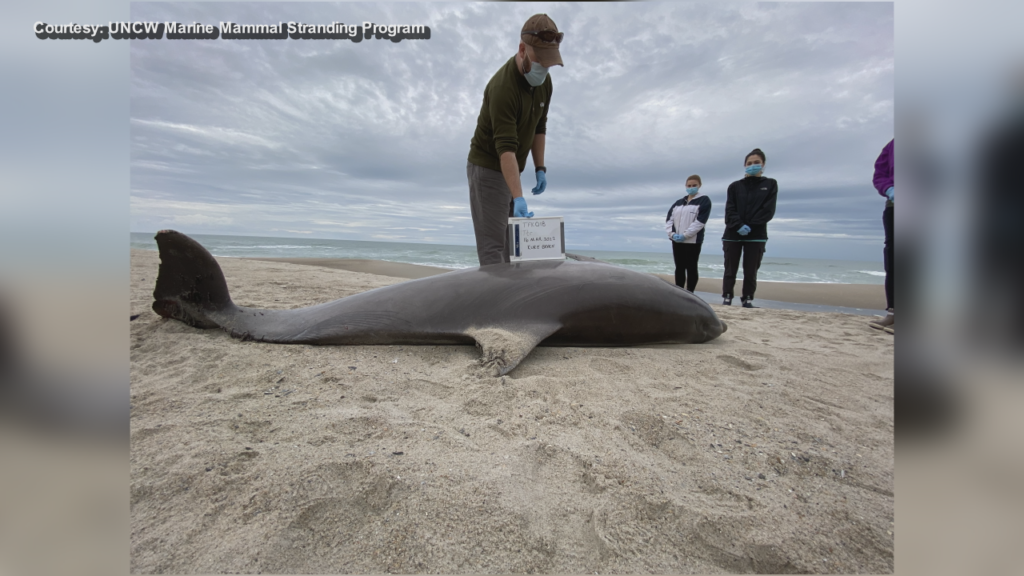
WILMINGTON, NC (WWAY) — Researchers with the University of North Carolina Wilmington’s Marine Mammal Stranding Program are continuing to investigate a recent increase in stranded bottlenose dolphins along the North Carolina coast, but they say they have not identified a single cause for the uptick.
The program, based at UNCW’s Oriole Burevitch Laboratory, responds to injured and deceased marine mammals found along the North Carolina coastline.
“We work with a collection of other stranding teams in our state to respond to all injured and deceased marine mammals on the coast of North Carolina,” said Dr. Michael Tift, the program’s director and a UNCW biology and marine biology professor.
While every stranding is unfortunate, Tift said each one provides researchers with an opportunity to better understand the biology, health and conservation of marine mammals.
“You can imagine that accessing biological samples from animals like whales and dolphins is extremely difficult, so we use that as an opportunity to collect those types of samples for all types of research questions,” said Tift.
So far this year, 86 marine mammals have stranded along North Carolina’s coast, including a noticeable increase in bottlenose dolphins, particularly calves.
Tift said researchers have not found one specific reason for the increase.
“The number of animals that were dying were higher than normal; they didn’t quite reach the number to declare an unusual mortality event, and they eventually started coming back down, which we were really excited about,” he said.
Dr. Tiffany Keenan, the program’s stranding coordinator who is also a UNCW biology and marine biology professor, said the number of stranded dolphin calves makes the investigation especially important because they represent the future of the population.
“We want to make sure those young animals that are going to grow up to continue the population are in good health, and so we’re testing for different types of pathogens and diseases, viruses, bacteria, fungal infections, so we’re going full gamut of testing to see what’s going on,” said Keenan.
Keenan said the program depends on community support and hopes its work will help protect marine mammals and North Carolina’s coastal environment for years to come.
“It is incredibly satisfying but also humbling to see so many people care about these animals and to be able to train the next generation of scientists who are going to go out there and protect these animals, protect our environment, protect the different fisheries that are so important to our coastal residence,” she said.
More information about the UNCW Marine Mammal Stranding Program, including how to donate or get involved, is available on the program’s website.