Visa: Sales are up 4.2% for first 7 weeks of the holiday period; pace lags last year
(ABC) — Consumers stepped up their spending, particularly on items like gadgets and clothing, for the first seven weeks of the holiday shopping period. But the pace was slower than a year ago amid worries about higher prices and other economic concerns, according to new data from Visa released Tuesday.
From Nov. 1 through Sunday, holiday sales rose 4.2%, a slower clip from the 4.8% increase during the same period a year ago, according to the company’s Visa Consulting & Analytics division, which analyzed a subset of Visa payments network data in the U.S.
The figure includes all methods of payment including cash and card.
The data, which exclude sales from auto dealerships, gas stations, and restaurants, are not adjusted for inflation including the impact from President Donald Trump’s tariffs.
When adjusted, retail sales rose a more modest 2.2% for that time frame, according to Visa’s principal U.S. economist Michael Brown. That compares to the inflation-adjusted 3% sales gain last year.
“It’s certainly not a spectacular season,” Brown told The Associated Press. “It’s sort of an average holiday season given concerns about macro economic growth, inflation. There’s still a lot of uncertainty among the consumer population.”
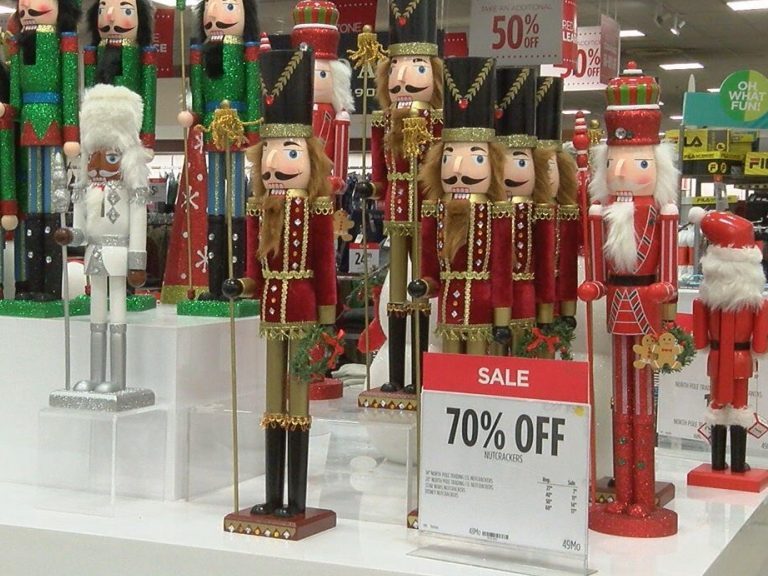
Retailers have described shoppers as being selective when making holiday purchases, choosing to focus on gifts for under the tree instead of holiday decor like ornaments for the tree, for example. Many households are struggling with higher prices in groceries, rent and imported goods hit by tariffs. The latest job report, released by the Labor Department last week, also shows a souring employment picture.
As a result, consumers’ mood has been gloomy, though it improved last month as worries about inflation eased a bit, according to the University of Michigan.
When all the numbers are in, Visa expects holiday sales data will more or less be in line with its prediction of a 4.6% sales increase for the November and December period combined.
Still to come are several of the holiday shopping season’s top 10 busiest days including Tuesday, the day after Christmas and the Saturday after Christmas, according to Sensormatic, which tracks retail foot traffic.
The Visa data is in line with the forecast from the National Retail Federation, the nation’s largest retail industry trade group. It expects sales over November and December of between $1.01 trillion and $1.02 trillion. That would be up 3.7% to 4.2% over last year.
Predicting the shopping season has been challenging as the 43-day federal government shutdown delayed economic reports including those covering monthly retail sales figures. The federal government is gradually catching up.
Last week, the Commerce Department reported that sales at U.S. retailers and restaurants were unchanged in October from September in a report delayed by more than a month. A big drag on October data was a drop in sales at motor vehicles and auto parts dealerships, hurt by the expiration of federal government subsidies that sliced demand for battery-powered electric cars.
According to Visa, e-commerce sales rose 7.8% for the first seven weeks of the period, fueled by promotions that started early in the season.
Still, shopping at physical stores dominates — 73% of holiday payment volume was in physical stores, while 27% of retail spending happened online, Visa said.
Sales at general merchandise stores, or big discounters like Target and Walmart that sell all types of merchandise, rose 3.7%, Visa said.
Electronics have emerged as the hottest category, with sales rising 5.8% during this time frame, fueled in part by devices, powered by artificial intelligence, Visa said.
Tariffs played a key role in how shoppers bought, Brown said.
Clothing and accessories sales accelerated at a 5.3% pace from Nov. 1 through Dec. 21 from a 4.1% increase last year. The category wasn’t as affected by tariffs as other areas like holiday home decor, which is predominantly made in China, Brown said. That category saw a slim 0.8% sales gain.
And a still weak housing market hurt sales of home improvement items like building materials and garden accessories, which recorded a 1% sales increase, Visa said.