
BOLIVIA, NC (WWAY) — Brunswick Community College and the Brunswick County NCWorks Career Center are set to host their annual job fair next week, bringing together employers and jobseekers from across the region.
The 2026 BCC Annual Job Fair is scheduled for Wednesday, April 8, from 10 a.m. to 1 p.m. at the Dinah E. Gore Sports and Aquatics Complex gymnasium on the college’s main campus.
According to organizers, more than 50 employers are registered to attend, representing a range of industries including healthcare, manufacturing, public service, skilled trades and hospitality. Additional employers may still be added ahead of the event.
The job fair is intended to connect employers with potential candidates while also providing resources for individuals seeking employment or career changes. Attendees will have access to on-site hiring opportunities, as well as résumé and interview workshops, professional headshots and career guidance.
The NCWorks Career Center will also provide services through its mobile unit, offering job search assistance, registration support and individualized career services during the event.
Organizers say the event is part of ongoing efforts to support workforce development and connect businesses with qualified workers in Brunswick County and surrounding areas.
The job fair is free and open to the public.

ABC NEWS — Olivia Munn says she had no symptoms before she took a risk assessment test that helped detect her Stage 1 breast cancer, and she has since been urging other women to take it.
The actress, who revealed in an Instagram post in March 2024 that she had been diagnosed with breast cancer the previous year, said she had “no symptoms” before her diagnosis.
“And I had a clear mammogram and a clear ultrasound,” she told CBS Sunday Morning.
However, in April 2023, Munn learned she had Stage 1 breast cancer after taking the Lifetime Risk Assessment test, a free online questionnaire that takes just minutes to complete and estimates a person’s lifetime risk of developing breast cancer, using personal information such as age, family history of breast cancer, date of first menstruation, and whether or not you’ve ever given birth, according to the National Institutes of Health.
While the tool may help a doctor estimate your breast cancer risk, it cannot tell you whether or not you will get breast cancer.
Munn said her score was 37.3%, above the 20% high-risk threshold that typically prompts a recommendation for additional breast cancer screening or diagnostic tests.
After her diagnosis, Munn underwent a double mastectomy, an ovariectomy and a partial hysterectomy. She said her risk score is now zero.
She later shared her story publicly to raise awareness about the risk assessment test.
“Knowing that it’s really changed so many people’s lives. It’s been the most amazing thing,” she said. “There’s no way I could have ever predicted it.”
Munn also said her husband, comedian John Mulaney, whom she married in 2024, has been one of her biggest supporters throughout her journey.
“There’s no better person in the world to me than my husband,” she shared. “He wanted to come to every single doctor’s appointment. He had his little notebook. You know? And he’s got his notebook that he writes all of his ideas for jokes and anything that comes to him through the day.”
His humor also helped her through recovery: “Having someone who’s so funny, it really — it just lightens everything,” she said.
Munn and her husband share two children, Malcolm, 4, and Mei Mei, who will turn 2 this fall.
Munn said becoming a parent and facing a cancer diagnosis changed the way she sees time, teaching her to slow down and appreciate the small, everyday moments.
“I say it’s not the Christmases and the birthdays and the New Year’s that we remember,” Munn said. “Like, life happens on a Tuesday. Like, it just happens. And you cannot expect it. And so every day, you should just be so present and grateful.”
“And once you are faced with the possibility of death and not being here, it’s — for me, all I wanted were the little moments,” she added.
This risk assessment is a widely avaialble tool online, but doctors urge anyone who is worried about their breast cancer risk to talk to thier healthcare provider, rather than try to evaluate it on their own, as there may be other things beyond the tool’s input to consider.
A provider will also be able to discuss the results, potentially offer further diagnostic testing/screening, or may recommend other ways to better estimate cancer risk.

NEW YORK (AP) — U.S. stocks are rising and recovering some of the losses from their five-week losing streak, even as oil prices keep climbing. The S&P 500 rose 0.8% in early trading Monday. The index is coming off its worst week since the war with Iran began. The Dow Jones Industrial Average added 393 points, and the Nasdaq composite climbed 0.7%. That followed gains for stocks in much of Europe, but caution was still prevalent throughout financial markets. Stocks in some Asian markets fell sharply, while the price for a barrel of Brent crude rose 2.3% to $107.80.
THIS IS A BREAKING NEWS UPDATE. AP’s earlier story follows below.
Wall Street was poised to open the week with gains on Monday as oil prices continued their climb and prospects for an end to the Iran war remained uncertain.
Futures for the S&P 500, Dow Jones Industrial Average and Nasdaq all climbed 0.6% before the opening bell. Wall Street closed on Friday with its fifth straight losing week, its longest such streak in nearly four years.
Benchmark U.S. crude jumped $1.20 to $100.84 a barrel. Futures for Brent crude, the international standard, climbed 2.1% to $107.54 a barrel. Before the war, Brent had been priced at about $70 a barrel.
U.S. President Donald Trump on Monday threatened widespread destruction of Iran’s energy resources and other vital infrastructure if a deal to end the war with Tehran is not reached soon.
In a social media post, Trump said “great progress is being made” in talks with Iran to end military operations but bristled that if a deal is not reached and if the strategic Hormuz Strait is not immediately reopened, the U.S. would broaden its offensive by “completely obliterating all of their Electric Generating Plants, Oil Wells and Kharg Island (and possibly all desalinization plants!).”
About one-fifth of the world’s oil passes through the Hormuz Strait.
On the ground, the war showed no sign of letting up: Tehran struck a key water and electrical plant in Kuwait, and an oil refinery in Israel came under attack. Israel and the U.S. launched a new wave of strikes on Iran.
There was little corporate news to trade on early Monday, though shares of Sysco tumbled 5.7% after the nation’s largest food distributor said it would acquire supplier Restaurant Depot in a deal worth more than $29 billion.
The acquisition would create a closer link between Sysco and customers that rely on Restaurant Depot for supplies needed quickly in an industry segment known as “cash-and-carry wholesale.”
Restaurant Depot shareholders will receive $21.6 billion in cash and 91.5 million Sysco shares.
Markets in Asia closed broadly lower Monday as worries continued about soaring oil prices and the potential for further escalation in war with Iran, but shares rose moderately in Europe.
France’s CAC 40 rose 0.4% at midday, while Germany’s DAX added 0.3%. Britain’s FTSE 100 gained 0.9%.
Japan’s benchmark Nikkei 225 slipped 2.8% to finish at 51,885.85. Australia’s S&P/ASX 200 lost 0.7% to 8,461.00. South Korea’s Kospi dove 3.0% to 5,277.30. Hong Kong’s Hang Seng lost 0.8% to 24,750.79, while the Shanghai Composite reversed course in the afternoon and was up 0.2% at 3,923.29.
In Japan and the rest of Asia worries continue to grow about the effective lack of access to the Strait of Hormuz as the region relies greatly on such access for oil shipments.
Investors are now bracing for the war to last for some time, which would likely set off inflation in global markets, and eventually may stunt Asia’s economic growth.
“Although we do not expect the conflict to be protracted, we anticipate heightened volatility in the near term,” said Xavier Lee, senior equity analyst at Morningstar Research.
Alarm has been resounding in Japan about the declining value of the yen. In currency trading, the U.S. dollar inched down to 159.51 Japanese yen from 160.32 yen. The euro cost $1.1482, down from $1.1510.
“In addition to the crude oil futures market, speculative activity is also said to be increasing in the foreign exchange market,” Vice Finance Minister Atsushi Mimura said.
“As we have already stated, we will respond on all fronts, and our focus is spread in all directions,” he told reporters, without giving specifics on the possible action.
___
AP journalist Ayaka McGill contributed to this report.

(AP)–How does a kangaroo escape a petting zoo?
It’s not the opening line to a dad joke. If you’re Chesney the kangaroo, you scale an eight-foot (2 1/2 meter) fence and go on the lam for three days, giving your keeper sleepless nights and sending residents of a small Wisconsin town on a search that would end happily on Saturday.
The unprecedented leap at Sunshine Farm in Necedah, Wisconsin, last week was precipitated by some stray dogs that rushed the enclosure and spooked the 16-month-old Chesney, said his keeper, Debbie Marland. She and friends then trekked hither and yon in this town about 160 miles (255 kilometers) northwest of Milwaukee.
They chased reports of sightings and even rented heat-seeking drones, which proved effective in narrowing down the wanderings of the high-jumping adventurer.
“I was putting on about 37,000 steps per day looking for him,” Marland said Sunday. “I haven’t done so much exercise in a very long time.”
Chesney and his roommate Kenny are named for country-music star Kenny Chesney. They’re among 25 animals at Sunshine Farm, with horses, sheep, alpacas, Kunekune pigs, Highland cows and a Bactrian camel. The farm is generally open Fridays through Sundays from mid-May through mid-November and tours are offered to visitors who can interact with the animals.
Chesney escaped about 11:15 a.m. last Wednesday. Though he stayed within a three-mile (5-kilometer) radius of the farm, he kept his pursuers guessing.
Colton Johnson, owner of Midwest Aerial Drone Services, has used heat-sensing drones to help hunters recover deer and reunite missing dogs with their owners. Add a kangaroo to the list.
Johnson spent three days trailing Chesney alongside Marland and a team of volunteers. His strategy was similar to the ones he uses to find lost pets, but Johnson said the appearance of Chesney’s heat signature on the drone footage was unique.
“It almost looked like a dinosaur running through the woods,” Johnson said. “It’s got a long tail, and the way it was moving and hopping, that’s the only way that I can describe it.”
The team caught up with Chesney on Wednesday and again Thursday night, but Johnson said the frightened kangaroo slipped away — once by jumping into a cold river — and Johnson lost track on the drone.
According to Marland’s friend, Stacy Brereton, who helps out at the farm routinely, Friday was a tough day. No one had spotted Chesney all day and searchers feared he had wandered farther afield into even more unfamiliar territory, Brereton said.
Then, Friday night, Chesney was discovered nestled under a tree in a wooded area. A group of searchers surrounded him, but ever fleet of foot — 20 mph (32 kph) is no stretch for him — Chesney eluded them.
Marland returned to the area Saturday morning with Chesney’s favorite treats and pieces of material that had his and Kenny’s scent. Other searchers later joined her. But with no sign of the kangaroo, they started packing up. Just then, they spotted the long-eared kangaroo with outsize back legs approaching.
Brereton stepped up with a delicate touch.
“He had a very calm attitude when he walked up, obviously you could tell he wasn’t in fight-or-flight mode, so I just went with that,” Brereton said. “I just stayed calm with him and I just kind of went and sat and let him come to me.”
Chesney heard the voices and wanted attention, said Brereton, who eventually scooped up the 40-pound (18-kilogram) animal.
“I do believe he heard our comforting voices, he smelled the familiar smells of home and it just made him feel safe,” said Brereton, adding, “I’m just glad he loves me as much as I love him.”
Marland said the “the community really did come together” for the kangaroo, who is now something of a celebrity. A Sunshine Farm fan has written a children’s book about Chesney’s adventures, which Marland hopes to publish and sell to recoup some of the search costs.
Kenny, who with his marsupial mate has the run of Marland’s house, was happy to be reunited with Chesney. Though hungry and tired, Chesney was otherwise healthy but will get a checkup with the veterinarian shortly.
To be safe, Marland added, a new mesh top will be placed over the kangaroo enclosure to prevent any more high-jumping hijinks. ___ Associated Press writer Savannah Peters in Edgewood, New Mexico, contributed.

(AP)–Wall Street was poised to open the week with gains on Monday as oil prices continued their climb and prospects for an end to the Iran war remained uncertain.
Futures for the S&P 500, Dow Jones Industrial Average and Nasdaq all climbed 0.6% before the opening bell. Wall Street closed on Friday with its fifth straight losing week, its longest such streak in nearly four years.
Benchmark U.S. crude jumped $1.20 to $100.84 a barrel. Futures for Brent crude, the international standard, climbed 2.1% to $107.54 a barrel. Before the war, Brent had been priced at about $70 a barrel.
U.S. President Donald Trump on Monday threatened widespread destruction of Iran’s energy resources and other vital infrastructure if a deal to end the war with Tehran is not reached soon.
In a social media post, Trump said “great progress is being made” in talks with Iran to end military operations but bristled that if a deal is not reached and if the strategic Hormuz Strait is not immediately reopened, the U.S. would broaden its offensive by “completely obliterating all of their Electric Generating Plants, Oil Wells and Kharg Island (and possibly all desalinization plants!).”
About one-fifth of the world’s oil passes through the Hormuz Strait.
On the ground, the war showed no sign of letting up: Tehran struck a key water and electrical plant in Kuwait, and an oil refinery in Israel came under attack. Israel and the U.S. launched a new wave of strikes on Iran.
There was little corporate news to trade on early Monday, though shares of Sysco tumbled 5.7% after the nation’s largest food distributor said it would acquire supplier Restaurant Depot in a deal worth more than $29 billion.
The acquisition would create a closer link between Sysco and customers that rely on Restaurant Depot for supplies needed quickly in an industry segment known as “cash-and-carry wholesale.”
Restaurant Depot shareholders will receive $21.6 billion in cash and 91.5 million Sysco shares.
Markets in Asia closed broadly lower Monday as worries continued about soaring oil prices and the potential for further escalation in war with Iran, but shares rose moderately in Europe.
France’s CAC 40 rose 0.4% at midday, while Germany’s DAX added 0.3%. Britain’s FTSE 100 gained 0.9%.
Japan’s benchmark Nikkei 225 slipped 2.8% to finish at 51,885.85. Australia’s S&P/ASX 200 lost 0.7% to 8,461.00. South Korea’s Kospi dove 3.0% to 5,277.30. Hong Kong’s Hang Seng lost 0.8% to 24,750.79, while the Shanghai Composite reversed course in the afternoon and was up 0.2% at 3,923.29.
In Japan and the rest of Asia worries continue to grow about the effective lack of access to the Strait of Hormuz as the region relies greatly on such access for oil shipments.
Investors are now bracing for the war to last for some time, which would likely set off inflation in global markets, and eventually may stunt Asia’s economic growth.
“Although we do not expect the conflict to be protracted, we anticipate heightened volatility in the near term,” said Xavier Lee, senior equity analyst at Morningstar Research.
Alarm has been resounding in Japan about the declining value of the yen. In currency trading, the U.S. dollar inched down to 159.51 Japanese yen from 160.32 yen. The euro cost $1.1482, down from $1.1510.
“In addition to the crude oil futures market, speculative activity is also said to be increasing in the foreign exchange market,” Vice Finance Minister Atsushi Mimura said.
“As we have already stated, we will respond on all fronts, and our focus is spread in all directions,” he told reporters, without giving specifics on the possible action.


(AP) — Passover is a major Jewish holiday, celebrated over the course of a week each spring. It commemorates the Exodus of ancient Israelites from slavery in Egypt, as recounted in the Bible. It is celebrated around family dinner tables and at communal banquets, where the dramatic story of liberation from slavery is retold.
“Passover is the most observed Jewish holiday in America,” said Motti Seligson, director of public relations for Chabad-Lubavitch, an Orthodox Jewish movement. “It’s not a synagogue holiday, although there are services in synagogues. The main parts of Passover are observed at home.”
This year, as in recent years, the celebrations occur amid a sober backdrop. There are anxieties over the U.S.-Israel war against Iran, widespread antisemitism marked by recent synagogue attacks, divisions within the Jewish community over Israeli policies and the raw aftermath of the Israel-Hamas war.
Passover is a time for reuniting and remembering
Passover — known as Pesach in Hebrew — begins at sunset on Wednesday, April 1. By tradition, it will be celebrated for seven days in Israel. In the rest of the world, some observe it for seven days, others for eight.
Observant Jews avoid various grains known as chametz, a reminder of how the biblical Israelites ate unleavened bread when they fled Egypt, with no time for dough to rise. Matzo — a crisp, unleavened bread — is OK to eat. Most breads, pastas, cereals, cakes and cookies are off-limits.
For many Jews, Passover is a time to reunite with family. They recount the Exodus from Egypt at a meal called the Seder. Participants use a Haggadah — a program for the Seder’s readings and rituals. Many families customize the Haggadah with supplemental songs and readings on a particular theme, or written by the participants themselves.
The Seder table is set with wine and various symbolic foods. For example, bitter herbs represent the experience of slavery; greens represent the coming of spring; and a shank bone represents the sacrifice made in biblical times.
Seders involve the active participation of children. They search for an afikomen — a hidden piece of matzo. The youngest child present asks ritual questions such as, “Why is this night different from any other night?”
Seder commemorations in wartime
Passover this year comes as war intensifies in the Middle East, with the United States and Israel heavily bombarding Iran and its proxies, which have struck back with attacks on Israel and U.S. bases in the region.
Antisemitism remains a concern with increasingly prominent voices on the right and left denouncing the U.S.-Israeli alliance, sometimes in language condemning not just Zionism but Jewish religious beliefs. An Anti-Defamation League report says colleges and universities have improved protections for Jewish students but also cited a persistence in anti-Jewish attitudes. Synagogues in Mississippi and Michigan were targeted by an arsonist and a gunman, respectively, in recent months. A Hanukkah celebration in Australia came under deadly attack in December.
Celebrations at home and in community
While traditionally a home celebration, many congregations also hold larger Seders so that participants — especially those with few family connections or who are unable to prepare the meal — can have a place to celebrate with others.
Many Jewish community, cultural and campus centers host Passover gatherings. Some participants go to both communal and home Seders on different nights.
Some hotels are offering Seders in kosher settings at travel destinations. Chabad plans to host thousands of people at communal Seders in Thailand, Nepal and other countries popular with travelers.
Regardless of the setting, the Seder ritual aims to involve participants directly in the biblical story. “Tradition teaches us that in every generation, we ought to look upon ourselves as if we personally had gone out of Egypt,” says one version of the Haggadah. “Therefore, it is our duty to thank the One who performed all the miracles for generations past and present.”

(CBS) — After weeks of delays, NASA is finally poised for launch of a historic flight this week to send a crew of four astronauts on a trailblazing nine-day trip around the moon and back.
The Artemis II mission — with commander Reid Wiseman, pilot Victor Glover, astronaut Christina Koch and Canadian astronaut Jeremy Hansen — is scheduled to lift off Wednesday, April 1, at 6:24 p.m. EDT, atop a Space Launch System rocket, the most powerful operational booster in the world. Forecasters are predicting an 80% chance of acceptable weather for launch.
“Hey, let’s go to the moon!” exclaimed Wiseman, speaking to a throng of reporters after he and his crewmates arrived at the Kennedy Space Center on Friday. “I think the nation and the world has been waiting a long time to do this again.”
They originally planned to launch in early February, but the flight was delayed, first by hydrogen fuel leaks and then later by problems with the upper stage propellant pressurization system. NASA says both issues have been resolved, finally clearing the way for blastoff.
A test mission, full of firsts
This will be the rocket’s first flight with a crew on aboard, and only its second flight overall. It will also be the first piloted flight of an Orion deep space crew capsule.
A major objective is to put the crew ship, named Integrity, through its paces.
“This is a test mission,” Wiseman said. “When we get off the planet, we might come right back home. We might spend three or four days around Earth. We might go to the moon. That’s where we want to go, but it is a test mission, and we are ready for every scenario as we ride this amazing Space Launch System in the Orion spacecraft, 250,000 miles away. It’s going to be amazing!”
Wiseman, Glover and Koch are NASA space veterans. Hansen, making his first space flight, will become the first Canadian to leave Earth orbit.
With their mission to circle the moon, they become the first crew to head for the moon since the Apollo 17 flight that landed there more than 50 years ago.
Big step toward a future moon landing
It’s a major milestone in a new NASA space race with China, which plans to put their own “taikonauts” on the lunar surface by 2030. NASA hopes to win that race by launching one and possibly two Artemis moon landing missions in 2028.
But first, the agency plans to thoroughly test the Orion capsule, making its first flight with a crew on board, during this Artemis II voyage around the moon.
Then, next year, NASA plans for astronauts to rendezvous and dock in low-Earth orbit with new moon landers being built by SpaceX and Blue Origin to test critical systems and verify operating procedures. After that, NASA astronauts will embark on a moon landing near the lunar south pole in just two years.
In the meantime, NASA will be focusing on increasing the flight rate and designing a moon base where astronauts can spend weeks or months at a time carrying out research and technology development.
NASA Administrator Jared Isaacman, who announced the updated plans in February with an estimated cost of $20 billion over seven years, said this “step-by-step approach” is “exactly how NASA achieved the near impossible” with the Apollo program in the 1960s.
“But this time, the goal is not flags and footprints. This time, the goal is to stay,” he said, adding, “America will never again give up the moon.”
A “crazy first day” in space
Blazing a trail for the crews that follow, the Artemis II astronauts will climb away from Florida atop the SLS rocket’s nearly 9 million pounds of thrust.
Weighing 5.7 million pounds at liftoff, the rocket will accelerate the Orion crew ship on eight-minute climb to space, at which point it will moving at nearly 5 miles per second — fast enough to fly across some 70 football fields, end to end, in just one second.
Two rocket firings, one 50 minutes after liftoff and another about an hour later, will set the spacecraft on an elliptical orbit with a high point of 43,760 miles, higher than any astronauts have flown since the final Apollo moon mission in 1972.
The Orion capsule will separate from the Interim Cryogenic Propulsion Stage, or ICPS, three hours 23 minutes after launch.
All of those maneuvers combine to give the crew a 24-hour-long orbit, allowing plenty of time to check out their Orion capsule, making sure the communications, navigation, propulsion and life support systems are working properly before heading to the moon.
Those tests include “waste collection,” NASA’s way of referring to use of the capsule’s cramped toilet compartment. All of the testing will be carried out while the spacecraft is close enough to get home quickly in the event of any major problems.
Glover, assisted by Wiseman, also will test the Orion’s maneuvering system, approaching and flying around the spent SLS upper stage to mimic the sort of flying that will be required by future crews to rendezvous and dock with landers or NASA’s planned Gateway space station in lunar orbit. If time is available, Wiseman might get a bit of hands-on flying himself.
“It is a crazy first day,” Wiseman told CBS News. “We come off the pad here at the Kennedy Space Center, and we have about 90 minutes (for) one trip around the Earth at low Earth orbit … making sure everything looks really good at a basic level. And then we head out to (44,000) miles from Earth for a 24-hour orbit.
“That one 24-hour orbit gives us time to check out all of (Orion’s) environmental control, life support systems,” Wiseman said. “Can it scrub our carbon dioxide? Can it keep us alive? Can we drink water? Can we go to the bathroom? All those basic human functions. … We’ve got to go get those things tested before we press out to the moon.”
Assuming no major problems, the Artemis II crew will take a four-hour nap then get up for yet another critical rocket firing, this one using the main engine of Orion’s service module to put the craft in an orbit measuring 44,555 miles by 115 miles.
The astronauts then will grab another four-hour nap while flight controllers assess Orion’s performance before making a final go-no go decision to send the crew on to the moon.
They will have a lot to consider. The Lockheed Martin-built Orion spacecraft will be flying for the first time with a full suite of life support systems. The only other launch of an SLS and Orion was the unpiloted Artemis I test flight in 2022.
While the capsule itself performed well, the Orion’s heat shield was heavily damaged by the 5,000-degree heat of reentry. The Artemis II Orion is equipped with the same type heat shield, but after extensive post-flight testing, NASA managers deemed it safe to fly again “as is” using a different reentry trajectory, one that will prevent the sort of internal heating that caused the Artemis I problem.
Four more days to the moon
Assuming Orion gets a clean bill of health after after engineers review data from its first day in space, the crew will set up for the critical “trans-lunar injection,” or TLI, burn about 25 hours after launch using the service module’s engine.
The six-minute five-second engine firing will boost the ship’s velocity by about 900 mph, just enough to push it out of Earth orbit to begin the four-day coast to the moon.
While confident the rocket and their Orion capsule will carry them safely around the moon and back to a Pacific Ocean splashdown on April 10, the astronauts and their families understand the risks.
“It’s a test flight, and we have to be willing to take that risk,” Hansen said in an interview with CBS News. “And that’s the one that I talk to my family about. I’m very optimistic. I truly believe the most likely outcome is we’ll all be totally fine when we hit the Pacific Ocean nine and a half days later.
“But I want everyone to understand that you can lose a crew. And if we do, that shouldn’t shock us. And the most important thing we do next is we stack the next rocket, and we’d let the next four volunteers get on top of it and go.”
Flying around the moon for the first time in half a century
The astronauts will not land on the moon or even go into lunar orbit as the Apollo 8 crew did in their historic 1968 flight — the first piloted flight of a Saturn 5 rocket and the first to carry astronauts beyond low-Earth orbit.
Instead, the Artemis II crew will leave Earth on a “free return” trajectory, flying around the leading edge of the moon and using lunar gravity to bend the ship’s path back toward Earth.
The trans-lunar injection burn will precisely set up the reentry trajectory with only minor tweaks required for an on-target splashdown. In other words, if there are major problems with Orion’s navigation or propulsion system after heading for the moon, the capsule will still make its back to Earth without any help from its thrusters.
The free return trajectory will carry the crew within about 4,100 miles of the moon’s surface at closest approach.
“If you held a basketball out from your hand and you looked at it, that’s about how big the moon will appear in the crew’s window as we do a fly by,” said lead flight director Jeff Radigan.
The far side of the moon — and the greatest distance from home
The crew will become the first humans to see large regions of the moon’s normally out-of-view far side.
While Apollo astronauts flew behind the moon near its equator, those missions were timed to ensure daylight at the landing sites facing Earth and the far side was in darkness. This time around, assuming an April 1 launch, 21% of the far side will be in sunlight when the Artemis II astronauts sail past, giving the crew a chance to directly see portions of the far side never before observed by human eyes.
“Four people, two windows pointing right at the lunar surface, and a highly choreographed dance, really, of who has the cameras, who has the other voice recording devices, and how we are supporting the people actually taking the data and making the observations,” Koch said.
“Of course, the moon has been imaged by so many remote sensing satellites, but there are actually places on the far side that have never been seen by human eyes. … So hopefully, when we get there, we’ll be ready to take that on and still make the most of those couple hours we have.”
Said Glover: “Twenty-four men have seen the moon, and we’re going to send the first set of woman’s eyes. And there’s actually some differences, they think that she can potentially see colors that, you know, we (men) may not see.”
Assuming an on-time launch, the crew will end up flying farther from Earth than the crew of Apollo 13, who flew an unplanned free-return trajectory of their own following a catastrophic explosion on the way to the moon in 1970. They reached a record distance of 248,655 miles from Earth before finally heading home.
The Artemis II crew is expected to beat that mark by about 4,000 miles, setting a new record of 252,000 miles.
A high-speed plunge back to Earth
Assuming the Artemis II launch goes well and no major problems are found during the crew’s first day in orbit, the TLI burn will set up the lunar flyby and put the ship on course for reentry and splashdown at the end of the mission on Friday, April 10.
Only minor course corrections will be needed to precisely target reentry.
Pulled in by Earth’s gravity, the Orion crew capsule will be moving at some 25,000 mph — roughly 7 miles per second — when it slams back into the discernible atmosphere about 75 miles above the Pacific Ocean.
The crew capsule will be quickly engulfed in an electrically charged fireball as its 16.5-foot-wide heat shield endures temperatures as high as 5,000 degrees. It will block radio signals for about five minutes.
Lessons from damage to heat shield on Artemis I
Orion will return to Earth using the same type heat shield used in the unpiloted Artemis I flight in 2022. It is designed to prevent temperatures where the shield joins the base of the capsule from exceeding 500 degrees.
During the Artemis I mission, the capsule followed a planned “skip” trajectory that caused it to drop into the upper atmosphere, then back out again before making its final descent to splashdown. The skip trajectory offers NASA a wider range of splashdown options in case bad weather makes a targeted landing site problematic.
But post-flight analysis showed the Artemis I heat shield suffered unexpected damage during entry, with large chunks of the outer “char” layer unexpectedly popping off. The capsule landed safely, but NASA kicked off an exhaustive investigation to determine why the heat shield failed to behave as computer models suggested.
Engineers determined that high entry heating is what makes the outer char layer permeable enough for gas generated in lower layers, through a process called pyrolysis, to escape.
During the Artemis I capsule’s long skip back out of the discernible atmosphere, entry heating lessened, the outer layer became impermeable and gas generated by pyrolysis in lower layers had now way to escape. Pressure built up and the gas pockets pushed chunks of the outer heat shield away.
Engineers concluded that a different entry trajectory, one with an initial dip into the upper atmosphere followed by a shorter-duration climb back out, would allow the outer char layer to erode and burn away more evenly without creating damaging sub-surface cracks and pressure build ups. An independent review team agreed with those conclusions.
While NASA is planning to use a different design on the Artemis III mission next year, agency managers opted to stick with the heat shield already in place on the Artemis II Orion. Given the Artemis II free return trajectory, “we can safely, and with high degrees of success, control that entry environment,” said Amit Kshatriya, NASA’s associate administrator. “And so that’s the plan.”
Splashdown and recovery
From the start of reentry to splashdown: 13 minutes.
Nine minutes after the start of reentry, now back in touch with mission control, the Artemis II crew will begin monitoring the deployment of 11 parachutes intended to stabilize and slow the capsule to a splashdown velocity of just 15 mph or so. It is the most complex parachute system ever flown on a piloted spacecraft.
After rapidly decelerating during passage through the peak heating zone, the Orion capsule will be descending at about 300 mph when when three small parachutes will be deployed, pulling a protective cover away from the main parachute storage bay as the spacecraft passes through an altitude of about 36,000 feet.
Two 23-foot-wide drogue chutes then will unfurl and inflate at around 24,000 feet to stabilize the capsule followed by three pilot chutes that will pull out Orion’s three 116-foot-wide main parachutes. They will inflate in stages between 8,000 feet and 4,000 feet, slowing the ship’s descent from around 300 mph to splashdown velocity.
The parachute system is designed to bring a crew safely back to Earth if one drogue or one main parachute fails to inflate. Additional failures would mean higher impact velocities, but NASA has not provided any detailed information about such outcomes.
But in a normal descent, Orion will hit the water heatshield first at a velocity of 15 to 17 mph and, hopefully for the crew, stay in that orientation without flipping over due to waves or wind. If it does, airbags will flip it back upright.
Wiseman, Glover, Koch and Hansen will be helped out of the capsule and airlifted by helicopter to a waiting Navy amphibious transport dock, or LPD. After initial medical checks and calls to family and friends, the astronauts will head back to shore for a flight home to the Johnson Space Center.
The Orion capsule, meanwhile, will be hauled into the recovery ship’s flooded “well deck” and secured on a platform for the trip back to shore. NASA engineers will spend weeks reviewing data from the Artemis II flight while pressing ahead with planning for the next mission.
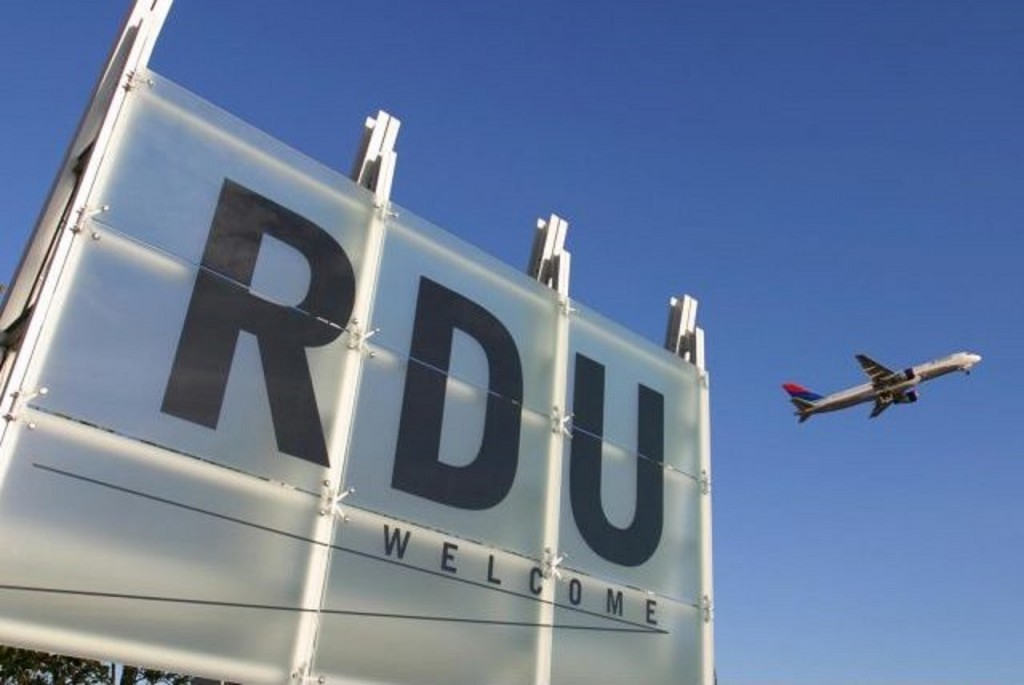
Raleigh, NC (WWAY) — Raleigh-Durham International Airport Terminal 1 was evacuated after an anonymous threat around 4:20 Monday morning.
According to RDU’s X account, law enforcement and TSA agents checked and cleared the facility, which reopened at 6 A.M.
The Airport says it is continuing to monitor the situation and will maintain a law enforcement presence as a safety precaution.

(WWAY) — Temperatures return into the 70s this afternoon after a chilly weekend.
Look for sunshine and scattered clouds today with highs in the lower 70s. Plentiful sunshine will follow Tuesday with warmer highs in the upper 70s. Subtropical high pressure remains in charge Wednesday with highs pushing 80 under sunshine and clouds. Increasing rain chances expected as we get into Easter weekend. With ongoing drought and continued mainly dry weather over the next 7 days, be very careful with flame and follow any local burn bans in place.
WWAY FORECAST:
Today: Mix of sun and clouds. A warm afternoon with high around 75.
Tuesday: Mostly sunny. A nice afternoon with highs near 80.
Wednesday: Partly sunny skies with temperatures into the lower 80s.
-Meteorologist Jason Korver

ABOARD AIRFORCE ONE (AP) — President Donald Trump on Sunday night said he has “no problem” with a Russian oil tanker off the coast of Cuba delivering relief to the island, which has been brought to its knees by a U.S. oil blockade.
“We have a tanker out there. We don’t mind having somebody get a boatload because they need … they have to survive,” Trump told reporters as he flew back to Washington.
When asked if a New York Times report that the tanker would be allowed to reach Cuba was true, Trump said: “I told them, if a country wants to send some oil into Cuba right now, I have no problem whether it’s Russia or not.”
On Monday, Russia’s Transport Ministry said the oil tanker Anatoly Kolodkin arrived at the Cuban port of Matanzas carrying “humanitarian supplies” of about 730,000 barrels of oil.
The vessel is sanctioned by the United States, the European Union and the United Kingdom following the war in Ukraine.
Kremlin spokesman Dmitry Peskov said Monday that Russia had previously discussed its oil shipment to Cuba with the United States. “Russia сonsiders it its duty not to stand aside, but to provide the necessary assistance to our Cuban friends,” he told reporters.
Trump, whose government has come at its Caribbean adversary more aggressively than any U.S. government in recent history, has effectively cut Cuba off from key oil shipments in an effort to force regime change. The blockade has had devastating effects on the civilians Trump and Secretary of State Marco Rubio say they want to help, leaving many desperate.
Islandwide blackouts have roiled Cubans already grappling with years of crisis, and lack of gasoline and basic resources has crippled hospital and slashed public transport.
Experts say the anticipated shipment could produce about 180,000 barrels of diesel, enough to feed Cuba’s daily demand for nine or 10 days.
Islandwide blackouts have roiled Cubans already grappling with years of crisis, and lack of gasoline and basic resources has crippled hospital and slashed public transport.
Cuba has long been at the heart of geopolitical tug-of-war between the U.S. and Russia, dating back decades. Trump on Sunday dismissed the idea that allowing the boat to reach Cuba would help Russian President Vladimir Putin.
“It doesn’t help him. He loses one boatload of oil, that’s all it is. If he wants to do that, and if other countries want to do it, it doesn’t bother me much,” Trump said. “It’s not going to have an impact. Cuba’s finished. They have a bad regime. They have very bad and corrupt leadership and whether or not they get a boat of oil, it’s not going to matter.”
He added: “I’d prefer letting it in, whether it’s Russia or anybody else because the people need heat and cooling and all of the other things.”

(AP) — U.S. President Donald Trump has raised the idea of American forces seizing Iran’s Kharg Island, its main oil terminal in the Persian Gulf.
“Maybe we take Kharg Island, maybe we don’t. We have a lot of options,” Trump told the Financial Times in an interview Monday. “It would also mean we had to be there (on Kharg Island) for a while.”
Iran has threatened to mine the Persian Gulf if its territory is invaded. The United States and Israel kept up their attacks Monday on the Islamic Republic, even as there were signs of progress in nascent ceasefire talks. Iran struck a key water and electrical plant in hard-hit Kuwait, part of its ongoing campaign targeting the Gulf Arab states.
Trump also said that Iran had agreed to allow 20 ships carrying oil through the Strait of Hormuz starting Monday morning and continuing over the next few days “out of a sign of respect.”
“I would only say that we’re doing extremely well in that negotiation but you never know with Iran because we negotiate with them and then we always have to blow them up,” he said.
The war has already threatened global supplies of oil and natural gas, sparked fertilizer shortages and disrupted air travel. Iran’s grip on the strategic Strait of Hormuz has shaken markets and prices.
Here is the latest:
Bahrain contains fire in a commercial building after attack
Bahrain’s Interior Ministry said the fire broke out in a commercial building in Al Dair, a coastal village near Bahrain International Airport. There were no injuries. It added that investigations are underway to determine the cause of the fire.
China backs Pakistan’s mediation efforts between Iran and the US
“We appreciate Pakistan’s efforts to help de-escalate the situation, support Pakistan in continuing to play a mediating role,” said China’s Foreign Ministry spokesperson Mao Ning.
She told a daily briefing in Beijing that China is ready to coordinate with Pakistan and any other relevant party “to jointly promote peace and cease hostilities to safeguard regional peace and stability.”
Pakistan announced Sunday that it would soon host talks between the U.S. and Iran, though there was no immediate word from Washington or Tehran, and it was unclear whether discussions on the monthlong war would be direct or indirect.
2 members of Iranian exile group were executed
The members of the Iranian exile group Mujahedeen-e-Khalq were hanged Monday in Iran, state media and the group said.
The two men were identified as Akbar Daneshvarkar and Mohammad Taghavi. Daneshvarkar had been held for years prior. Amnesty International has said Tehran’s Revolutionary Court convicted the men on charges of armed rebellion against the state “following a grossly unfair trial in October 2024.” It said the men were tortured during interrogations.
Israel passes budget, extending Netanyahu term
Israel needed to pass a budget before April 1 in order to avoid triggering early elections. Prime Minister Benjamin Netanyahu still reserves the right to call early elections before then if he wants.
Israel’s opposition slammed the budget for increasing funding to Israel’s ultra-Orthodox communities at a time when the country is facing soaring costs over its war in Iran and is still reeling from a two-year war in Gaza.
The $270 billion budget, Israel’s largest ever, included a 20% increase for the Ministry of Defense due to the ongoing war against Iran. The ministry’s budget has swollen to $45 billion, forcing cuts in other government ministries.
Lawmakers debate death penalty for attacks against Israelis in West Bank
Israel’s parliament is set to vote on a bill that would make the death penalty the default punishment for West Bank Palestinians convicted of murdering Israelis.
The parliament began debate on Monday, days before its spring recess. The bill’s passage would mark the culmination of a yearslong push by Israel’s far-right to escalate punishment for Palestinians convicted of nationalistic offenses against Israelis — and victory for Israel’s firebrand minister of national security, Itamar Ben-Gvir, leader of the religious party that introduced the legislation.
Opponents of the legislation call it racist, draconian and unlikely to deter attacks by Palestinian militants. Rights groups are expected to petition Israel’s Supreme Court against it.
Iran confirms the Revolutionary Guard navy chief was killed
Israel on Thursday had said it killed Alireza Tangsiri, a rear admiral in the navy.
A statement from the Guard on Monday, read on state television, said Tangsiri “joined the ranks of Allah due to the severity of his injuries.”
It praised his efforts, particularly in helping Iran maintain a chokehold on the Strait of Hormuz. “Every fighter is a Tangsiri, and we will see what surprises they will bring in the days and months ahead,” the statement added.
UAE minister calls for ‘disarmament’ of Iranian missile program
Comments by Noura Al Kaabi, a minister of state at the UAE’s Foreign Ministry, offered another signal that the Emirates wants more than just a ceasefire to stop the war.
In a column published by the state-linked, English-language newspaper The National, Al Kaabi denounced the missile and drone attacks targeting her country and Iran’s chokehold over the Strait of Hormuz.
“We want a normal neighbor,” she wrote. “An Iranian regime that launches ballistic missiles at homes, weaponizes global trade and supports proxies is no longer an acceptable feature of the regional landscape.”
She added: “We want a guarantee that this will never happen again.”
A petrochemical plant was hit in Iran strike, state media say
The plant is located some 530 kilometers (330 miles) northwest of the capital, Tehran.
Firefighters put out a blaze at the site, media reported.
A suspected Israeli airstrike hit Beirut on Monday morning
There were no immediate reports of casualties.
Oil prices rise in early Monday trading
The spot price of Brent crude oil, the international standard, was around $115 early Monday, up nearly 60% from Feb. 28, when the U.S. and Israel started the war with attacks on Iran.
Iranian lawmaker suggests Tehran leave Nuclear Nonproliferation Treaty
The comment by Alaeddin Boroujerdi to Iranian state television comes after hard-liners in Tehran long have suggested taking the step.
“Why should we accept the restrictions?” Boroujerdi said. “We are not seeking a nuclear weapon anyway. But it’s not like that we are supposed to observe the rules of the game and they bomb us.”
The Nuclear Nonproliferation Treaty is a landmark international accord meant to stop the spread of nuclear arms. Countries that signed it agreed not to build or obtain nuclear weapons and allow the International Atomic Energy Agency to conduct inspections to verify they correctly declared their programs. Iran has been restricting IAEA inspections for years and hasn’t let them visit the three enrichment sites bombed by the U.S. in June.
Latest reports of live fire
— Israel’s military said on Monday morning that it was striking ‘military infrastructure’ across Tehran.
— Bahrain sounded its missile alert sirens twice on Monday.
— At dawn Monday, Israel’s military said Iran had launched missiles at the country. It was the first such launch from Iran of the day. Sirens went off in the area near Israel’s main nuclear research center, a part of the country that has been targeted repeatedly over the past days.
WILMINGTON, N.C. (WWAY) — The husband of a Wilmington City Council member is facing a formal grievance from his own party over allegations of inappropriate behavior at political events.
According to a source close to the investigation, the New Hanover County Democratic Party has filed a grievance against David Andrews, a precinct chair and the husband of Wilmington City Councilwoman Salette Andrews, citing multiple incidents of alleged misconduct.
According to the grievance, Andrews is accused of acting inappropriately while intoxicated at several events, including fundraisers for former North Carolina Governor Roy Cooper. During one fundraiser on September 1oth, 2025, Andrews allegedly loudly confronted New Hanover County Commissioner Stephanie Walker and spoke negatively about Wilmington City Council member David Joyner, a colleague of his wife.
Andrews then later berated Joyner in front of multiple people as Joyner was trying to leave the event.
At another Cooper fundraiser on December 16th, 2025, Andrews is accused of confronting New Hanover County Democratic Party Chair Jill Hopman, calling her a “terrible leader.” Andrews also accused Hopman of favoring opponents his wife was going against in the primary, and threatened to file a grievance against her. The grievance says Hopman “wondered if he would hit her.”
The grievance also outlines additional allegations, including inappropriate touching and comments directed toward women. Among those cited are a current Democratic candidate for clerk of superior court, Jennie Wells Thompson, who says Andrews spoke to her while intoxicated and touched her inappropriately.
The grievance also spoke about two incidents that occurred during the 2024 election.
The complaint has been submitted to the state Democratic Party’s Council of Review, which has been asked to consider removing Andrews from his role as precinct chair and banning him from future New Hanover County Democratic Party events.
Requests for comment from Salette Andrews were not immediately returned.
OCEAN ISLE, NC (WWAY)– In Ocean Isle Beach, one group is flying animals north in an effort to save them.
On Sunday, a rescue flight departed from Odell Williamson Airport in Ocean Isle Beach to New Jersey, transporting six dogs to shelters where their chances of adoption are higher.
“Pilots to the Rescue,” a nonprofit organization, transports at-risk animals from under-resourced shelters to rescue and adoption centers where they can receive care.
Michael Schneider, the founder and one of the pilots, said the mission is driven by a difficult reality. He says it’s more common to euthanize animals in the south, than the north.
“There’s really no reason to euthanize a perfectly adoptable animal,” Schneider said. “Just let them be stray, let them be out in the wild. They may not live as long, but it’s a lot better than euthanizing. You only need to euthanize aggressive animals.”
Schneider said his organization has rescued more than 6,000 animals, most of them being dogs and cats. The group has also helped transport endangered species, including wolves and sea turtles.
BURGAW, NC (WWAY)– Feral cats have been rummaging around Burgaw, but one woman is making sure they are properly being taken care of.
WWAY’s Bryan Alonso met the Burgaw cat lady, to see what she is doing.
Sally, Tanner and Bea are just a few of the feral cats that now walk alongside Julie Rowland, known by neighbors as the “Burgaw Cat Lady.”
“I’m a cat lover. I’ve had cats all my life — it’s natural,” Rowland said. “Some of my friends and neighbors call me the cat whisperer. I just love cats.”
For the past four years, Rowland has worked to domesticate and care for several feral cats living around her neighborhood. She feeds them daily, spends time with them and even takes some on walks down her street.
“I’ve done my duty. I’ve had them all fixed. They all have shots. They are microchipped. I feed them every day,” she said.
Despite the number of cats she cares for, Rowland said she has never received complaints from neighbors. In fact, she said many greet her warmly as she walks by with the cats.
That changed recently when she received a call from the Pender County Animal Shelter. One of her cats, Bea, had been trapped and brought to animal control by an unidentified person. Rowland said Bea was close to being euthanized after becoming highly distressed in the cage before staff located her microchip and contacted her.
“I thought she was dead — she was so out of it,” Rowland said.
Rowland suspects a nearby resident may have trapped the cat but said the individual declined to comment when approached.
Lt. Keith Ramsey of Pender County Animal Control said trapping cats is legal under certain circumstances.
“If the cats are on her property and she keeps them there, that’s one thing,” Ramsey said. “But when they go off the property and go to another neighbor’s house, then it becomes an issue. You’ve got a right to trap animals at your house.”
Some neighbors, however, say the cats provide benefits. Char McClain said their presence helps keep pests away.
“There’s a lot of them, but we don’t have snakes or vermin, or any mice or anything like that in our neighborhood,” McClain said.
Rowland said she understands not everyone is willing to care for feral cats but hopes more people will consider helping.
“I hope people would show some compassion,” she said. “If people would take the time, then maybe we wouldn’t have such a high feral cat population here,” said Rowland.
Rowland says she has tamed around a dozen cats throughout the 4 years she has lived in Burgaw.

(AP) — Even after President Donald Trump ordered emergency pay for Transportation Security Administration agents to ease long security lines, major U.S. airports on Sunday were still urging travelers to arrive hours early — and federal immigration officers brought in to help may not be leaving anytime soon.
Trump’s executive order on Friday instructed the Department of Homeland Security to pay TSA officers immediately, though it’s unclear how quickly travelers will see an impact. The move comes during a busy travel stretch, with spring breaks underway and Passover and Easter approaching.
Tens of thousands of TSA employees have been working without pay since DHS funding lapsed on Valentine’s Day. The department’s shutdown reached 44 days on Sunday, eclipsing the record 43-day shutdown last fall that affected all of the federal government.
Trump deployed Immigration and Customs Enforcement agents to some airports a week ago to help with security as TSA callouts rose nationwide — the same officers who may now remain in place if TSA staffing strains continue.
When will ICE’s deployment at airports end?
Making the rounds on Sunday morning news shows, White House border czar Tom Homan said it depends on how many TSA employees would be returning to work after they start receiving their pay.
“ICE is there to help our brothers and sisters in TSA. We’ll be there as long as they need us, until they get back to normal operations and feel like those airports are secure,” he told CBS’ “Face the Nation.”
Speaking on CNN’s “State of the Union,” Homan said it also depends on how many TSA agents “have actually quit and have no plan on coming back to work.”
Nearly 500 TSA officers have quit since the shutdown started, according to DHS.
When will TSA officers get paid?
Homan, in his CNN interview, said he hopes TSA officers will be paid by Monday or Tuesday.
“It’s good news because these TSA officers are struggling,” Homan said. “They can’t feed their families or pay their rent.”
Also on Sunday, Charlotte Douglas International Airport said in a post on X that backpay could arrive for its 600 local TSA workers beginning Monday.
“While this action provides critical relief, CLT supports long-term solutions to ensure continued stability for this essential workforce,” the airport said.
Johnny Jones, secretary-treasurer of the American Federation of Government Employees’ TSA chapter, said Sunday that he has heard from workers worried they may not receive their full back pay because TSA management was given very short notice to begin processing payments. He also said TSA agents are concerned they could miss pay for time they were unable to work because they couldn’t afford to report for duty.
“It is a disaster in progress,” Jones said.
What’s the current situation on the ground?
Some of the busiest airports in the United States continued to ask travelers to arrive hours before their departure time in order to get through security lines.
Baltimore-Washington International Airport, for example, said Sunday that checkpoint wait times had improved from Saturday but “remain longer than normal.” The airport continued to recommend passengers show up several hours early, along with airports such as Atlanta’s Hartsfield–Jackson International Airport and Louis Armstrong International Airport in New Orleans.
“Security wait times are significantly longer than normal and can change quickly,” according to an advisory posted Sunday on the website of LaGuardia Airport.
Maryland Gov. Wes Moore said in a post on X Saturday evening that more ICE agents were being deployed to BWI to assist at TSA security checkpoints to “speed up the clearance process for passengers — not immigration enforcement.”
How soon will this help with airport delays?
It’s hard to tell.
Caleb Harmon-Marshall, a former TSA officer who runs a travel newsletter called Gate Access, said the staffing crisis won’t improve significantly until officers are confident that they won’t be subjected to more skipped paychecks.
“It has to be an extended pay for them to come back or want to stay there,” he said, estimating longer lines could linger for another week or two.
Jones, the TSA union leader, offered a more optimistic outlook on Sunday, saying he’s hopeful that passengers could see wait times ease closer to typical levels once workers are able to afford basic expenses like gas to get to work.
TSA will also have to decide whether to reopen checkpoints or expedite service lanes they closed or consolidated at airports due to inadequate staffing, which led to passengers standing in screening lines that clogged check-in areas or showing up far too early for their flights.
A handful of airports have experienced daily TSA officer call-out rates of 40% or higher. Nationwide on Thursday, more than 11.8% of the TSA employees on the schedule missed work, the most so far, DHS said Friday.

ISLAMABAD (AP) — Pakistan announced Sunday that it will soon host talks between the U.S. and Iran, though there was no immediate word from Washington or Tehran, and it was unclear whether discussions on the monthlong war would be direct or indirect.
“Pakistan is very happy that both Iran and the U.S. have expressed their confidence in Pakistan to facilitate the talks. Pakistan will be honored to host and facilitate meaningful talks between the two sides in the coming days,” Foreign Minister Ishaq Dar said after top diplomats from Turkey, Egypt and Saudi Arabia met in Islamabad.
Pakistan later said the diplomats had departed for their home countries. The talks were originally scheduled to continue Monday.
Pakistan’s foreign ministry did not answer questions. Islamabad has emerged as a mediator, having relatively good ties with Washington and Tehran, after what Pakistani officials call weeks of quiet diplomacy.
Earlier, Iran’s parliament speaker, Mohammad Bagher Qalibaf, dismissed the talks in Pakistan as a cover after some 2,500 U.S. Marines trained in amphibious landings arrived in the Middle East. He said Iranian forces were “waiting for the arrival of American troops on the ground to set them on fire and punish their regional partners forever,” according to state media.
Meanwhile in Israel, Prime Minister Benjamin Netanyahu said the military will widen its invasion of Lebanon, expanding the “existing security strip” in that country’s south while targeting the Iranian-backed Hezbollah militant group. No details were released.
Over 1 million Lebanese have been displaced in the war. One of them, Mohammad Doghman, called Israel “an expansionist state.”
Fleeing Iranians urge US to end war
The war has threatened global supplies of oil, natural gas and fertilizer and disrupted air travel. Iran’s grip on the strategic Strait of Hormuz has shaken markets and prices. Now the Iranian-backed Houthi rebels ‘ entry into the war could threaten shipping on another crucial waterway, the Bab el-Mandeb strait to the Red Sea.
“We don’t know at what moment our homes could be targeted,” said Razzak Saghir al-Mousawi, 71, describing relentless airstrikes as Iranians crossing into Iraq urged the United States to end the war. “I am definitely afraid.”
Witnesses reported more strikes Sunday night in Tehran, and state media cited Iran’s energy ministry as saying power was cut in Tehran and Alborz provinces after attacks on electricity facilities. The Israeli military said it was striking Tehran and that Iran had launched more missiles.
More than 3,000 people have been killed in the war that began with U.S. and Israeli strikes on Iran that triggered Iranian attacks against Israel and U.S. military assets and other sites in neighboring Gulf Arab states. The war continues on the digital front as well.
Egypt says meetings aim for ‘direct dialogue’
Egyptian Foreign Minister Badr Abdelatty said the meetings in Pakistan are aimed at opening a “direct dialogue” between the U.S. and Iran, which have largely communicated through mediators. The war began with U.S. and Israeli strikes during indirect talks. Pakistan said the foreign ministers met Sunday without U.S. or Israeli participation.
Iranian officials have rejected a U.S. 15-point “action list” as a framework for a possible peace deal and publicly dismissed the idea of negotiating under pressure. But Iran’s state broadcaster has reported that Tehran drafted its own five-point proposal reportedly calling for a halt to killing Iranian officials, guarantees against future attacks, reparations and Iran’s “exercise of sovereignty over the Strait of Hormuz.”
Iran has eased some restrictions on commercial ships in the strait, agreeing late Saturday to allow 20 more Pakistani-flagged vessels to pass through. It “sends a clear signal that Iran remains open for business with the world, provided the United States abandons coercion,” said Asif Durrani, Pakistan’s former ambassador to Iran.
An adviser to the United Arab Emirates, Anwar Gargash, called for any settlement to the war to include “clear guarantees” that Iranian attacks on neighbors will not be repeated. He said Iran’s government has become “the main threat” to Persian Gulf security, and called for compensation for attacks on civilian infrastructure.
Iran threatens strikes on Israeli and US universities
Iran warned of escalation after Israeli airstrikes hit several universities, including ones that Israel claimed were used for nuclear research and development. Concerns over Iran’s nuclear program are at the heart of tensions.
The paramilitary Revolutionary Guard said Iran would consider Israeli universities and branches of U.S. universities in the region “legitimate targets” unless offered safety assurances for Iranian universities, state media reported.
“If the U.S. government wants its universities in the region spared, it should condemn the bombardment” of Iranian universities by midday Monday, the Guard said.
U.S. colleges have campuses in Qatar and the UAE, including Georgetown, New York and Northwestern universities. The American University of Beirut moved classes online and called it a precautionary measure.
Iran’s Foreign Ministry has said dozens of universities and research centers have been hit, including the Iran University of Science and Technology and Isfahan University of Technology.
Both sides in the war have threatened to attack civilian facilities, which critics have warned could be a war crime.
Death toll climbs
In Lebanon, officials said more than 1,200 people have been killed. There were fears of more deaths after Netanyahu, speaking on a visit to northern Israel, announced the expanded invasion. Hezbollah “still has residual capability to fire rockets at us,” he said.
Iranian authorities say more than 1,900 people have been killed in the Islamic Republic, while 19 have been reported dead in Israel.
In Iraq, where Iranian-supported militia groups have entered the conflict, 80 members of the security forces have died.
In Gulf states, 20 people have been killed. Four have been killed in the occupied West Bank.
Thirteen U.S. service members have been killed in the war.

JERUSALEM (AP) — Jerusalem’s major holy sites are shuttered and families are dejected and exhausted ahead of Passover and Easter as the Iran wa enters its fifth week. The mood stands in stark contrast to a usual spring, when longer days herald a period of family gatherings and an influx of tourists for the major Jewish and Christian holidays.
Metal shutters are drawn on nearly all stores in the Old City, home to key holy sites, and only scattered footsteps echo on deserted stone alleyways. Vast plazas are missing the typical throngs of faithful and tourists.
Jerusalem has largely escaped past wars, with Israel’s enemies appearing to be hesitant to launch missiles near the city’s Muslim holy sites. But since Israel and the United States launched strikes on Iran on Feb. 28, Jerusalem has repeatedly come under fire.
Earlier this month, an intercepted Iranian missile sprayed shrapnel on the rooftop of the Greek Orthodox Patriarchate, just steps from the Church of the Holy Sepulcher, one of the most important sites in Christianity. The church, built on what is revered by many Christians as the site of Jesus’ crucifixion, burial and resurrection, remains closed under Israeli military guidelines prohibiting gatherings of more than 50 people.
Missile debris also hit a road leading to the Western Wall, the holiest site where Jews can pray.
From his office overlooking the plaza at the Western Wall, now also closed to worshipers, Rabbi Shmuel Rabinowitz, lamented the empty plaza.
“The heart aches greatly, it bleeds, seeing the Western Wall as it looks now,” he said.
The massive priestly blessing for Passover, which usually draws tens of thousands, will take place with just 50 worshippers, Rabinowitz said. That’s the maximum allowed to pray together in the enclosed area by the Western Wall under wartime safety guidelines — reminiscent of the restrictions imposed during the coronavirus pandemic.
Easter celebrations are canceled
The Latin Patriarchate canceled the Palm Sunday procession in Jerusalem, complying with Israeli military guidelines that limited gatherings to under 50 people.
Despite that, the Patriarchate said Jerusalem police prevented the Catholic Church’s top leaders from entering the Church of the Holy Sepulchre to celebrate the Mass marking Jesus’ triumphant entry into Jerusalem.
The church called it “a manifestly unreasonable and grossly disproportionate measure” and said it was “the first time in centuries” that its leaders were prevented from celebrating Palm Sunday at the place where Christians believe Jesus was crucified.
The Jerusalem police said the leaders were informed that they could not enter the church due to safety concerns, since it does not have adequate emergency access or shelters in case of a missile attack.
The traditional Palm Sunday procession normally sees tens of thousands of Christians from around the world walk from the Mount of Olives down the narrow, hilly streets toward the Old City, waving palm fronds and singing.
Rami Asakrieh, the parish priest for Jerusalem’s Catholics, said the community will sorely miss the procession, a deeply emotional and spiritual part of the holiday. But the cancellation is also a reminder that faith comes internally from the heart, not from external actions, he added.
“We are celebrating resurrection, resurrection is from death and winning the pain and the war,” he said. “It will not come by having fear, but by having faith.”
A local Catholic high school, empty of students as classes have been canceled, was also recently hit by debris from an Iranian missile interception, Asakrieh said.
A Franciscan priest, Asakrieh is still celebrating Mass for up to 50 parishioners at the Saint Savoir monastery’s cavernous marble hall, near the centuries-old complex’s music school, the Magnificat Institute. The school was built in what was once the convent’s basement, which has been approved by the Israeli military as a suitable shelter.
Jerusalem’s smaller synagogues, mosques and churches are also open to groups of up to 50 people — if they are located close to a shelter or a safe space.
Closed for most of Ramadan
Next to the Western Wall is Al Aqsa Mosque compound, Islam’s third-holiest site, which has also stood empty since the war started, canceling prayers during most of the Muslim holy month of Ramadan, which ended 10 days ago.
Fayez Dakkak, a third-generation Muslim storeowner in the Old City whose shop has catered to Christian pilgrims since 1942, said he was heartbroken over Al Aqsa’s closure during the Islamic holy month.
“It’s like there was no Ramadan for us,” Dakkak said. He added that he prayed several times at a local mosque but that it can’t compare to being able to pray at Al Aqsa.
Police orders have closed his shop, along with all non-food stores in the Old City — also part of the safety guidelines during the war.
Dakkak said that for years now, as the numbers of pilgrims and tourists plummeted, he’s barely been able to make ends meet. Still, it would have been nice to open his shop for some semblance of routine and just chat with other storeowners.
Cleaning for Passover, running for the shelter
Israelis have also grown weary after nearly a month of daily sirens, 16 civilian deaths and dozens of people seriously injured.
For seder, Jewish families are planning smaller, stripped-down ceremonial Passover dinners that commemorate the Jewish exodus from Egypt — a far cry from times when large family gatherings often welcomed relatives from abroad. Israel’s Ben Gurion airport has been operating on a severely limited basis throughout the war. Many point out the irony that ahead of Passover, Israelis are fleeing the country through the land border crossing with Egypt to the Sinai desert, while the holiday commemorates the story of ancient Israelites leaving Egypt via Sinai to Israel.
Observant Jewish families are frantically cleaning for Passover to remove traces of leavening, which requires “turning the house upside-down in between running for the shelter,” said Jamie Geller, a cookbook author who works in Jerusalem’s Old City.
From her office at Aish, a Jewish educational institute with headquarters next to the Western Wall plaza, Geller can see where shrapnel dented and smashed rooftops, roads and a parking lot in the area.
“It’s shocking,” she said. “The Old City has always been a bit off limits for international terror and war, but not this time.”

SEOUL, South Korea (AP) — North Korean leader Kim Jong Un observed a test of an upgraded solid-fuel engine for weapons capable of reaching the U.S. mainland, and called it a significant development boosting his country’s strategic military arsenal, state media reported Sunday.
While the test was in line with Kim’s stated goal of acquiring more agile, hard-to-detect missiles targeting the U.S. and its allies, some experts speculate North Korea’s claim may be an exaggeration. Missiles with built-in solid propellants are easier to move and conceal their launches than liquid-fuel weapons, which in general must be fueled before liftoffs and cannot last long.
The official Korean Central News Agency reported Kim watched the ground jet test of the engine using a composite carbon fiber material. It said the engine’s maximum thrust is 2,500 kilonewtons, up from about 1,970 kilonewtons reported in a similar solid-fuel engine test in September.
KCNA reported the test was conducted as part of the country’s five-year arms build-up meant to upgrade “strategic strike means,” a term referring to nuclear-capable ballistic missiles and other weapons. Kim said the latest engine test had “great significance in putting the country’s strategic military muscle on the highest level,” according to KCNA. The agency did not say when or where the test occurred.
North Korea’s report on the latest test could be “bluffing” as it didn’t disclose some key information like the engine’s total combustion time, said Lee Choon Geun, an honorary research fellow at South Korea’s Science and Technology Policy Institute.
When North Korea reported about the previous engine test in September, it described it as the ninth and final ground test of a solid-fuel engine that it earlier said would be used for intercontinental ballistic missiles. Observers predicted at the time North Korea would soon test-launch an ICBM loaded with that engine, but it hasn’t done so yet.
North Korea’s solid-fuel engine program may be facing some delays or the country might have determined to develop a better engine, possibly with Russian assistance, Lee said. Cooperation between the countries has deepened in recent years, with the North sending troops and conventional weapons to support Russia’s war against Ukraine.
In recent years, North Korea has test-fired a variety of ICBMs demonstrating the potential range to reach the U.S. mainland, including solid-fuel ones. But some of North Korea’s past claims about major weapons tests drew outside skepticism. In 2024, North Korea claimed to have successfully test-launched a multiwarhead missile, but South Korea quickly dismissed it as deception to cover up a failed launch.
Some foreign experts say North Korea still faces technological hurdles before it has a functioning ICBM, such as ensuring its warheads survive the harsh conditions of atmospheric reentry. But others dispute that assessment given the number of years the country has spent on its nuclear and missile programs.
Possession of more powerful and efficient solid-fuel engines would allow North Korea to build smaller ICBMs that can be launched from submarines or land-based mobile launch trucks, Lee said. Other observers say a push to increase the engine power is likely associated with efforts to place multiple warheads on a single missile to increase chances of defeating U.S. defenses.
North Korea has pushed hard to expand its nuclear arsenal since Kim’s high-stakes diplomacy with U.S. President Donald Trump collapsed in 2019. In a ruling Workers’ Party congress in February, Kim left open the door for dialogue with Trump but urged Washington to drop demands for the North’s nuclear disarmament as a precondition for talks.

NEW YORK (AP) — “Project Hail Mary” stayed aloft in its second weekend, holding strongly with $54.5 million, according to studio estimates Sunday, and adding to the long-term prospects of the year’s biggest hit thus far.
The Phil Lord and Chris Miller sci-fi adventure, starring Ryan Gosling, dipped only 32% after notching the best non-franchise opening weekend since 2023’s “Oppenheimer.” Amazon MGM’s yet, “Project Hail Mary” has grossed $300.8 million worldwide in two weeks.
“Project Hail Mary,” which cost nearly $200 million to produce, didn’t face any significant new competition and kept premium format screens largely to itself. Potentially the weekend’s most watched movie, the KPop documentary “BTS: The Return,” went straight to streaming on Netflix.
But “Project Hail Mary” is on an enviable trajectory. Its second weekend hold was even better than that of “Oppenheimer,” which collected $46.7 million in its follow-up frame.
Meanwhile, the weekend’s top new release, “They Will Kill You,” debuted with a disappointing $5 million for Warner Bros. The gory R-rated horror film stars Zazie Beetz as a woman who applies to be a maid at an apartment complex where she’s to become a sacrificial offering.
While the result was far from catastrophic for a movie with a modest $20 million budget, it did suggest that theaters may have become oversaturated in horror. David A. Gross, who runs the movie consulting firm FranchiseRe, noted that there has been a new horror film released every weekend for the last 14 weekends.
That included last week’s “Ready or Not 2: Here I Come” ($16.3 million domestically so far) and a second horror-comedy that also debuted this weekend. IFC’s “Forbidden Fruits,” about a coven of witches who work at a Texas mall, debuted with $1.2 million in sales.
Despite the glut, Gross is forecasting horror films will account for about $2.1 billion in North American ticket revenue in 2026, down from $2.75 million last year. While horror remains popular with audiences and relatively cheap to produce, the genre may be approaching overkill.
Meanwhile, family movies continue to thrive. The Pixar original “Hoppers” remained in second place with $12.2 million in its fourth weekend. The Walt Disney Co. release has accumulated $297.6 million globally.
Next weekend, though, it will face stiff competition in Universal Pictures’ “The Super Mario Galaxy Movie.” It’s expected to have the biggest opening of 2026.
Top 10 movies by domestic box office
With final domestic figures being released Monday, this list factors in the estimated ticket sales for Friday through Sunday at U.S. and Canadian theaters, according to Comscore:
1. “Project Hail Mary,” $54.5 million.
2. “Hoppers,” $12.2 million.
3. “They Will Kill You,” $5 million.
4. “Dhurandhar The Revenge,” $4.8 million.
5. “Reminders of Him,” $4.7 million.
6. “Ready or Not 2: Here I Come,” $4 million.
7. “Scream 7,” $2.6 million.
8. “GOAT,” $2.2 million.
9. “Undertone,” $1.7 million.
10. “Forbidden Fruits,” $1.2 million.
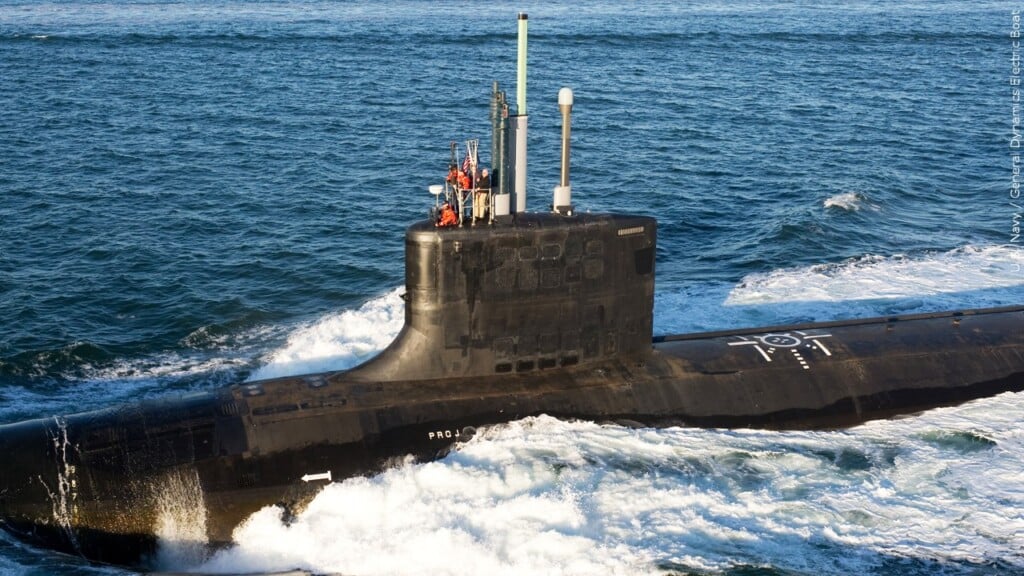
BOSTON (AP) — The USS Massachusetts officially joined the Navy fleet on Saturday after a commissioning ceremony, making it the first submarine named after the Bay State.
The newest Virginia-class fast attack submarine, which can dive to depths greater than 800 feet (240 meters), was christened on May 6, 2023, by the ship’s sponsor, Sheryl Sandberg, the former COO of Meta. This is the 25th Virginia-Class submarine co-produced by General Dynamics Electric Boat and Newport News Shipbuilding and the fifth U.S. Navy vessel named after Massachusetts.
“To be able to take a ship from new construction and watch it be built together by the ship yard, train with our team and bring into Boston Harbor for the first time, it’s very amazing,” the sub’s commanding officer, Mike Siedsma, a 21-year Navy veteran who has spent time on four different classes of submarines, said Friday ahead of the ceremony. “I looked at the history books. I don’t think we’ve had a submarine in Boston Harbor since sometime in the late ’80s or early ’90s.”
During Saturday’s commission ceremony on the Boston Harbor, Massachusetts Gov. Maura Healey said the event showcases the state’s “deep ties to our nation’s maritime and military history, and we are proud to see that legacy continue with this next generation of service.”
“The commissioning of the USS Massachusetts is a proud moment for Massachusetts and our country, especially as we approach the 250th anniversary of our nation,” she said. “This ship carries forward a long tradition of service and reflects the strength and dedication of the sailors who will serve aboard it.”
Siedsma did not say where the sub — which cost over $2.8 billion, weighs about 8,000 tons and can carry 24 Tomahawk cruise missiles — is headed. A U.S. submarine sank an Iranian warship off the coast of Sri Lanka earlier this month in the war with Iran.
“The geopolitical situation is very interesting,” Siedsma said. “What is important to remember is what we are doing is proving the power of the United States Navy.”
The crew of 147 also includes 39 women, 16 years after a ban on women serving on submarines was lifted. The USS New Jersey, which was commissioned in 2024, was the first sub designed and built with modifications for a gender-integrated crew.
“The ship is intentionally designed to be served on by both women and men. That is pretty exciting. Twenty five percent of this crew is female,” Sandberg said. “Those sailors just don’t inspire me. They inspire every little girl out there to believe that she could do anything.”
This is the fifth Navy vessel named after the state. The first was the USS Massachusetts, a steamer built in 1845. The last was USS Massachusetts, BB 59, commissioned in 1942 as a South Dakota-class fast battleship. Most of its time was spent in the Pacific during World War II.
For Sandberg, the commissioning also brought to mind the role the state has played in the founding of the United States and how “people are still fighting for the same freedoms that the original colonists were fighting for.”
Reporters touring the sub on Friday were led past the control room, down into the torpedo room and into the dining hall. The ward room, where officers eat, also features a mug rack featuring wood from counties in Massachusetts. It was donated by “This Old House,” the television home improvement show.
“It was an incredible donation. Very great connection to the state and the commonwealth,” Siedsma said. “It’s beautiful.”

WILMINGTON, N.C. (WWAY) — 2025 started with Lo Hoyer accepting the head volleyball coach position at UNCW, but the year ended with some devastating news.
Right before their final game of the season, Hoyer learned she had been diagnosed with stage 3 breast cancer at just 39 years old. She first felt a lump in January, but moving and work caused her to not get it checked out until last October. Then on November 14, she got the results of her tests.
Hoyer began treatment soon after and says they discovered it in the nick of time.
“We caught it early enough,” Hoyer said. “It did spread a little bit, and so that will be part of our treatment plan after I have surgery in May. What’s still left, what needs to get taken care of. It spread to a lymph node and my sternum. The sternum will be the biggest issue afterwards. I’m either going to have it all gone or it’s just going to be something that I’ll live with the rest of my life, but nothing imminent.”
Hoyer has had five high doses of chemotherapy and has her final one scheduled on Wednesday. She expects low dose treatments to continue during the 2026 season.

(Photo: Lo Hoyer)
Despite it all, Hoyer remains committed to the Seahawks and says stepping away to focus on her health was never an option. She was on the sideline Saturday during the team’s scrimmage against Campbell.
“I absolutely love my job,” Hoyer said. “I love what I do. I can’t imagine stepping away. I think that would be even worse than trying to manage chemo and working. I came here to build this program and that’s my plan.”

(Photo: Colton Emswiler/WWAY)
The offseason has been slightly different to accommodate her recovery, but her players have remained by her side and feel motivated by seeing their coach battle both on and off the court.
“We’ve had one-on-one meetings every month, we call them ‘jersey meetings,’” graduate student Lauren Young said. “We’ve taken that time to build our coach-player connection. If she has treatment that week, we definitely show that we’re aware of it and can support her in any way. Checking in on how she’s feeling that day, just small things to keep up and show that we care and we support her.”

(Photo: Colton Emswiler/WWAY)
“Us coming in every morning to practice at 6:30 a.m. and seeing her there with a smile on her face, ready to support us and coach us every day, it’s just so inspiring, to see someone go through something so hard and still be there for us every day, it just pushes us even harder to do that for her,” freshman Meredith Keefer said.
Hoyer’s journey towards remission is ongoing, but is making the most of it alongside those who care about her.
“Every time that we’re presented a challenge or something that could be difficult, there’s an opportunity within it,” Hoyer said. “I would love to not be going through breast cancer and going into the transfer portal and all of those things, but it’s life and it’s all how you take it. I’m very lucky that I have to go through this here and that I’m going through it with amazing people that are supporting us and supporting UNCW volleyball.”

(Photo: Colton Emswiler/WWAY)

(CBS) — The four-person crew of Artemis II is at Kennedy Space Center in Florida preparing to lift off and travel to the moon as early as Wednesday — and getting ready for any hurdles space may throw at them.
The astronauts’ round-trip space journey will cover nearly half a million miles over nine days. They will reach the moon, loop around its far side, and return to Earth. It will be the first crewed moonshot since 1972.
But space is inherently risky — and this is a test flight.
NASA plans for every scenario, and a global team of air force rescuers is on standby ready to come to the aid of the Artemis II crew if circumstances require it. The Air Force’s Detachment 3 has coordinated contingency planning and astronaut rescues for NASA since 1959. Members of the unit train hard for a moment that they hope to never see.
“We absolutely never want it to happen,” said Lt. Colonel Kevin Pieper, who oversees the unit.
CBS Saturday morning watched unit members conduct a simulation to retrieve astronauts after a mid-launch abort. Here’s what the simulation looks like: A C-17 military aircraft hauling 15,000 pounds of rescue equipment heads to the splashdown site. The plane airdrops jet skis, inflatable boats and medical supplies, and a team of pararescue jumpers, or PJs, heads into the water.
The PJs gather the equipment, then bring it to the capsule itself and begin extricating the crew onto the life raft, which holds food, water, survival gear and medical equipment.
Jason Dykstra, a member of the rescue team, said jumpers have little idea what they’ll find with the capsule or crew, so they have to prepare for every scenario and for days aboard the life raft.
“We have enough supplies to sustain those astronauts, medically speaking, until help arrives, until we can get them out of there and get them to a higher level of care,” Dykstra said. “We are set up to survive in that environment for about 72 to 96 hours.”
Multiple teams will be on standby when the Artemis II crew finally launches. Unit leader Pieper said there are several unknowns to prepare for, so every rehearsal helps. Backing up the crew of Artemis II is a “huge responsibility,” he said.
“We are here to make sure that they get home safely, if, God forbid, something like this were to happen,” Pieper said. “Everyone understands just how important what we’re doing is, for not only for the safety of the crew, but for the mission.”